Tidal Bores

Tidal Bores

Tidal Bores

07/07/25

“How can ocean tides flow into rivers?”

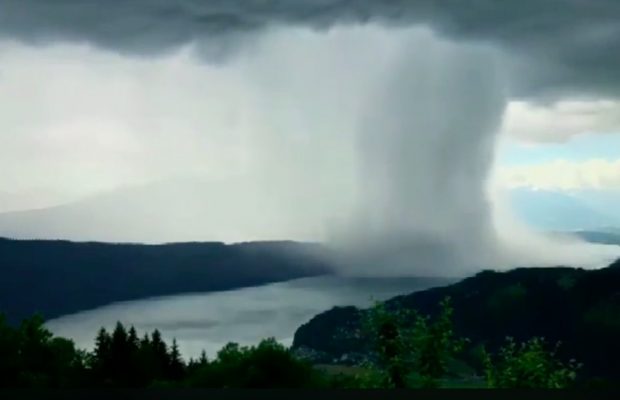
Rivers pour water from high elevations into deeper bodies of water like oceans. Oceans have waves that crash into land. When a place with a high tidal range and a shallow river or Bay inlet, the ocean tides can push into the river in the opposite direction of river water flow. These Tidal Bores are fascinating phenomena that can upset the local hydrological system.

Image credit: https://cdn.hswstatic.com/

The Fly River

The Fly River

The Fly River

07/06/25

“What is the largest river in the world without a dam in its catchment?”

Rivers come in all shapes and sizes. The largest river in the world without a dam in its catchment is the The Fly River in Papua New Guinea. The river has a total length of 1,060 km (~660 miles), originates in the Victor Emanuel Range of the Star Mountains Papua New Guinea’s central highlands, and has a delta at its entrance. The Fly River is host to Indigenous communities and forms the border between Papua New New Guinea and Indonesian-occupied West Papua.

Image credit: https://travellingartist.wordpress.com/

NYC Unified Stormwater Rule

NYC Unified Stormwater Rule

NYC Unified Stormwater Rule

07/05/25

“How can NYC unify its stormwater regulations to cover both its combined and separated sewers under one regulation?”

Historically, NYC regulated stormwater in its combined sewer overflows differently than its municipal separate stormwater sanitary systems. But on February 15, 2022, NYC unveiled its NYC Unified Stormwater Rule. This regulation brought RCNY Title 15 Chapter 19.1 enforcement to the entire city and reduced the minimum qualification to 20,000 square feet. This shifted NYC’s stormwater pollution focus from off-site treatment to on-site treatment, putting NYC on a path to a more just and sustainable future. The NYC unified stormwater rule can increase equity in environmental justice communities due to their sizable presence in older combined sewer overflow neighborhoods. 

Construction General Permit

Construction General Permit

Construction General Permit

07/04/25

“How do U.S. states regulate stormwater pollution runoff from construction activity?”

Construction activities create pollution that stormwater can pick up and dump into surface waters. U.S. States use stormwater permits to keep their water bodies clean. Construction activities that meet certain criteria must obtain a Construction General Permit from the state environmental regulatory agency before starting work. Construction general permits are part of the National Pollution Discharge Elimination System (NPDES).

Silt Fences

Silt Fences

Silt Fences

07/03/25

“How can we put up barriers to temporarily protect water bodies from construction stormwater sediment runoff?”

Construction stormwater runoff can devastate nearby water bodies. Construction operators must take best management practices to protect water bodies as part of stormwater pollution prevention plans. One approach is to build temporary Silt Fences around the perimeter of construction projects to stop sediment runoff from leaving the development area. Silt fences have a special fabric that allows water to pass through while trapping pollutants. Operators should install silt fences in trenches to keep them stabilized. 

Image credit https://globalsynthetics.com.au/

Permaculture

Permaculture

Permaculture

07/02/25

“How can we take inspiration from nature to create sustainable land management practices?”

Modern day land management in most of the world is extractive and unsustainable. Whether it’s destroying the water cycle through concretizing cities, extracting too much groundwater from aquifers to grow almonds, or cutting down forests to encourage suburban sprawl, there are so many things wrong. To build a more sustainable system, we can replicate circular processes found in nature to provide humans with the landscapes, food, energy, and other systems we need. Many circles have termed this practice Permaculture, and it holds the potential to reshape how we interact with the wider world.

Grading (Construction)

Grading (Construction)

Grading (Construction)

07/01/25

“How can we shape a landscape’s slope to suit our construction needs?”

People may want certain landscape slopes for their construction projects. For example, a developer may want to flatten out a piece of land to make the foundation more stable, or a stormwater engineer might recommend that a community build a meandering path to allow for better drainage. People can accomplish these tasks through Grading, where the land surface is reshaped to accomplish specific criteria.

Permafrost

Permafrost

Permafrost

06/30/25

“What happens when soil is frozen for more than two years?”

Soil’s temperature depends on the air’s temperature. When soil is frozen for two or more years, it develops into Permafrost. Permafrost upholds tundra ecosystems, and is prone to physical collapse upon melting. Permafrost is commonly found in far northern latitudes and the Tibetan Plateau. 

Mixed Liquor Suspended Solids

Mixed Liquor Suspended Solids

Mixed Liquor Suspended Solids

06/29/25

“How can we represent the total mass of suspended solids in the aeration tank of an activated sludge process?”

Activated sludge treatment plants are one of the most widely used treatment systems in the world. These systems use suspended microorganisms in sludge to “eat” the organic matter present in the influent water. The total mass of suspended solids per volume in the influent-sludge mixture is quantified as Mixed Liquor Suspended Solids. Measuring the amount of mixed liquor suspended solids is useful for designing targets for treatment systems.

Image credit: https://www.ebsbiowizard.com/