Category: Urban Systems

The Roadless Rule

The Roadless Rule

The Roadless Rule

07/22/26

“What’s the U.S.federal rule that protects backcountry forests from road construction, why is it under attack, and what can you do to help?”

Remote, backcountry forests are marvelous pieces of geography. Not only do they nurture diverse ecosystems and regulate our planet’s carbon balance, but they also provide world-class recreational opportunities. In 2001, the U.S. federal government introduced The Roadless Rule, which protects roughly 60 million acres of American backcountry forests and grasslands from road and logging development. This rule has been an incredible success, sustaining not only the forests themselves but also drinking water access to over 25 million Americans. However, this is now all under threat as the USDA released a notice of intent to repeal the roadless rule, likely by (as of writing) late 2026. If you are a U.S. resident, you can fight to protect the roadless rule by calling your representatives, using the information found in the link here.
Force Main Discharge Elevation

Force Main Discharge Elevation

Force Main Discharge Elevation

07/21/26

“How can we quantify the height a force main must pump to?”

Force mains pump wastewater to overcome elevational or frictional differences. The height they must pump to is called the Force Main Discharge Elevation. Wastewater does not need pumping to move once it reaches the force main discharge elevation since it will go downhill with gravity. The force main discharge elevation does not need to be above the pump inlet since the pump might be present to work against frictional losses only.

Force Mains

Force Mains

Force Mains

07/20/26

“What’s so special about pipes that carry wastewater using a pump?”

It’s typical for sewers to carry wastewater using gravity. However, sometimes the sewer needs to carry wastewater against gravity using pumps. Pipes that carry wastewater using pumps are called Force Mains. Force mains are typically filled due to pressurization.

Dammed River Reservoirs

Dammed River Reservoirs

Dammed River Reservoirs

07/17/26

“How can we dam rivers to create reservoirs?”

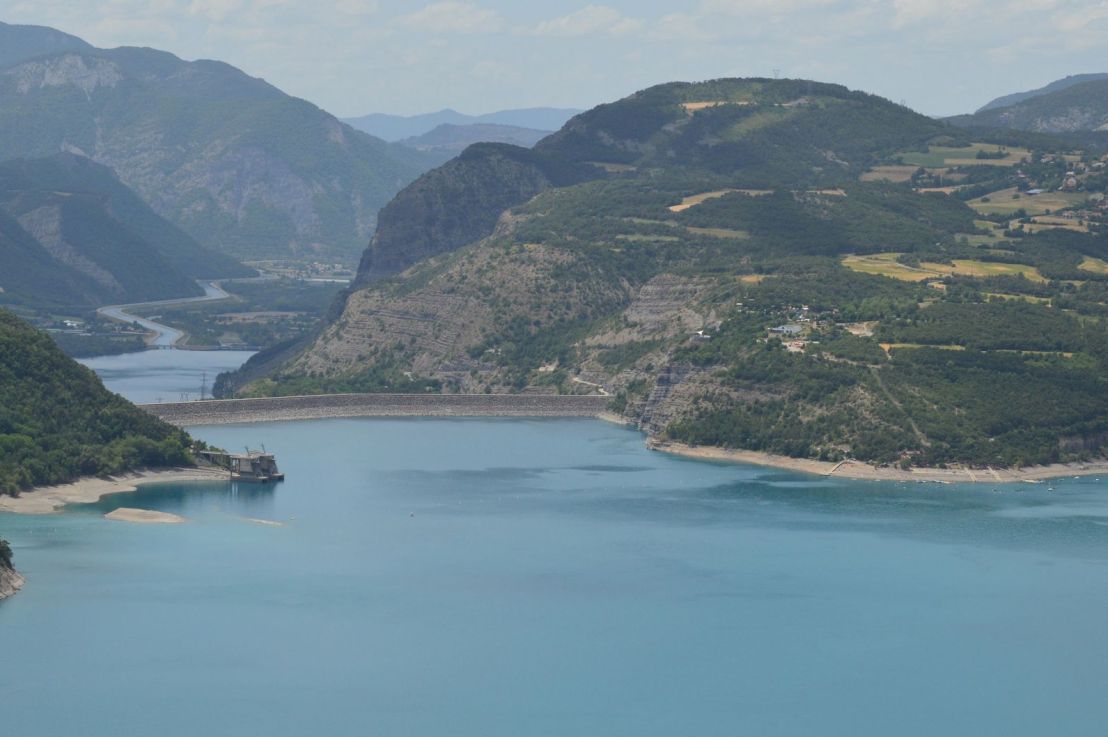
People can create reservoirs to store water. One way is to install a dam over a river, bringing its flow to a near halt and practically turning the water body into a lake. These Dammed River Reservoirs can hold vast amounts of water throughout the year. Water is typically still let out through controlled release. Dams can release enough water to generate hydropower. Dammed river reservoirs can protect against floods by concentrating water upstream and releasing only a paltry amount downstream. Dammed river reservoirs can be environmentally catastrophic (especially for Indigenous livelihoods), and people may remove dams to restore the natural environment. Damned river reservoirs are also liable to sedimentation buildup and algae blooms from the stopped flow.

Reservoirs

Reservoirs

Reservoirs

07/16/26

“How can we create giant reserves of water for later use?”

Water is one of the most fundamental components of human life. Consequentially, water needs to be stored for people to avoid catastrophe. Reservoirs are large water storage bodies to fill this need. Reservoirs can be natural (like lakes) or artificial (like dammed rivers). Reservoirs can also release water to assist drought-stricken communities.

Cone of Depression

Cone of Depression

Cone of Depression

07/14/26

“How does a water table’s shape change when a pump is activated?”

Pumps can suck water out of aquifers. When a pump activates in an unconfined aquifer, it creates lower pressure near its mouth, causing the water table portion near the well to bend towards it. Because the water table portion further from the table is less affected, it will bend less, and a negative slope will form. Since the water table is affected equally in all directions, this slope will be circular and form what’s called a Cone of Depression. The slope of the cone of depression is contingent upon the pumping rate, pumping time, aquifer conductivity, and water recharge. 

Image credit: https://upload.wikimedia.org/

R-Tank Stormwater Modules

R-Tank Stormwater Modules

R-Tank Stormwater Modules

07/09/26

“How can we create large-scale underground stormwater storage with modular units?”

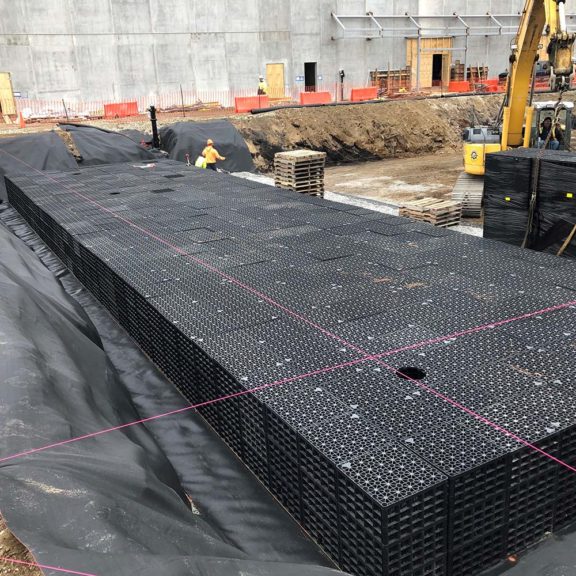
Stormwater storage can be a monumental problem when you don’t have enough space in your project. But what if we were to take modular storage units, put them underground, and then connect them to one another and to pipes feeding from above ground? This way, we can create a large storage system that’s expandable, dense, and flexible without taking up overland space. Well, this is the idea behind R-Tank Stormwater Modules. R-tanks are typically installed under impervious surfaces so they won’t take up infiltration potential. R-tanks can channel their contents to detention, retention, or water reuse systems.

Image credit: https://www.fergusonwaterworks.com/

A Meta-Affiliated Data Center Discharged a Deadly Bacterial Strain Into a Wyoming Town’s Wastewater

A Meta-Affiliated Data Center Discharged a Deadly Bacterial Strain Into a Wyoming Town’s Wastewater

A Meta-Affiliated Data Center Discharged a Deadly Bacterial Strain Into a Wyoming Town’s Wastewater

07/07/26

“How did a Meta-affiliated data center discharge a deadly bacterial strain into a Wyoming town’s wastewater?”

Data centers are very controversial for their heavy environmental strain. Recently, a Meta-affiliated data center was found to have discharged a deadly strain of bacteria into the wastewater pipes of Cheyenne, the capital of the U.S. State of Wyoming. This bacterial strain, known as Cupriavidus gilardii, is a multidrug-resistant pathogen that may have a mortality rate as high as 31.3 percent. As a consequence of this finding, local officials are withholding waste-dumping privileges from any data center connected to the municipal water services. This is how A Meta-Affiliated Data Center Discharged a Deadly Bacterial Strain Into a Wyoming Town’s Wastewater.

Image credit: Laramie Boomerang + Meta