Category: Physiology

Hazard Quotient

Hazard Quotient

Hazard Quotient

01/27/26

“How can we quantify the lethality of exposure to a substance?”

People are exposed to potentially hazardous substances all the time, whether it’s traces of air pollution or bacterial growth on food. We also know that if exposure breaches a certain level, it becomes dangerous. So how can we quantify the lethality of exposure to a substance? Well, what if we divide the exposure level by the reference dose? This is how the Hazard Quotient works, and it is a very useful tool in toxicology.

Noise Dose

Noise Dose

Noise Dose

01/24/26

“How can we quantify the level of noise someone is exposed to over time?”

Listening to too much loud noise is a well-known safety risk. The constant vibration in your ears can lead to long-term damage if not managed properly. The Noise Dose quantifies how much noise a person has been exposed to for the day, regarding safety levels. We can quantify noise dose by taking the hours someone listened to a certain decibel of noise and dividing it by the maximum number of hours it’s safe to listen to that noise level per day. We can sum this ratio for every noise decibel level heard throughout the day, multiplied by 100% to arrive at the total noise dose. If a noise dose exceeds 100 percent, then the person has breached the healthy recommended daily noise levels.

Chronic Daily Intake

Chronic Daily Intake

Chronic Daily Intake

01/23/26

“How can we calculate the amount of contaminant a person is exposed to daily?”

People are exposed to all kinds of substances throughout the day, whether it’s from the food we eat or the air we breathe. Some of these substances are harmful and can lead to health problems. We can measure how much of these contaminants we expose ourselves daily through Chronic Daily Intake. Chronic daily intake is typically expressed as milligrams of substance per kilogram of body weight per day. The US E.P.A uses chronic daily intake as part of health hazard assessment.

Acceptable Daily Intake (ADI)

Acceptable Daily Intake (ADI)

Acceptable Daily Intake (ADI)

01/21/2026

“How does the WHO measure how much a certain substance in food or drinking water can be consumed daily over a lifetime without an appreciable health risk?”

NOAELs document how much of a substance an organism can handle before a statistically significant health effect occurs. However, these studies may be conducted in controlled environments or on test animals that may not accurately reflect human conditions. To account for all of these variables, organizations such as the World Health Organization (WHO) and the European Food Safety Authority (EFSA) use Acceptable Daily Intake (ADI). Acceptable daily intake measures the amount of a certain substance in food or drinking water that can be consumed daily over a lifetime without an appreciable health risk to people. This is commonly expressed as milligrams of substance per kilogram of body weight and is applied by regulatory and health authorities all over the world to monitor food additives, pesticides, and much more. Acceptable daily intake is applied to food ingredients similar to how reference dose is applied to environmental toxins.

Reference Dose (RfD)

Reference Dose (RfD)

Reference Dose (RfD)

01/20/26

“How does the U.S. EPA produce recommended daily lifetime exposure limits for substances?”

NOAELs are the highest level of a substance a person can take without any statistically significant effects, according to research. However, this could be much higher than what may actually be safe for long-term use. The U.S. EPA has created the Reference Dose (RfD) in response. Reference does are the maximum acceptable oral dose of a toxic substance that has no adverse noncancer health effects from a lifetime of exposure. Reference doses are commonly found by dividing the NOAEL for a substance by uncertainty factors.

NOAEL – No Observed Adverse Effect Level

NOAEL – No Observed Adverse Effect Level

NOAEL – No Observed Adverse Effect Level

01/19/26

“How can we measure the highest dose of a substance that does not cause any statistically significant effect?”

People worry about whether a substance they’re exposed to leads to health complications. One way to understand this is to measure the highest dosage of the substance that organisms can handle before a statistically significant effect occurs. Labeled NOAEL – No Observed Adverse Effect Level, these measurements are fundamental for quantifying safe exposure levels for substances.

Why Your Kidneys Are Like a Water Filtration System

Why Your Kidneys Are Like a Water Filtration System

Why Your Kidneys Are Like a Water Filtration System

03/17/25

“Why are your kidneys like a water filtration system?”

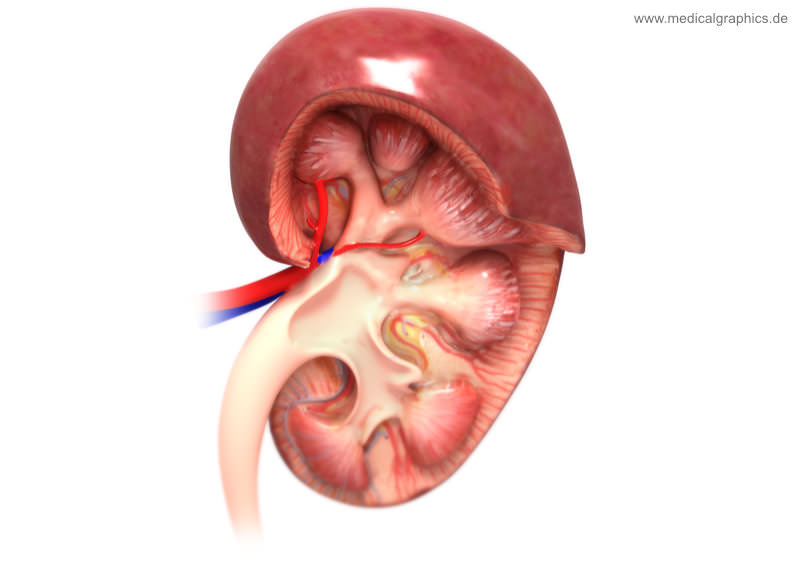
We tend to think of body organs as functioning completely differently than built infrastructure. But this is not always the case. Take the kidneys for example. A kidney filters extra water from incoming into urine, much like how a water filtration system filters contaminants from incoming water. This is Why Your Kidneys Are Like a Water Filtration System.

Image credit https://humanbiology.pressbooks.tru.ca/

Rheology

Rheology

Rheology

12/12/24

“What is the study of the flow of matter?”

Flows happen in matter, whether it’s in a liquid, gas, or even a soft solid. The science behind studying material flow phenomena is called Rheology. Rheology has direct insights for physics, engineering, materials science, physiology, and chemistry.

The Ventral Cavity

The Ventral Cavity

The Ventral Cavity

09/27/24

“What is the human body cavity that contains the most organs?”

The human body contains cavities that protect its organs. One of the two major human body cavities is The Ventral Cavity, which protects the central organs such as the stomach, kidneys, heart, and liver.