Category: Physics

Neutrons

Neutrons

         Neutrons                      02/10/16
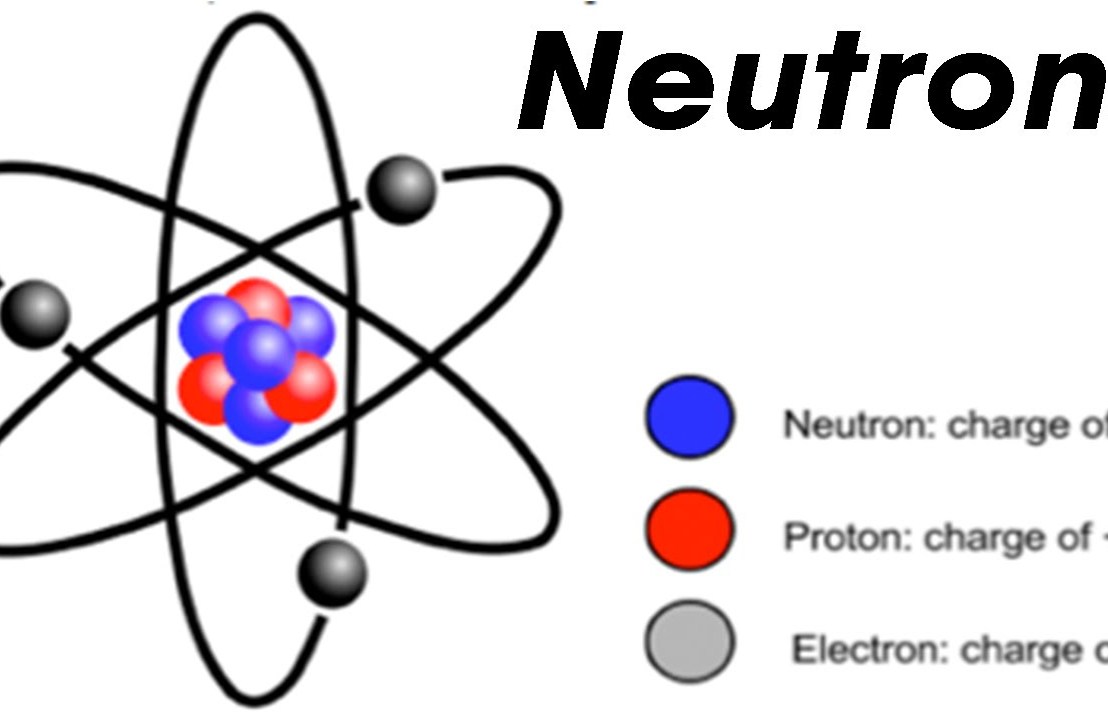
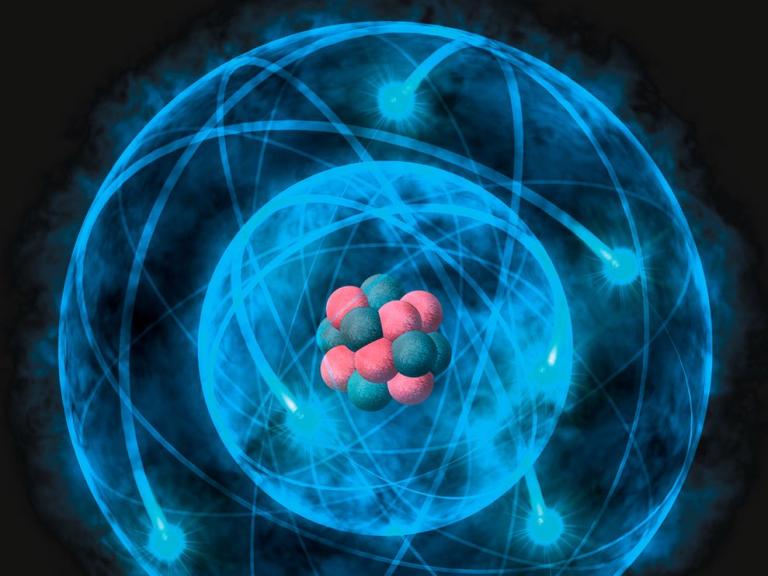
Neutrons are one of the most fundamental particles in the universe.Neutrons are located in the nucleus (along with protons) and have no observed electric charge, hence the name Neutron. Neutrons, protons, and electrons are bound together by the nuclear force, which will be explained later. An excess of neutrons in an element can make an atom a heavy one, which in turn makes it more prone to radioactive decay.  

Conservation of momentum

Conservation of momentum

Conservation of momentum  02/09/16
One of the most fundamental principles of Physics is the conservation of momentum. The theory of the conservation of momentum states that there is a quantity called linear momentum which is proportional to the product of an object’s mass and translational velocity. In addition, there is also angular velocity which is proportional to an object’s moment of inertia and angular momentum. This concept is one of the most pertinent to a student’s knowledge.

Molniya orbit

Molniya orbit

Molniya orbit        02/08/16
Molniya orbits are of of the most peculiar discoveries made by the old Soviet Union. As shown below, Molniya orbits have a highly eccentric Apogee and Perigee, and consequently they spend a large amount of time in orbit around certain latitudes (north being the most common ones). Molniya orbits were used by the Soviet union for communication satellites since the highly eccentric orbit meant that it spent a large amount of time in the Northern hemisphere, allowing for excellent communications coverage for the Soviet’s geographic position.

Geostationary Orbit

Geostationary Orbit

Geostationary Orbit  02/07/16
One of the most marvelous discoveries of modern Science and Engineering is the discovery and application of geosynchronous orbits. A geosynchronous orbit is a specific type of orbit in which the period of rotation around the earth is equal to the Earth’s revolution around its axis, an entire day in other words. This means that the orbiting satellite will stay above the same relative position of the earth for the whole time. This type of orbit is often used for telecommunication satellites. Unfortunately, such orbits can only be approximations due to impingement from solarwinds, geographic height shifts, solar wind, and gravitational influence of the moon.

Protons

Protons

  Protons   02/04/16
Symmetry is one of the most omnipresent facets of the universe. Protons are the natural counterbalance to electrons. Protons are positively charged particles that surround the nucleons in the atomic nucleus. The number of protons are what determines an element (for example, water has one proton, if another proton is added, then it becomes Helium, and so on). Protons balance out the electrons, if there is an imbalance, then then the atom is called an ion. Ions are considered “positive” (cation) if there is a dearth of electrons ( since the total positive charge of the protons will outbalance the total negative charge of the electrons) and vice versa for negatively charged ions (anions).

Electrons

Electrons

Electrons  02/03/16
Electrons are some of the most flummoxing part of the universe. Electrons are subatomic particles with a negative charge. Contrary to popular notion, electrons do not orbit the nucleus of the atom, but as a consequence of the laws of Quantum Mechanics, they form a probability shell around the nucleus of an atom, with the probability density being weaker the further away from the distance is to the center. When a molecule loses or gains an electron, it becomes an ion, which means that it now has a net charge.

Perpetual motion machines

Perpetual motion machines

Perpetual motion machines                 02/01/16

One of the most common statements of crankery among pseudoscientists is that of Perpetual motion machines. A perpetual motion machine is a machine which can operate indefinitely with 100 percent energy efficiency, meaning that all of the energy that enters the system will leave the system in the same way. Perpetual motion machines are a glimpse at mankind’s quest for ultimate symmetry and utility in the universe. Perpetual motion machines are in complete violation of the second law of thermodynamics, as energy can only be debased through use and can never be fully preserved. Therefore, anytime you see something claim that they have made free energy, they haven’t.   

Second law of thermodynamics

Second law of thermodynamics

               Second law of thermodynamics      01/31/16
One of the most enigmatic yet intriguing facets of fundamental physics is the second law of thermodynamics. The second law dictates a seemingly simple yet consequential rule, that the entropy in all systems can only increase. Entropy is the measure of disorder in a thermodynamic system, think of it like if there was one room half filled with people wearing red shirts and half blue shirts, with one room they are split evenly half and another they are strewn around in a desultory manner. The second law states that all systems start out like the former and end up like the latter. The dire implications of this quandary is that a perpetual motion machine is completely impossible any any attempt will only based off of erroneous reasoning.  

Phases of matter

Phases of matter

Phases of matter      01/30/16


Complex matter is invariably found in a physical state. A state of matter can be defined as the macroscopic order that the components are in. There are four (main) type of macroscopic states of matter, Solids, liquids, gases, and Plasmas. Every complex object can be found in one of those states and can transfer between one of those states through a change in temperature and pressure.

The most intuitive phase of solid is the solid. Objects in a solid state have their molecules packed closely together, with the forces so strong that the neighboring molecules are only able to vibrate. Consequently, solids have a definite shape and volume (unless deformation by an outside force impinges upon it, but that’s a topic for a later lecture).


Given the precise conditions, an object can also be extant in a liquid state. If a solid object is heated above the melting point, then the molecules begin to break free of their rigidity but the intermolecular forces are still strong enough to hold them together. As a result, liquids do not have a dependant shape (their geometry is contingent upon the space of the container that they are suffused in).  A most intriguing and peculiar facet of nature is that of the triple point, in which the state transitions for a certain object are all bordering one another.


If one is to change the pressure or temperature conditions to the point where the molecules are able to break completely free of neighboring van der wal force impingements, then a gas is formed. Gases have no definite shape or volume, so they are free to move around with little constraint. If enough heat is applied to a gas, then it will undergo a process known as ionization in which all of the electrons will break free of the molecules and a plasma will be formed. Plasmas have much of the same physical properties as a gas except for the fact that they are completely electrically conductive (not to say that gases can not be electrically conductive, just not on the same level as Plasmas)