Category: Physics

Effective Half-Life

Effective Half-Life

Effective Half-Life

04/03/26

“How long does it take for a radeonucleotide to diminish to half of its mass in a biological organism?”

Organisms may consume radionucleotides. The radionucleotide will lose mass to both radioactive decay and biological absorption. We can find the Effective Half-Life of the radionucleotide through the equation 1/(half-life_effective) = 1/(half-life_radiation) + 1/(half-life_biological).

In-Situ Groundwater Remediation

In-Situ Groundwater Remediation

In-Situ Groundwater Remediation

04/01/26

“How can we clean groundwater without removing it?”

Groundwater can become contaminated through a variety of means. Although it’s common to remove groundwater to clean it, wouldn’t it be great if we could separate toxins from groundwater while it sits in place? Well, what if we were to inject a cleaning agent or mechanisms directly into the groundwater? This process is known as In-Situ Groundwater Remediation, and it’s a growing field of study.

Subcritical Flow

Subcritical Flow

Subcritical Flow

03/30/26

“What are the special properties of slow-moving, tranquil flows in channels?”

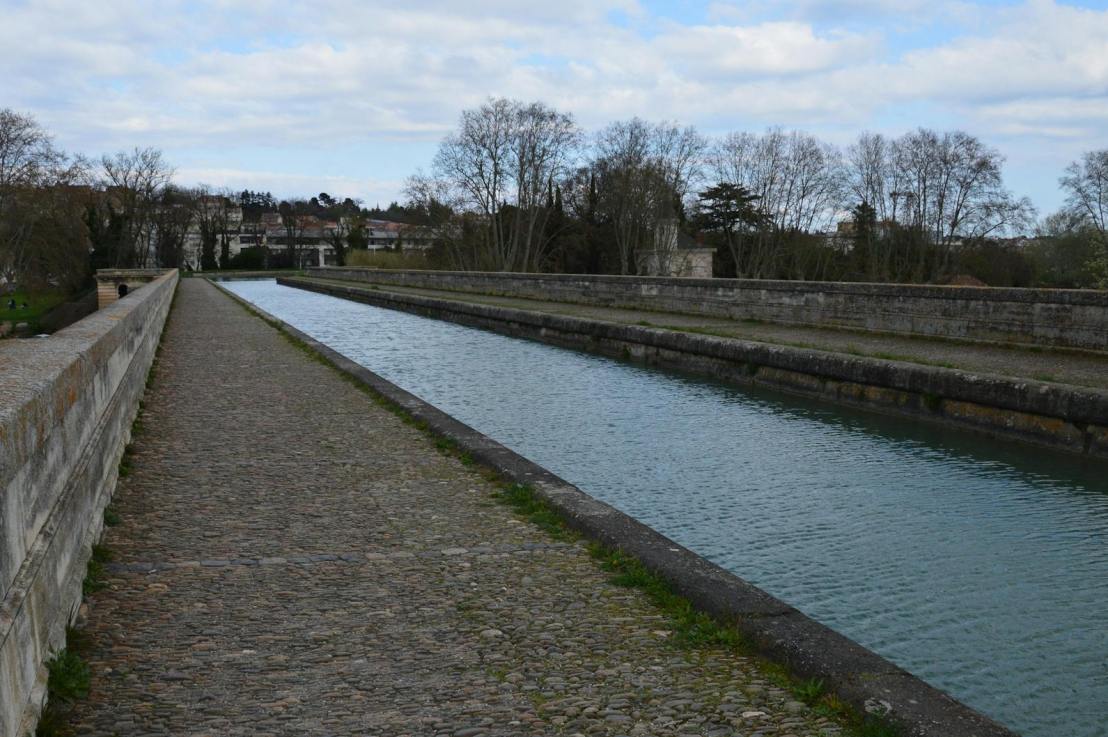
Slow-moving, tranquil flows in channels may seem simple. But if you dig deeper, you will find it more interesting. These flows, known as Subcritical Flows, are typically deep and dominated by gravity. The slow-moving and gravity-centric flow can be greatly affected by downstream elements like dams because it does not have enough momentum to overcome such heavy changes.

Dimensionless Henry’s Law Constant

Dimensionless Henry’s Law Constant

Dimensionless Henry’s Law Constant

03/29/26

“How can we quantify whether a substance is likely to stay in water or escape as water?”

Some substances escape from water solutions quickly, like volatile organic compounds, while others stay contentedly in water. We can find this out by taking the ratio of the concentration in vapor to the concentration in water, represented by the Dimensionless Henry’s Law Constant. The dimensionless Henry’s Law constant is equal to the regular Henry’s Law Coefficient divided by the universal gas constant and the temperature.

Activated Carbon

Activated Carbon

Activated Carbon

03/22/26

“How can we use extremely dense carbon to filter water?”

Certain materials are good at filtering water. One of them is Activated Carbon. Activated carbon is hyperdense with tiny pores (often over 3,000 square meters per gram), which can adsorb water contaminants on its interior surface. Activated carbon pores will fill up over time and will need to be cleaned out. 

Image credit: https://www.thoughtco.com/

Stoichiometric Air-Fuel Ratio 

Stoichiometric Air-Fuel Ratio 

Stoichiometric Air-Fuel Ratio 

03/19/26

“What’s the ratio of air-fuel mass in combustion to ensure all ingredients are used?”

Combustion reactions require air and fuel. If the ratio of air to fuel is not perfect, there will be some unspent air or fuel at the end. The ratio where all air and fuel are consumed in the reaction is called the Stoichiometric Air-Fuel Ratio. The stoichiometric air-fuel ratio produces only carbon dioxide, water, and nitrogen.

Air-Fuel Ratio

Air-Fuel Ratio

Air-Fuel Ratio

03/18/26

“What’s so special about the mass of air to fuel in a combustion process?”

Combustion reactions require air and fuel to operate. The quality of the reaction is determined by the ratio of air to fuel mass present, also called the Air-Fuel Ratio. The air-fuel ratio is usually represented by the amount of air compared to fuel. For example, an air-fuel ratio of 8:1 means that for every 8 kg of air, there is 1 kg of fuel.If there is too little air in the ratio, some fuel will not burn. If there’s too much air, then there will not be enough fuel present to burn effectively.

Fugacity

Fugacity

Fugacity

03/14/2026

“How can we quantify how much a substance wants to escape from its mixture?”

Different substances have different levels of internal stability. Some very much want to escape their mixture, while others are happy where they are. So how can we quantify this? Well, scientists developed Fugacity theory to explain this phenomenon. Fugacity is defined as the empirically measured vapor pressure rather than the ideal vapor pressure. Chemicals will move between substances like air and water until their fugacity potentials are equal.

Hydraulic Gradient Lines vs Energy Gradient Lines

Hydraulic Gradient Lines vs Energy Gradient Lines

Hydraulic Gradient Lines vs Energy Gradient Lines

03/07/26

“What is the difference between a fluid’s hydraulic gradient line and energy gradient line?”

Engineers often have to compute the hydraulic gradient line and energy gradient line for fluid flow. But what is the difference between them, and why does it matter? Well, the hydraulic gradient line represents how high the fluid would rise if a piezometer tube were placed at a specific point, given by the summation of pressure and elevation for a given fluid. The energy gradient constitutes the total energy of a fluid at a particular point, given by the summation of pressure, elevation, and velocity. The difference between the hydraulic line and the energy gradient line is the fluid’s velocity. One of the reasons why these are different is that it shows how the stored energy of the hydraulic gradient and the energy of motion of velocity are separate quantities, and another is that we often need different tools to measure the hydraulic gradient and velocity of a system, so we can combine them to find the energy gradient line. This is the difference between the Hydraulic Gradient Lines vs Energy Gradient Lines.