Category: Other-science

Significant figures

Significant figures

Significant figures

09/02/16

“How can we scientifically analyze a number for it’s accuracy?”


Believe it or not, scientific numbers are very different from mathematical numbers. This may sound absurd at first, but if you read on then it will start to make sense. In mathematics, there is no real difference between the number 1 and 1.0 and even 1.00000 for that matter. But when working in science, these numbers are anything but interchangeable! But why is that so?

Well, it’s all because scientists and engineers have to deal with something called accuracy. When working with empirically derived numbers such as the mass on a scale, it’s impossible to know the true value of a measurement. So each number one works with has a certain level of accuracy to  it. So to quantify this accuracy, we use a tool called significant figures, and they follow a certain set of rules.

Each number that we care about is termed a significant figure, or sig fig for short. All non zero numbers are significant (as they represent a quantity), all zeroes between two significant figures are significant (as the number will not be able to be simplified), and the numbers trailing after a sig fig and decimal point will be accurate (as they measure the level of accuracy of our measurements).

Let’s do a few examples. 400 has only 1 significant figure, (the four is a non zero integer, and none of the zeroes are “sandwiched” in between other significant figures and are before a decimal point).404 has 3 significant figures (The zero is sandwiched between two o non-zero numbers) 4 has only 1 significant figure (The only number is four, a non zero integer). 4.00 actually has 3 significant figures (Both of the zeroes are behind the decimal). .040 only has 2 significant figures (The first zero is  behind the zero but not behind any non-zero integers).

Scientific notation

Scientific notation

Scientific notation

09/01/16

“How do scientists and engineers represent complex numbers?”

When working in a technical subject, you will probably have to deal with numbers that are either extremely large or extremely small, or have to work with empirically obtained values. For example, the number 602000000000000000000000 is really to read, as well as 0.000027. So how can we make them simpler and more accurate?

Well, let’s try to tackle this problem ourselves. What if we took our understanding of significant figures, and applied it to this problem? Since the only numbers that  we actually need to care about is significant figures, how about we just remove all of the unnecessary zeroes? And how can we accomplish this? Well since we know that if we multiply or divide anything by 10 we will just shift the zeroes behind the numbers, how about we simplify all of the extra zeroes into a power of ten? the For example, when we have the number 602000000000000000000000, we can turn this in to 6.02*10^23. And for the number 0.000027, we can shift it into 2.7*10^-5. This way of working so much simpler! Scientists and Engineers have termed this framework scientific notation.

Now how can we apply this system for calculations? Well, first let’s divided it into two cases, multiplication/division, and addition/subtraction.  In the first case, we will multiply both numbers and round our final answer to the number of significant figures of the variable with the lowest amount of sig-figs. For example, 5.2*10.81 will be 56 instead of 56.212 since the former only has two significant figures. For addition and subtraction, We will simply put all of the numbers in terms of the highest amount of digits after the decimal place, and then round to the lowest amount of significant figures. Let’s do an example. Suppose we have the numbers 3.14 and 2.1, and 1. When we ad the numbers together, we will notice that 3.14 has the highest amount of digits (2), and then rewrite everything else accordingly to become 3.14 + 2.10 +1.00 = 6.24, and then we will round down to one significant figure to finally arrive at 6.

Scientific notation is an amazing tool for scientific accuracy, because when working with complicated systems such as mechanical engineering precision or particle physics, a single bit of inaccuracy could destroy all of our hard work!

Complex systems

Complex systems

  Complex systems                  05/19/16


Anyone who has ever studied  and lower division mathematics and physical science is probably familiar with linear systems, But what happens if we branch into more complex Nonlinear systems? Over here arises a problem, how can model a system of such great complexity that are found in fields ranging from Physics to economics to computer science to sociology? Through the introduction of complex systems, we get a paradigm shift in our epistemology. Complex systems take a statistical approach contrary to the mechanistic modeling approaches of renaissance era science, by including variables of all kinds to make one large cohesive system.

Isolated system

Isolated system

Isolated system             05/18/16


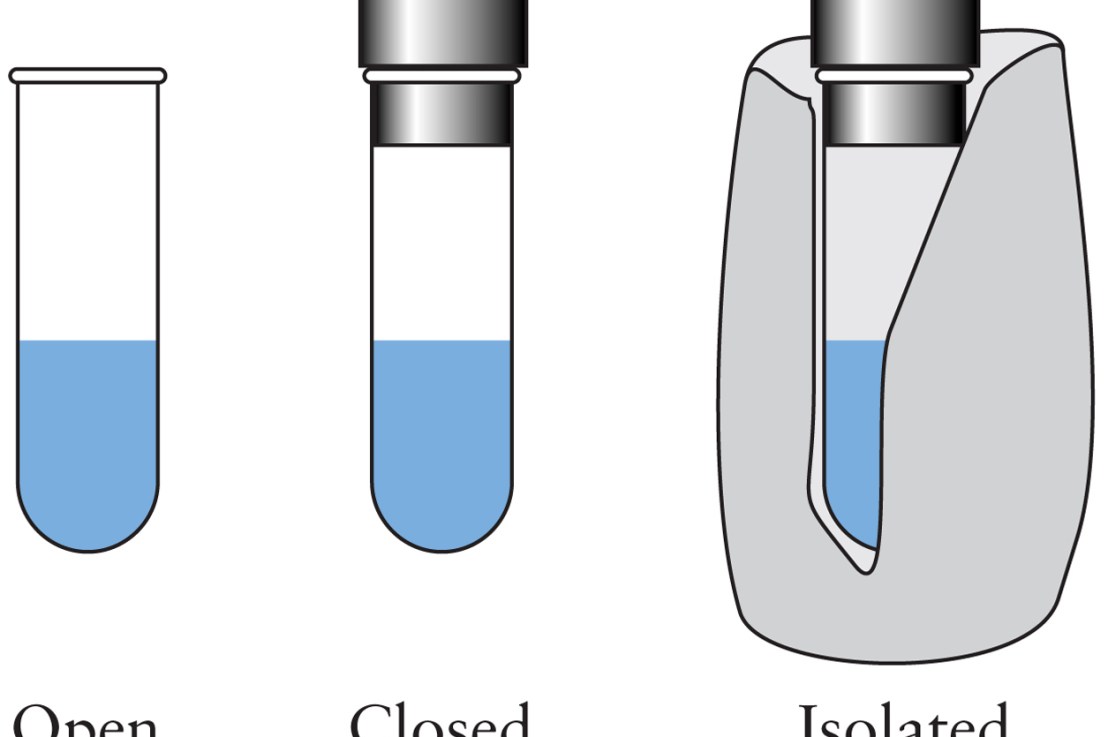
Within physical science and engineering, an Isolated system is a physical system that is so far removed from other systems that it is considered almost closed off from them. This differs from a closed system, in which the latter are isolated through an artificial boundary, while the former is due to causal distance. Isolated systems are useful for dealing with real world phenomena such as atoms and planets in the solar system.

Conservation law

Conservation law

       Conservation law           05/17/16


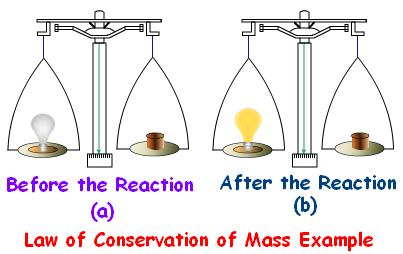
A Conservation law in physics is a property of an isolated system in which it does not change over time but remains static instead. Examples include the conservation of momentum, the conservation of angular momentum, and the conservation of energy.

Microscopic scale

Microscopic scale

  Microscopic scale               04/28/16


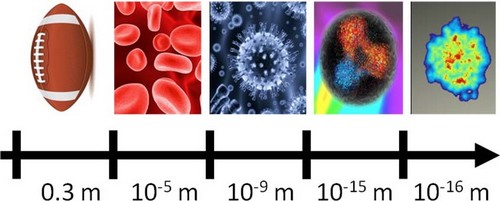
One of the most bewildering properties of the material world is that of the microscopic scale. Objects in the microscopic scale are often unable to be viewed by the human eye, and require advanced instruments such as microscopes to be observed. If one goes miniscule enough, then the realm of quantum mechanics will come in to effect, heavily distorting all known conceptions of reality.


Macroscopic scale

Macroscopic scale

Macroscopic scale        04/27/16


In the study of thermodynamics, the Macroscopic scale is defined as the scale in which phenomena can be seen by the naked eye. This stands in contrast to objects on the microscopic scale, which requires the use of advanced equipment to observe. Examples of phenomena on the macroscopic scale include newtonian objects, smoke, and quite frankly everyday life.

Degrees of freedom

Degrees of freedom

  Degrees of freedom   03/09/16


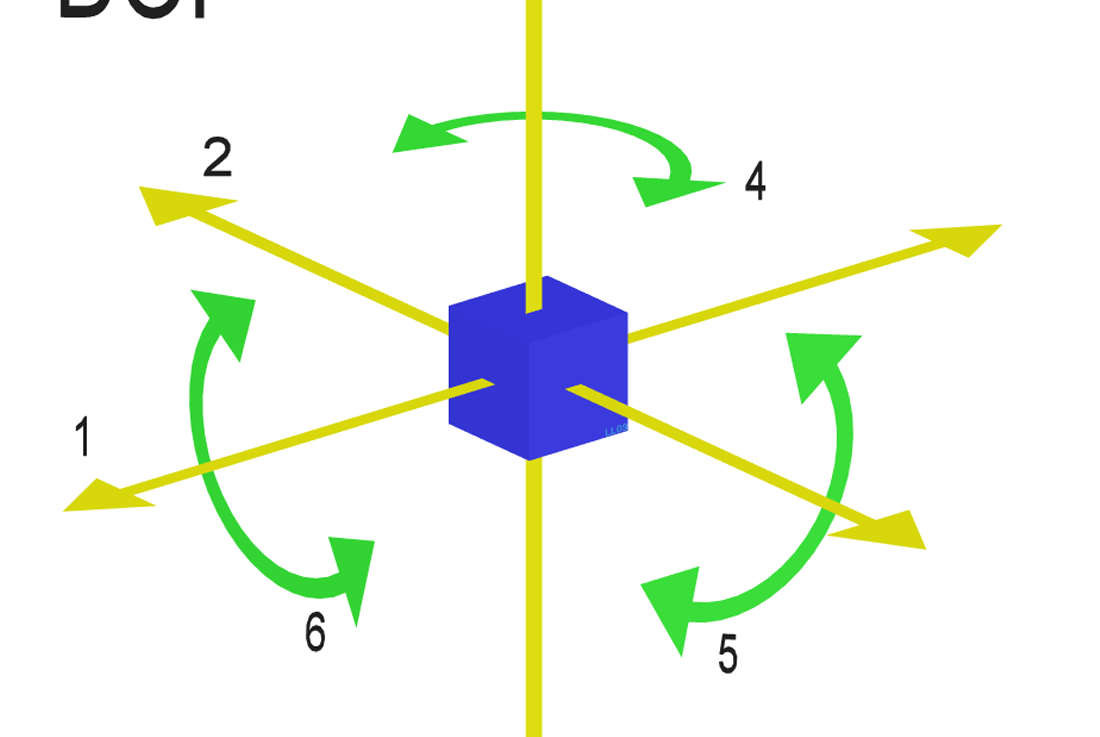
In geometry and mechanics, degrees of freedom relate to the freedom of movement for an object. All objects can have up to  three degrees of translational freedom (meaning they can move along the x, y, and zaxises) and three degrees of rotational freedom (the ability to rotate around the x, y, and zaxises ), therefore an object can have a maximum of six degrees of freedom. The number of degrees of freedom that an object has is contingent on it’s constraints. For example, if an object can only move on and rotate around the z axis then it has only two degrees of freedom.

Cryonics

Cryonics

 Cryonics         01/26/16

We are now approaching one of the most controversial and (in)famous fields of science, Cryonics. To put it simply, Cryonics is the attempt to put organisms who have (currently) insoluble medical predicaments in an impassive state under low temperature conditions. The paramount theory behind the practice is that because many biological processes are quite literally “frozen in time” from low temperatures, combined with the fact, long term memory, personality, and identity are preserved in hardened cell structures in the brain, patients may be retrieved from cryopreservation at a later date when medical technology has advanced far enough to rescue them.

Many of the contentions that plague the success of Cryonics are quite grisly in nature. Cryonic preservation is usually achieved at around 77.15 degrees Kelvin (around the boiling point of liquid Nitrogen). Damage from ice formation at such levels can be potentially lethal. All and all, in my view, Cryonics is an outgrowth of one of the most primordial facets of human desires, the attempt to evade impending death.