Category: Mathematics

Fitness Functions

Fitness Functions

Fitness Functions

07/02/18

“How can we evaluate a solution as a single figure of merit?”


In many fields of science, one of the most important things to do is to evaluate which solution function to a given dataset is the best. However, quantifying this can be very difficult. So how can we use our scientific mindset to solve this problem? Well, we can simply use something called a Fitness Function that can summarize all functions as a single figure of merit. With an easily accessible and quantified set of possible functions, we can pick the best one from the stack. Fitness functions are commonly used in Data Science where there can be a manifold of possible solutions.
Bumpless Transfer

Bumpless Transfer

Bumpless Transfer

07/01/18

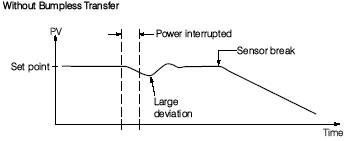
“How can we ensure a seamless transition when we turn a PID controller from manual to auto?”


Switching a PID controller from Auto to Manual can be very rough for the ongoing process. That’s why engineers have created Bumpless Transfer which allows it to happen completely smoothly.

Genetic Algorithm

Genetic Algorithm

Genetic Algorithm

06/27/18

“How can we find an absolute maximum or minimum using an algorithm?”


Finding the absolute maximum and minimum of the function is one of the most important applications of mathematics. However, sometimes this may not be a straightforward task. So how can we use our mathematical mindsets to figure this out? Well, we could start with a few local points. We can then find how good these points are by applying a local function, and then iterate to find new points. We can repeat this process again and again until we arrive at the absolute maximum or minimum. This procedure is known as a Genetic Algorithm and can be applied to all forms of engineering problems, whether it be in energy control systems or aerospace maneuvering.  

Nonlinear Algebra

Nonlinear Algebra

Nonlinear Algebra

06/02/18

“What happens to Linear Algebra when it stops being linear?”


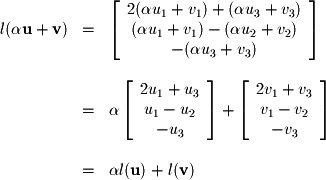
Linear Algebra has endless applications. But sometimes our system has equations where one or more variable might have an exponent greater than one or multiple variables might be coupled together. To work with these systems, we can use something called Nonlinear Algebra to simplify and solve.

Kalman Filters

Kalman Filters

Kalman Filters

06/01/18

“How can we analyze data when we can’t directly measure data?”


Scientists love to analyze data. However, sometimes we may not be able to directly obtain data. For example, when NASA studies the temperature near their rocket thrusters, they can’t place a sensor directly connected since the heat of the flame will burn it up. So instead, how about we indirectly look at this data through other means, such as the surrounding temperature of space and infer the engine’s temperature with interpolation. This technique is known as a Kalman FIlter and is used by scientists and engineers from all over the world.

Linear Regression

Linear Regression

Linear Regression

05/31/18

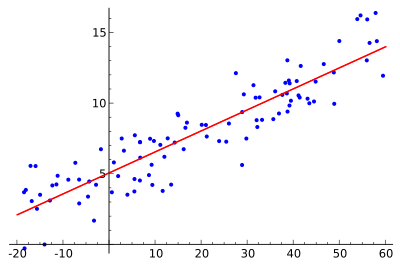
“How can we determine if there is a relationship between two phenomena?”


One of the most fundamental aspects of science is trying to find a causal relationship between two factors. To do this, we can use a statistical technique called Linear Regression which calculates how closely knit the independent and dependent variables are.

Simple Moving Averages

Simple Moving Averages

Simple Moving Averages

05/30/18

“How can we make an average of constantly changing data?”


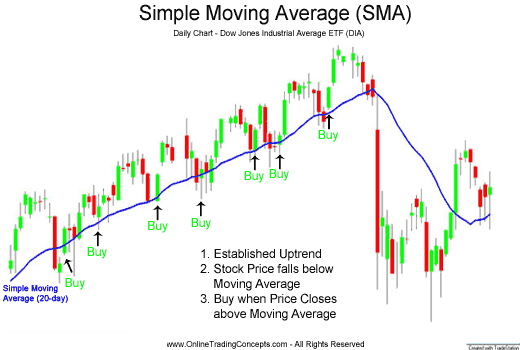
Data is all around us. And one often times we receive this data in real-time, whether it be in energy generation or the value of cryptocurrency. So how can we analyze any indicators of this data? Well, we can take a certain number of the most recent set of the data, such as the most last four data points, and simply take the average of that. This method is known as the Simple Moving Average. If the current data points are above or below the Simple Moving Average, then it will send a signal indicator.

Feature Selection

Feature Selection

Feature Selection

05/29/18

“How can we select relevant features from data?”


Engineers and Scientists (both Natural and Social) analyze data to see what causes what. Often times, they will start with a set of factors that they think that is relevant, and trim down what does not have any effect. This is known as Feature Selection and is one of the underlying tools behind statistics and machine learning.

Partial Differential Equations

Partial Differential Equations

Partial Differential Equations

05/23/18

“Are there Differential Equations controlled by more than one variable?”


Differential Equations are ubiquitous in nature. Whether it be in modeling how an object falls or how the economy rises, they always seem to have some form of application. But some of these Differential Equations are very special. Specifically, they are controlled by more than one variable. These Partial Differential Equations govern phenomena such as waves and heat conduction and require their own unique solution methods.