Category: Engineering

What Living Quarters Were Like on Sailing Ships

What Living Quarters Were Like on Sailing Ships

What Living Quarters Were Like on Sailing Ships

12/31/24

“What were living quarters like on 17th-century ships?”

It’s common for people to go on cruises for vacations, expecting luxury at sea. But in the age of the sail, ship living was anything but easy. People in lower ranks of authority would live in dense, unsanitary cabins, sleeping in hammocks. Vermin infestations were common, stitches were strong, and the diet monotonous (consisting mainly of salted meat and hard sea biscuits). Nevertheless, this was What Living Quarters Were Like on Sailing Ships.

Appropriate Technology

Appropriate Technology

Appropriate Technology

12/26/24

“How do we create technology that’s appropriate for a local society and environment?”

When people talk about modern technology, many picture items using the latest advances in electronics and sensors. However, that may not be appropriate for communities that live in remote areas or don’t have access to consistent electricity or high-tech supply chains. People may need access to Appropriate Technologies built with the local community and environment in mind. An example of appropriate technology is a machine that washes clothes without electricity using locally repairable parts for off-grid, remote communities.

Image credit: https://lifewater.org/

Drawbacks of Building With Wood

Drawbacks of Building With Wood

Drawbacks of Building With Wood

12/22/24

“What are the drawbacks of building with wood?”

Wood is a versatile material to use in buildings. However, it comes with drawbacks. Wood is highly flammable, vulnerable to moisture damage and insect infestation, changes volume fairly significantly depending on the temperature, and can crack and internally destabilize. These are the Drawbacks of Building With Wood.

Benefits of Building With Wood

Benefits of Building With Wood

Benefits of Building With Wood

12/21/24

“What are the benefits of building a structure with wood?”

Wood is a versatile material. It’s lightweight, can support its own weight well, is a natural insulator to electricity and heat, can absorb sound well, and is generally east to work with. These properties make wood a top choice for use in buildings. These are the Benefits of Building With Wood.

Heat Pump Dryers

Heat Pump Dryers

Heat Pump Dryers

12/19/24

“How can we use a heat pump to dry clothes?”

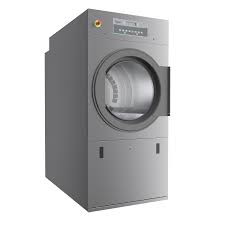
Heat pumps can transfer heat from one medium to a building space. People can also apply this technology to their laundry using Heat Pump Dryers. Heat pump dryers carry the moisture away from clothes into a tank and then absorbs the heat from said moisture to heat air to repeat the process. Heat pump dryers are incredibly popular in Europe, where they make up as much as 40% of market sales.

Image credit https://encrypted-tbn0.gstatic.com/

Benefits of Building With Brick

Benefits of Building With Brick

Benefits of Building With Brick

12/17/24

“What are the benefits of building with brick?”

People can create buildings out of a wide range of materials. Brick buildings are commonly found in places like the Northeastern US. Why did people make this choice? Well, bricks are durable, low-maintenance, fire-resistant, and good for the environment. The Benefits of Building With Brick make this material an obvious choice for countless developers.

Open Loop Water Source Heat Pump

Open Loop Water Source Heat Pump

Open Loop Water Source Heat Pump

12/14/24

“How can extract water to use in a water source heat pump?”

Water source heat pumps extract heat from water for a building. One of the most common types is to extract water from a source, extract the heat from it, and then return it to the source. This configuration is called an Open Loop Water Source Heat Pump and is one of the most common designs.

Image credit http://www.energyvanguard.com

Closed Loop Water Source Heat Pumps

Closed Loop Water Source Heat Pumps

Closed Loop Water Source Heat Pumps

12/13/24

“How can we make water source heat pumps that don’t directly extract water?”

Water source heat pumps use water to heat a building. however,  many systems rely on water extraction. How can we make one that’s more sustainable? Well, what if we were to make something that simply exchanges heat using sealed pipes? Well, this exists as Closed Loop Water Source Heat Pumps. This technology is not only more sustainable but also more resilient against winter freezing.

Image credit http://www.energy.gov