Category: Engineering

Groundwater Conservation Easements

Groundwater Conservation Easements

Groundwater Conservation Easements

10/11/25

“How can governments compensate property owners to restrict groundwater usage?”

Aquifers can deplete, and land can subside if too much groundwater is pumped. In many parts of the world, groundwater resources are controlled by private property owners. Enforcing these property owners to conserve the greater good can be difficult. One tool governments can leverage is to offer incentives to landowners, such as direct payments, credits, or tax write-offs, to conserve groundwater. One example is California’s Sustainable Groundwater Management Act to improve groundwater conservation coordination between communities and local governments. These Groundwater Conservation Easements can enable aquifer protection and sustainable land-use for regions to prosper.
Detention Time (Wastewater Treatment)

Detention Time (Wastewater Treatment)

Detention Time (Wastewater Treatment)

10/10/25

“How can we quantify the amount of time wastewater spends in a tank or basin?”

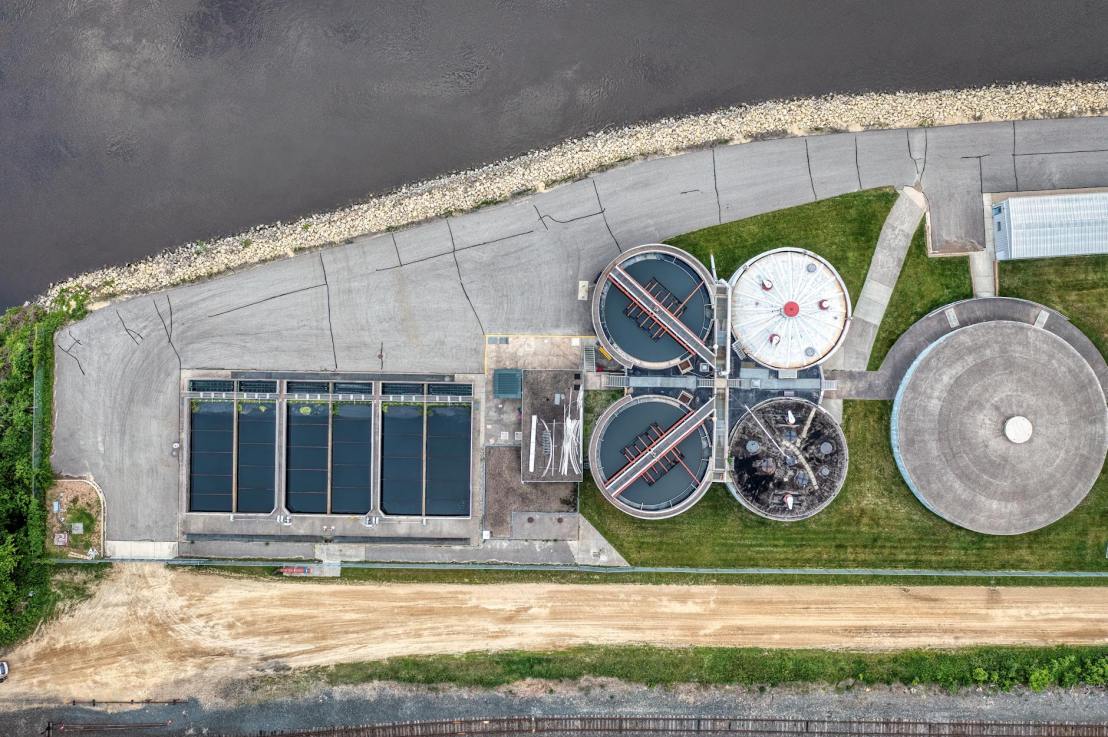
Wastewater is kept in tanks and basins as part of treatment processes. The amount of time it spends in these is given by the Detention Time, equivalent to the volume of wastewater divided by its flow rate.

Chlorine Disinfection for Water

Chlorine Disinfection for Water

Chlorine Disinfection for Drinking Water

10/09/25

“How can we use chlorine to make water safe to drink and swim?”

All sorts of pathogens harmful to human health reside in water. We need to disinfect water before we drink it. But what chemical should we use? Well, it turns out that chlorine is an incredibly useful tool. We can add chlorine in the form of chlorine gas (Cl2), sodium hypochlorite (NaOCl), and calcium hypochlorite (Ca(OCL)2) to water. The chlorine will then react with the water to form hypochlorous acid (HOCL) and hypochlorous acid (HCL). Hypochlorous acid may then dissociate into hydrogen ions (H+) and Hypochlorite ion (OCl-). The dissociation process is pH level and temperature dependent, and the HOCL and OCL- amounts are equal at pH levels of 7.5 and 20 degrees Celsius. Below a pH of 7.5, HOCL is dominant, and OCL- is dominant above 7.5. HOCL and OCL disinfect water by breaking down the cell walls and internal components of pathogens. HOCL is 80 times more effective at destroying E.coli than OCL- is. In Chlorine Disinfection for Drinking Water, there are at least some chlorine residuals left after the process ends. The amount of time and residual concentration the water is in contact with the chlorine is incredibly important for the disinfection process. Chlorine disinfection is used at a wide range of scales, from swimming pools to gargantuan treatment plants.

Lime Softening

Lime Softening

Lime Softening

10/07/25

“How can we use lime to remove magnesium and calcium ions from water?”

Water with an overabundance of magnesium and calcium ions requires water softening to prevent soap scum buildup. One way to accomplish this is to add limewater (calcium hydroxide) to the water to raise its pH level, forcing the magnesium and calcium to precipitate out by bonding with carbonate molecules. This process, often referred to as Lime Softening, is an effective way to soften water for practical use.

Image credit: https://samcotech.com/

Dissolved Oxygen

Dissolved Oxygen

Dissolved Oxygen

10/06/25

“How do we measure the amount of oxygen in water?”

Water usually contains free, unbonded oxygen molecules. This oxygen enables marine species and bacteria to breathe and facilitates wastewater treatment reactions. The amount of oxygen in water is measured as Dissolved Oxygen in mg/L. Water’s ability to hold dissolved oxygen decreases with increased salinity and temperature.

The New York-New Jersey Harbor and Tributaries Study (HATS)

The New York-New Jersey Harbor and Tributaries Study (HATS)

The New York-New Jersey Harbor and Tributaries Study (HATS)

10/05/25

“How is the New York-New Jersey Harbor region preparing for coastal storms?”

Hurricane Sandy shook the New York-New Jersey region in 2012. Dozens of lives, tens of thousands of homes, and billions of dollars were destroyed by the storm. This prompted many localities to reconsider how they will prepare for the next big storm event. The New York-New Jersey Harbor region is working with the U.S. Army Corps of Engineers to investigate risks and amelioratory actions through The New York-New Jersey Harbor and Tributaries Study (HATS). The HATS project looks to identify water resources problems and opportunities, existing and future conditions, and plan formulation/evaluation/comparison/selection. The US Army Corps tentatively plans to focus on the East Riser Ditch Channel in New Jersey and the Harlem River and Oakwood Beach in New York. 

Soil Boring Tests

Soil Boring Tests

Soil Boring Tests

10/04/25

“How can we determine the conditions and composition of the soil beneath our feet?”

Construction projects are usually built over soil. The soil’s properties have a sizable impact on the project’s design. To understand the soil conditions and composition, people can drill a hole into the ground, extract a soil sample, and then analyze the results. These Soil Boring Tests are an essential part of construction activities, helping people understand a multitude of important information, ranging from stormwater infiltration rates to support stability.

Image credit: https://punchlistzero.com/

Hard Water

Hard Water

Hard Water

10/03/25

“What’s special about water with high mineral ion content?”

Water will change depending on what it’s exposed to. When water percolates through limestone, chalk, or gypsum deposits, it might pick up ions such as calcium and magnesium. When this Hard Water comes into contact with soap, the fatty acids can react with the minerals to create a chalky precipitate that sticks to surfaces, leading to difficulty in cleaning, plumbing, appliance performance, and HVAC heating system efficiency. Water softening can reduce a water’s hardness

Image credit: https://baileyokc.com/

Collect Pond NYC

Collect Pond NYC

Collect Pond NYC

10/02/25

“How did a former pond have a massive influence on the development of Manhattan?”

When we think of Manhattan, we imagine tall skyscrapers resting upon impervious concrete and flanked by hordes of honking cars in one of the most densely populated parts of the world. But hundreds of years ago, when Manhattan was under its rightful indigenous land stewardship, the island was mostly lush forest with plentiful fresh water. On the lower end in what is now Chinatown was a body of water that the colonizers later called Collect Pond. The A subdivision of the Lenape people lived in a settlement by the southwestern shore of Collect Pond. A while after the land was stolen by Europeans, the pond was used for fishing and later a summer picnic and winter ice skating rink. Businesses later discharged their contaminated wastewater into the pond, resulting in severe public health hazards. The city decided to drain Collect Pond by building a canal to the north and filling the pond with soil in 1811. This development paved the way for the creation of the modern Canal Street in New York City, forever altering the structure of the metropolis.

Image credit: https://upload.wikimedia.org/