Category: Engineering

Sewer Capacity

Sewer Capacity

Sewer Capacity

12/05/25

“How can we represent the total amount of wastewater a sewer can handle?”

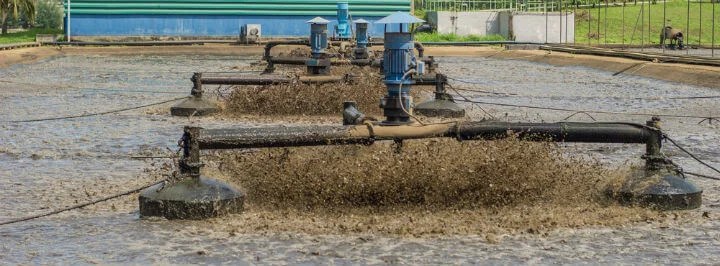
Sewers are one of the most important sanitary inventions. However, they can only handle a certain amount of wastewater, called Sewer Capacity, before they fail. Sewer capacity is dependent on a multitude of factors, such as pipe length, diameter, slope, material, as well as existing blockages and water speed. Sewer capacity may require expansion if a city is rapidly expanding.

Stormwater Management Programs (SWMP)

Stormwater Management Programs (SWMP)

Stormwater Management Programs (SWMP)

12/03/25

“How do municipalities plan for stormwater management?”

Nearly every part of the world receives stormwater, whether it’s the Syrian desert or the Amazonian Rainforest. The runoff from this stormwater can carry pollutants from municipalities to nearby water bodies. Towns and cities are required to devise a plan for managing stormwater pollution transport. In the U.S., these plans are called Stormwater Management Programs (SWMPs). The Clean Water Act requires public entities that operate MS4 systems to develop stormwater management programs. 

Impaired Water Bodies

Impaired Water Bodies

Impaired Water Bodies

12/02/25

“How does the EPA classify water bodies that don’t meet water quality standards?”

Water bodies all over the world have different levels of pollution. In the U.S., some water bodies are so polluted that they don’t meet water quality standards, leading the EPA to classify them as Impaired Water Bodies. Impaired water bodies are eligible to have a total maximum load pollution limit and environmental review for projects that may impact them to protect against further degradation.

Grade Separation

Grade Separation

Grade Separation

12/01/25

“How can we separate different transportation paths by placing them at different heights?”

Transportation routes are one of the most fundamental parts of how people move around, whether it’s a pedestrian street, a set of train tracks, or a highway. However, sometimes we may not have enough space for all paths to run together. So how can we use our engineering and planning mindsets to solve this? Well, what if we were to place different transportation paths at different heights? With Grade Separation, the same space can hold more potential paths. Examples of grade separation include the pedestrian and car bridges over 580 in Oakland, the bicycle lanes in New York City’s Rockaway Corridor, and the NH 248-BB in India.

Baghouse Filter Pulse Jet Cleaning

Baghouse Filter Pulse Jet Cleaning

Baghouse Filter Pulse Jet Cleaning

11/30/25

“How can we clean baghouse filters using compressed air?”

Baghouse filters are one of the most common industrial air purification technologies. However, they require regular maintenance to keep operations effective. One of the most popular methods is Baghouse Filter Pulse Jet Cleaning, where quick bursts of compressed air are sent down the center of filter tubes to create a physical shockwave and shake debris off. The technique’s simplicity has led to widespread adoption in baghouse filter systems worldwide. Infrastructure planners must keep in mind that pulse jet cleaning may be energy-intensive and require regular maintenance.

Image credit: https://www.nederman.com/

Baghouse Dust Cakes

Baghouse Dust Cakes

Baghouse Dust Cakes

11/29/25

“What are the particulate cakes that form on the perimeter of baghouse fabric filters?”

Baghouse filters are one of the most popular industrial air purifying systems on the planet. They work by sucking polluted air through fabric tubes that catch particulate matter. Over time, the particulate matter will pile up into Baghouse Dust Cakes. Baghouse dust cake buildup improves the efficiency of baghouse filter systems because the particles can attract similar particles.

Baghouse Filters

Baghouse Filters

Baghouse Filters

11/28/25

“How can we use fans and fabric tubes to filter over 99 percent of particulate matter?”

Many industrial facilities release air with particulate matter that’s deadly for humans. So how can we use our engineering mindset to clean the waste air release? Well, what if we were to use a giant fan attached to metal tubes to suck up the air, and then flow it through a series of tubular fabric filters that capture the particulate matter as the air passes through? Furthermore, what if we attach a physical waste bin called a hopper below the filters to capture particles after they’re flushed out of the fabric tubes? Well, this is the idea behind Baghouse Filters. Baghouse filters are so effective that they can remove over 99 percent of all particulate matter in an airstream. It’s no wonder that baghouse filters are some of the most popular industrial air cleaning mechanisms on the planet.

Image credit: https://www.nederman.com/

Junctions (Transportation)

Junctions (Transportation)

Junctions (Transportation)

11/27/25

“How can we describe the places where two different travel paths meet?”

Travel paths are the core of moving around, whether it’s a highway interchange or a train on a multilane path. The intersections of travel paths are called Junctions. Junction design is vital for transportation engineering since this could drastically affect traffic, commercial viability, technical feasibility, and travel flow coordination.