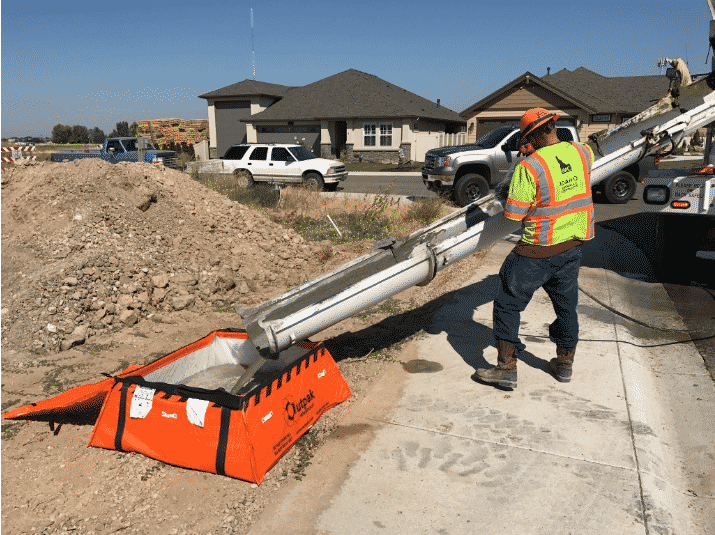
“How do we dispose of leftover concrete at the end of a construction workday?”
Concrete is a vital part of modern-day construction activity. But what do we do with the spare concrete leftover at the end of a construction workday? If we don’t do anything with it, we risk polluting soil and waterways. Well, what if we wash concrete out of all tools and chutes and place the waste into a special disposal container? Well, this is the Concrete Washout process, and it’s how construction operators ensure they don’t harm the surrounding environment and community with concrete waste.
“How can we create underground storage chambers that infiltrate stormwater into the earth?”
Stormwater can overwhelm any municipality, whether it’s in the Borneo rainforest or the Kalamari Desert. People need a way to manage it as it enters. So what if we were to use a pipe to collect stormwater from a roof or catchment basin, place it in an underground tank filled with filtering aggregate material punctured by void spaces for the water, and encase it in a semi-permeable structure that allows water to infiltrate out? Well, this is the idea behind Dry Wells. Dry wells can mitigate stormwater flooding and help recharge nearby aquifers. Operators should install dry wells away from low hydroconductive soils, high groundwater table aquifers, polluted sites, and building foundations.
“How can we use floatable curtains to prevent turbidity from spreading in bodies of water?”
Sediment runoff from construction activities can spike turbidity levels in nearby bodies of water. Once enough sediment breaches into a body of water, it can envelop everything. So what if we were to build a floating curtain barrier to contain the turbidity to a single place? Well, this is the idea behind Turbidity Curtains. Turbidity curtains have three parts: a top floatable piece, a protective skirt in the middle that prevents turbidity from spreading, and a ballast at the bottom to stabilize the curtain. We can apply turbidity curtains to a variety of situations beyond construction activity, from aquaculture to oil spill containment.
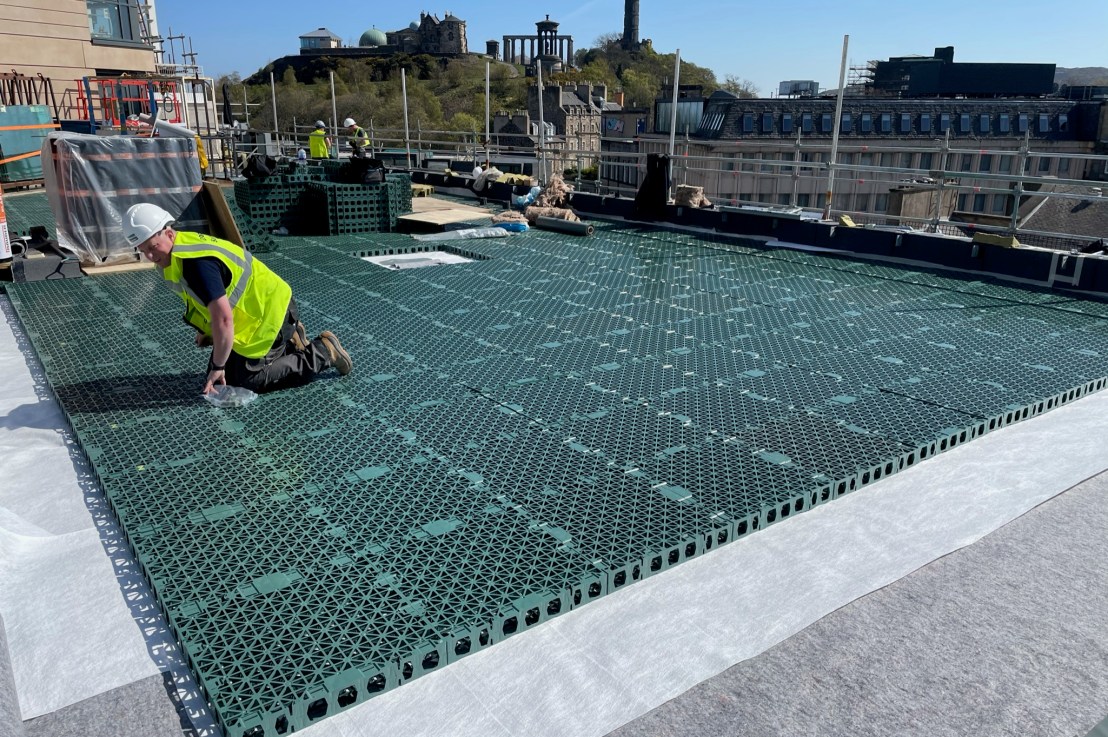
“How can we develop roofs designed to store rainwater during storms?”
Rainwater during storms will fall on roofs before moving to the ground. If too much water is dumped on the ground, then it might overwhelm local infiltration capacity and flood the area. So what if we were to develop roofs that could hold rainwater during storms and then slowly release and/or evaporate it once the storm has passed? Well, this is the concept behind Blue Roofs. Blue roofs are an excellent asset for flood control. Reducing the intensity of stormwater can decrease the occurrence of combined sewer overflows and increase water conservation.
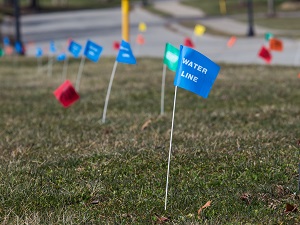
“How do utilities mark where their underground infrastructure is during excavation?”
Utility infrastructure is often underground, such as sewer pipes and electric power lines. This means that during construction excavation, people need to mark where the existing infrastructure is to avoid damage. The American Public Works Association has developed Utility Excavation Color Codes to visually indicate on-site locations of infrastructure, such as red for power lines or blue for potable water. Utility operators are obligated to mark their infrastructure location using paint and/or flags in their assigned colors. Utility excavation color codes help protect construction professionals and the general public from preventable accidents.
“How can we improve soil health by applying a top layer of materials?”
People have been stewarding plants since the dawn of agriculture. One of the biggest determinants of vegetative productivity is soil quality. The higher the quality of the soil, the better the planting outcomes achieved. So what if we could apply a top layer of material to improve soil quality? Well, people have been doing through Mulch. Mulch materials improve soil quality through better soil moisture conservation, reducing weed potential, and enhancing fertility. Examples of mulch include grass clippings, compost, and hay.
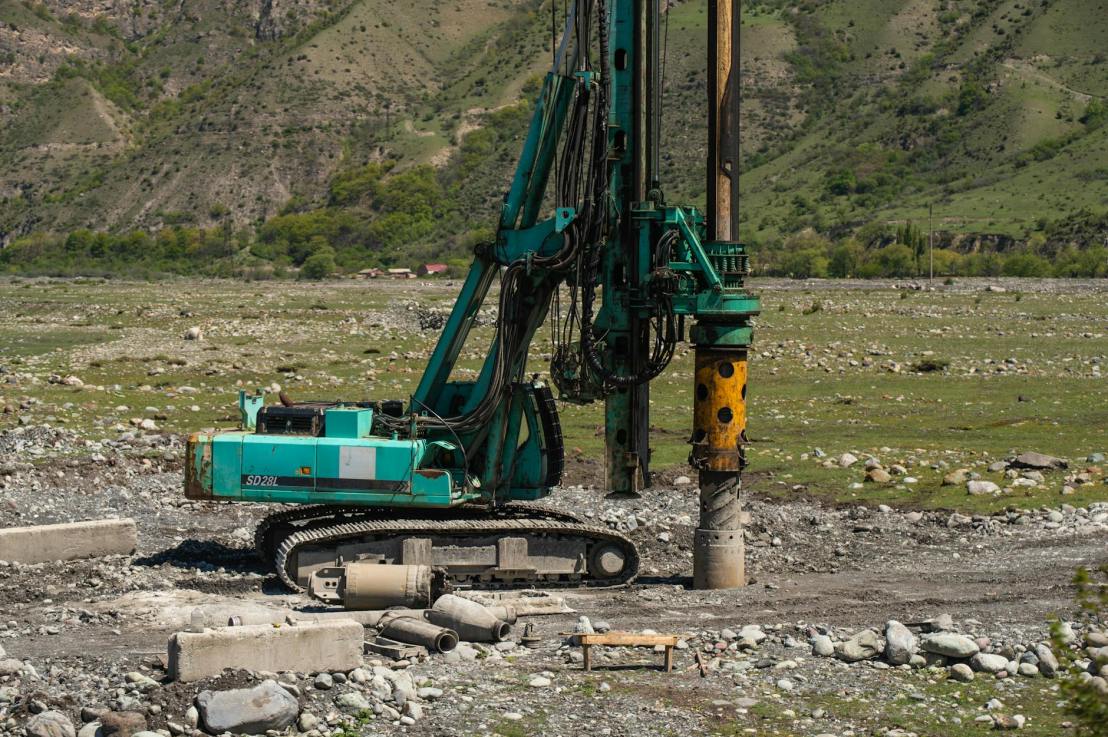
“How do we encode soil conditions from a soil boring test?”
Engineers perform soil boring tests to understand subsurface properties. This information is categorized into Soil Boring Logs. Soil boring logs detail the subsurface lithology, rock density, grain size, and moisture content. Soil boring logs also provide information on groundwater and aquifers encountered in the drilling process.
MS4 systems are a wonder of modern technology. In the U.S., whoever owns and operates these systems, whether it’s a city, county, or some other entity, are designated as an MS4 Operator. MS4 operators are legally required to develop and maintain a stormwater management program and to review stormwater pollution prevention plan applications.
“How do municipalities plan for stormwater management?”
Nearly every part of the world receives stormwater, whether it’s the Syrian desert or the Amazonian Rainforest. The runoff from this stormwater can carry pollutants from municipalities to nearby water bodies. Towns and cities are required to devise a plan for managing stormwater pollution transport. In the U.S., these plans are called Stormwater Management Programs (SWMPs). The Clean Water Act requires public entities that operate MS4 systems to develop stormwater management programs.




 Isaac's Science Blog