“How can we combine social and physical vulnerability indexes into one metric for adaptation?”
In adaptation research and planning, social and physical vulnerability indexes are often used discretely from one another. However, this need not always be the case. Using the proper statistical methodologies, both of these can be combined into a single Social-Physical Vulnerability Adaptation Index. With this, we can get a complete picture of how vulnerable a geographic territory or population may be to climate events. For example, a wealthy city in the WUI may be highly physically vulnerable to wildfire but not socially, while the opposite may be true for a port town.
How Economic Migration Will Become Tied With Climate Migration in the Future
01/11/21
“How will economic migration be tied with climate migration in the future?”
Economic and climate migration is often talked about as if they are two separate phenomena. However, in the future climate change will affect every aspect of our economic structure. Places that were once prosperous may become flooded or drought-ridden, ruining the local economy and forcing whole populations to move en-masse in search of new opportunities. This is How Economic Migration Will Become Tied With Climate Migration in the Future.
Climate migration is going to become one of the most prominent topics of discussion in the future. However, nations will need to find ways to accommodate this influx. One way to handle this will be through Climate Migrant Visas, or special programs to help get climate migrants into a country.
“How will climate migrants form their own community enclaves in the future?”
Climate migration is going to ramp up in the future. To keep their community and culture intact as well as survive economically, distinct Climate Migrant Enclave communities are going to be formed.
“How can we use scenario planning for climate migration?”
The increasing ferocity of disasters and deteriorating living conditions is going to accelerate climate migration as we’ve never seen before. Areas that will be host to incoming communities will need to plan to accommodate all of these new residents. One useful tool can be scenario planning, in which different hypothetical scenarios are weighed against each other for future impact. This is why Climate Migration Scenario Planning will be so useful.
Using Statistics to Distribute Climate Adaptation Funding
01/03/21
“How can we use statistics to distribute climate adaptation funding?”
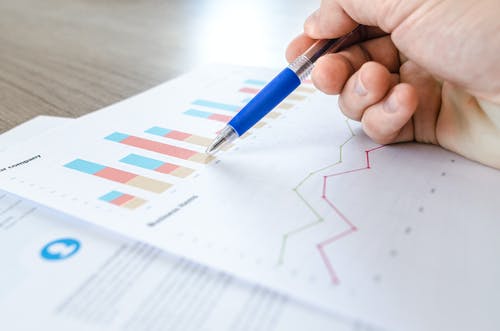
Climate adaptation projects require funding tailored to the specific needs of each environment. For example, municipalities in Northern California may want to see if they will be more affected by sea-level rise or wildfires. Trying to guess how to distribute these funds can be difficult. To solve this, statistics could be used to see which events these municipalities will be most vulnerable to and how to proceed accordingly. Using Statistics to Distribute Climate Adaptation Funding.
Why Quick Bridge Construction Is Beneficial for Resilience Capacity Building
01/01/21
“Why is quick bridge construction beneficial for resilience capacity building?”
Bridges allow for one population to move from one location to another with ease. However, these can take time, and the effects of climate change such as flooding are only speeding up. This can be solved with quick bridge construction methods. This is Why Quick Bridge Construction Is Beneficial for Resilience Capacity Building.
“How can sprawl lead to increased wildfire vulnerability?”
Suburban sprawl leads to all types of environmental destruction. But the most lethal just may be the one that affects people the most. By sprawling into wildfire-prone territory, people risk themselves getting damaged by such events, just creating a connection between Sprawl and Wildfire Vulnerability.







 Isaac's Science Blog