Category: Chemistry

Filter Backwashing

Filter Backwashing

Filter Backwashing

09/25/25

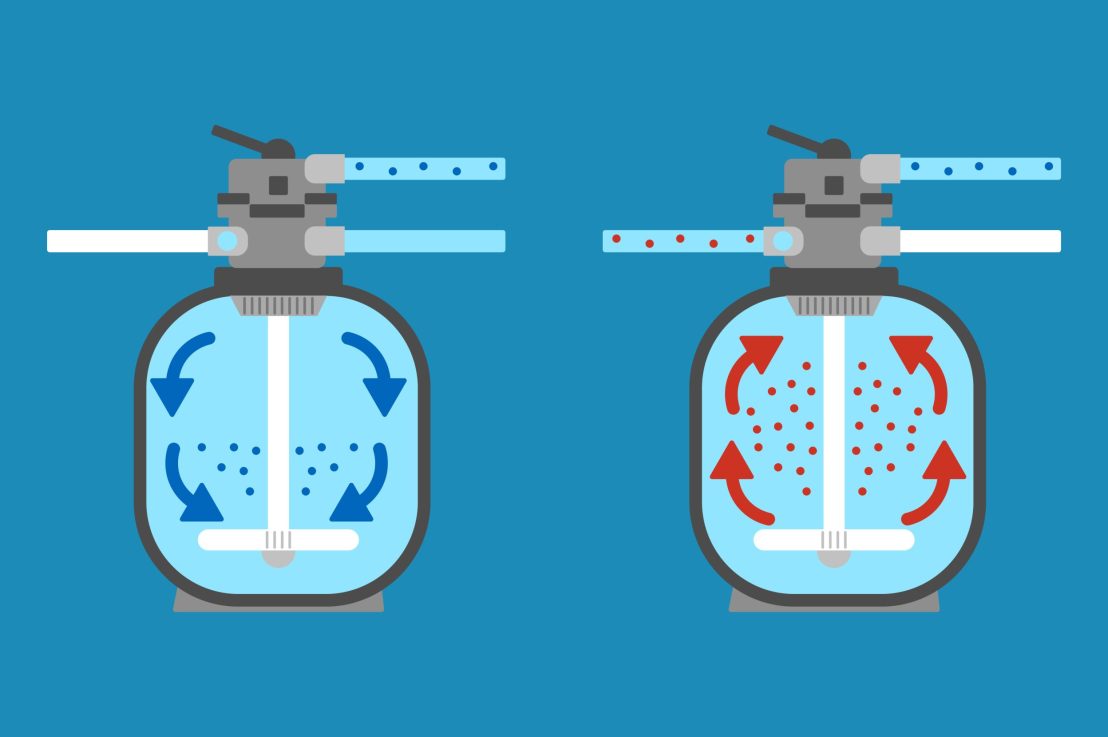
“Why can we clean filters by pumping water backwards?”

Filters collect trapped material over time. Sometimes this piles up so much that it hampers further treatment. To solve this, infrastructure operators can pump water in the other direction to remove water from filtration. This Filter Backwashing is vital for treatment maintenance.

Image credit: https://www.aquabluepools.net/

Rapid Mixing for Water Treatment

Rapid Mixing for Water Treatment

Rapid Mixing for Water Treatment

09/24/25

“Why is it important to rapidly mix water at the beginning of the coagulation process?”

Coagulation mixes coagulants with suspended particles to form larger, charge-neutralized molecules. However, the mixing needs to occur quickly (usually less than a minute) to ensure the coagulants are evenly distributed and the suspended solids are destabilized to effectively clump together during flocculation. This Rapid Mixing for Water Treatment is the first part of the larger coagulation-flocculation process, and is an example of how the brilliant systems that underpin everyday life for many.

Image credit: https://haoshpumps.com/

Alkalinity

Alkalinity

Alkalinity

09/23/25

“What’s the equivalent of inertia for resisting change in acidity in water?”

Water of different makeups reacts to a change in acidity in different ways. Just like how objects have inertia for resisting change in motion, water has Alkalinity for changing acidity levels. The higher a water’s alkalinity, the easier it can neutralize acid. The molecules carbonate (CO3), biocarbonate (HCO3), and hydroxide (OH) contribute to a substance’s alkalinity. Alkalinity is measured in milliequivalents per liter.

Temporary Water Hardness

Temporary Water Hardness

Temporary Water Hardness

09/22/25

“What’s a special type of water hardness that can be removed by boiling and adding lime?”

Water hardness comes from having too much dissolved magnesium and calcium in water. But some types of water hardness are easier to soften than others. If the magnesium and calcium are attached to bicarbonates, then they can be removed through boiling or adding lime. This type of water hardness is called Temporary Water Hardness. 

Molarity

Molarity

Molarity

09/17/25

“How can we quantify the number of moles in a liter of a solution?”

Chemical solutions can contain a wide variety of moles. Some may be dense, others may be sparse. We can quantify this by determining the Molarity of a substance, or the number of moles of a solute in a single liter of solution, symbolized by the equation Molarity (M) = moles of solute/liters of solution. Molarity is fundamental for computing chemical calculations.

Equivalents (Redox Reactions)

Equivalents (Redox Reactions)

Equivalents (Redox Reactions)

09/16/25

“How can we quantify the amount of electrons exchanged per ion/molecule of reacting substance in a redox situation?”

Oxidation-reduction reactions involve an exchange of electrons between different ions and/or molecules. This exchange is dependent upon how many electrons are exchanged per ion/molecule. The number of electrons exchanged per substance is quantified as an Equivalent (Redox Reactions). Equivalents allow us to simplify calculations for identifying necessary chemical materials.

Adsorption

Adsorption

Adsorption

09/06/25

“How can fluid molecules stick to the surfaces of objects?”

Fluid molecules can separate from the main “body”. For some molecules, they might stick to the surface of a solid or liquid through a process called Adsorption. Adsorped molecules usually create a film on the surface they stick to. Examples of adsorption include activated carbon in water filters that take contaminants, charcoal that removes odors in a fridge, and filters in gas masks. 

Water Treatment Residuals

Water Treatment Residuals

Water Treatment Residuals

08/18/25

“What are the residuals left behind by drinking water treatment?”

Treating water for toxins is a vital part of modern infrastructure. However, these processes will leave behind Water Treatment Residuals such as coagulants or sediments. Water infrastructure engineers must handle these residuals to create a healthy, sustainable system.

Mixed Liquor Suspended Solids

Mixed Liquor Suspended Solids

Mixed Liquor Suspended Solids

06/29/25

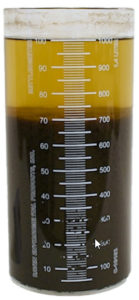
“How can we represent the total mass of suspended solids in the aeration tank of an activated sludge process?”

Activated sludge treatment plants are one of the most widely used treatment systems in the world. These systems use suspended microorganisms in sludge to “eat” the organic matter present in the influent water. The total mass of suspended solids per volume in the influent-sludge mixture is quantified as Mixed Liquor Suspended Solids. Measuring the amount of mixed liquor suspended solids is useful for designing targets for treatment systems.

Image credit: https://www.ebsbiowizard.com/