Category: Chemistry

Thermoplastics

Thermoplastics

Thermoplastics         

        04/22/16


Thermoplastics are plastic materials that become pliable once a certain temperature threshold has been reached and revert back to being rigid once cooled to a certain temperature. The amorphous nature of thermoplastics are less susceptible to chemical attacks and environmental stress cracking due to lacking such a clearly defined structure. Teflon is an example of an application of thermoplastics

Thermal runway

Thermal runway

Thermal runway 04/10/16


Have you ever wondered if an increase in temperature could cause a further increase in temperature? This simple idea is the basis of a phenomena known as a thermal runway. In Chemical Engineering, a thermal runaway can happen if a reaction rate increases due to an increase in temperature, which causes a further increase in temperature and spins out of control. In Electrical Engineering, joule heating may diminish resistive elements which further increases current which further increases heating.


If one thinks about it, couldn’t this phenomena simply be modeled with differential equations?

Spontaneous combustion

Spontaneous combustion

  Spontaneous combustion    04/06/16


Spontaneous combustion is when an object catches fire through the effect of self-heating. First, objects with low ignition temperatures begin to release heat. If such heat is unable to escape, then the heat re-enters the system. The combustion temperature will rise, and eventually if ignition point is reached and an oxidizer is present, then spontaneous combustion will occur. Hay is an example of an object that reaches combustion quickly.   

Amorphous solid

Amorphous solid

                   Amorphous solid            03/29/16


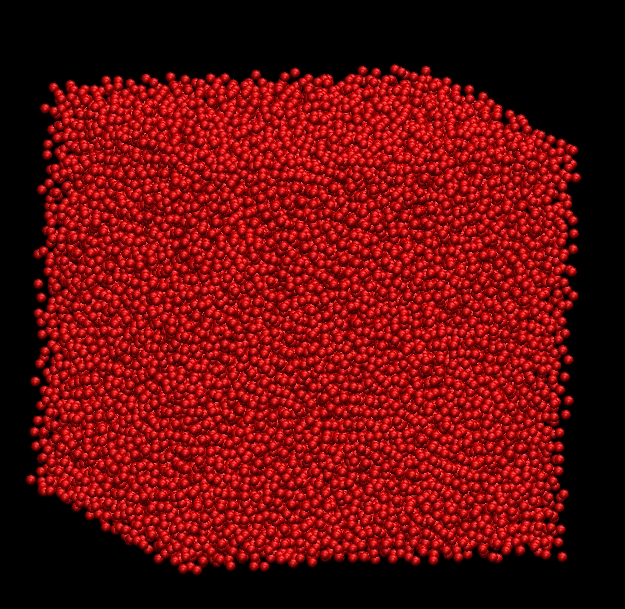
Amorphous solids are quite peculiar materials in the natural worlds. An Amorphous solid is a solid with no solid definition of internal molecular structure, instead, everything mostly bounces around. It is said that Amorphous solids are on the border between a solid and a liquid instead of truly being one or another. To be precise, Amorphous solids have no precise GEOMETRIC ordering. Glass and wax are examples of Amorphous solids

Glass

Glass

             Glass           03/28/16


One of the most fascinating physical substances known to humanity is one that is probably seen my the majority of the world everyday. This material is known as glass, and we shall examine what makes it so special.


Glass begins it’s life in the form of sand. If one were to raise the temperature of sand to 1700 Centigrades, then it melts and obtains a peculiar internal structure that results in it becoming what material scientists like to refer to as an Amorphous solid. The manufacturing process for glass often begins with such sand being mixed with recycled products and soda ash and limestone in a massive furnace. The soda lowers the amount of energy needed to melt the sand, but an unfortunate side-effect is that the glass that is produced through such means is often of very poor quality, so limestone is often added to prevent this from happening. The resultant glass is termed Soda-lime-silica glass in honor of all of the materials that went into it


Glass is so popular because it has a sublime domain of applications. Glass is chemically inert, so it will react with very little substances making it a prime candidate for use as a material holder such as in glasses Glass is transparent so it is easy to see through and glass is also fairly resistant to thermal expansion so one does not have to worry too much about glass breaking or swelling due to a heat wave. In addition, glass is a highly recyclable material


Glass is truly a most fascinating material. Imagine what human civilization would be like if glass lost one of it’s useful facets, such as chemical inertness or transparentness, then all of society would be simply turned upside down! I want you to ponder how glass and engineering make our world possible