Category: Biology

Spores

Spores

Spores

06/20/17

“How do fungi and ferns reproduce?”


There are many forms of asexual reproduction. One form commonly employed by fungi and ferns are known as spores. Spores are analogous to seeds in plants, in the fact that they are a self-contained environment for reproduction. What makes spores so special is that they are often unicellular. When spores are released into the wild, all they need is a suitable environment to grow and thrive!

Why you get sick from reading in a car

Why you get sick from reading in a car

Why you get sick from reading in a car

06/19/17

“Why do you get sick while reading in a car?”


Have you ever noticed how you get sick when you read in a car? Well, you have nothing but your own body’s physiology to blame. To estimate your location, your body receives some of its spatial information from its inner ear and eyes. When you are concentrating on a book, all you see is the stationary tome, but your ears will be listening to cracks, bumps, and changes in velocity. This incongruity of perceptual information will cause your brain to become disoriented and induce motion sickness. To avoid such an issue, try looking out of the window from time to time during the vehicular voyage.

Coal Worker’s Pneumoconiosis

Coal Worker’s Pneumoconiosis

Coal Worker’s Pneumoconiosis

06/07/17

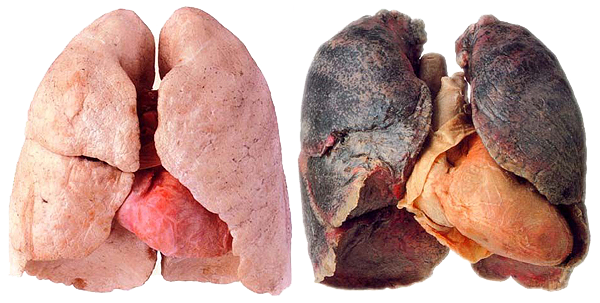
“What does coal do to the lungs?”


Coal dust does not decompose in a human body. And since coal miners have to sustain long-term exposure inhaling such material, it would only be logical that the coal dust would build up and permanently damage the body. Specifically, such individuals would develop something known as Coal Worker’s Pneumoconiosis, also known as Black Lung for the dark tint that the organs develop. Symptoms of Black Lung include shortness of breath, chronic cough, coughing up black mucus, high blood pressure, and heart problems. Coal Worker’s Pneumoconiosis is just another reminder that relying on outdated technologies will only destroy humanity and hinder progress.

Aeroponics

Aeroponics

Aeroponics

04/20/17

“How does NASA grow plants suspended in the air?”


With the advent of hydroponics, the roots of plants have been liberated from the soil, allowing for far more sustainable agricultural systems to develop. One of these methods actually involves suspending the roots of the plant in the air and then filling the environment with a nutrient mist. Scientists have termed this process aeroponics, and allows for a higher density yield and allow for the roots to more efficiently absorb oxygen. However, one drawback is that this system must be constantly sprayed with a 35% hydrogen peroxide to prevent the spread of impinging fungi and bacteria. NASA uses aeroponic systems to grow food for astronauts on year long missions.

Hydroponics

Hydroponics

Hydroponics

04/19/17

“Can we grow plants without soil?”
For the vast majority of human civilization, human agriculture has relied on the soil it rested upon to grow plants. However, with the ascent of global urbanization, global warming, and soil acidification, we must find novel ways to generate agriculture in order to survive. So what is one way we can achieve this? Well, let’s use our engineering mindset to find out. One of our major roadblocks is that we need to rely on soil material to grow our plants, so what if we were to create a way to grow such lifeforms without the use of soil? Well, a fascinating technology known as hydroponics accomplishes this using a technique in which minerals in a water solute are directly substituted for soil, therefore enabling sufficient nutrition for plant growth. Hydroponics is being used all over the world to create urban agricultural systems, and might become a major agricultural powerhouse in their own right one day!

Microscope optics

Microscope optics

Microscope optics

02/23/17

“How exactly do microscopes work?”
Microscopes are one of the most important inventions that humanity has ever created. With these devices, we can view the microscopic world in unparalleled detail, enabling accurate observations for a myriad of scientific fields. However, have you ever wondered how they worked in the first place? Well, let’s use our engineering mindset to think about it. Before we begin to work on this problem, let’s see if a similar problem has been solved before. If you research hard enough, then you will probably realize that our fundamental problem, taking a small image and magnifying it to a larger one, has been solved by refracting telescopes already. Believe it or not, optical microscopes use the exact same setup as these telescopes! This shows how discoveries in one field of science can be applied to a completely different one as well, and through intercommunication can both field benefit.

The scientifically optimal way to cook a Turkey

The scientifically optimal way to cook a Turkey

The scientifically optimal way to cook a Turkey

11/24/16

“What is the most efficient way to cook a Turkey?”

Thanksgiving is a most special holiday in the hearts of Americans. It represents a time when friends and family coming together to  participate in social activities and dine on delicious food. And the most important food of all of Thanksgiving is the Turkey, with it’s rich, savoring flavor. However, cooking a Turkey is not always an easy task. Specifically, the plump and rounded shape of a Turkey is most inefficient for heat conduction, forcing it to have a high cooking time (especially if one wants to cook the Turkey to an internal temperature 74 degrees celsius to prevent salmonella).  So how can we apply our scientific knowledge to solve this problem? Well, let’s think about it. We know that the temperature of objects raise based upon the amount of heat added, and that if an object has more surface area, then it has more heat it will receive. So how about we do just this? First, let’s take the Turkey out. Then, flip it over, and cut off the back bones. Subsequently, flip it over again, and apply pressure to break the breastbone. Once this has been completed, you can put the Turkey. Chefs have termed this process the spatch cocking method, and it can save the chef anywhere from 45 to 80 minutes of cooking time!.

Finally, in the Thanksgiving spirit, I would like to give a big thanks to Sarah Kaplan of the Washington Post for teaching the world about this most innovative method.


What makes something edible?

What makes something edible?

What makes something edible?

11/13/16

“Why is it that my body can digest some foods and not others?”

As a human in order to survive, you probably need to consume food everyday.But in order for this to happen, our bodies must be able to break down this food to extract useful materials such as amino acids for protein. If the food material that we consume is unable to be broken down (or if the material contains toxic elements), then it will be rejected.

Adhesive forces

Adhesive forces

Adhesive forces

11/07/16

“What causes liquids to stick to surfaces?”


Have you ever wondered why liquids seem to have sticky properties? Well, let’s think about it. We know that molecules of a liquid substances are attracted to each other through the phenomena of intermolecular forces, but since all materials in the universe are made up of molecules, wouldn’t it be logical that molecules of these liquid substances could also be attracted to molecules outside of the substance? This is the fundamental idea behind adhesive forces. Because of adhesive forces, liquids have the ability to “stick” to the containers in which it rests. And most peculiar application of adhesive forces are utilized by the insect known as water striders, who can literally glide upon water.