Author: Isaac Gendler

Molniya orbit

Molniya orbit

Molniya orbit        02/08/16
Molniya orbits are of of the most peculiar discoveries made by the old Soviet Union. As shown below, Molniya orbits have a highly eccentric Apogee and Perigee, and consequently they spend a large amount of time in orbit around certain latitudes (north being the most common ones). Molniya orbits were used by the Soviet union for communication satellites since the highly eccentric orbit meant that it spent a large amount of time in the Northern hemisphere, allowing for excellent communications coverage for the Soviet’s geographic position.

Geostationary Orbit

Geostationary Orbit

Geostationary Orbit  02/07/16
One of the most marvelous discoveries of modern Science and Engineering is the discovery and application of geosynchronous orbits. A geosynchronous orbit is a specific type of orbit in which the period of rotation around the earth is equal to the Earth’s revolution around its axis, an entire day in other words. This means that the orbiting satellite will stay above the same relative position of the earth for the whole time. This type of orbit is often used for telecommunication satellites. Unfortunately, such orbits can only be approximations due to impingement from solarwinds, geographic height shifts, solar wind, and gravitational influence of the moon.

Space elevators part II

Space elevators part II

   Space elevators part II         02/06/16
Space elevators were conceptualized by the legendary Russian Scientist and Enginner Konstantin Tsiolkovsky. Space elevators can possibly work on less gravity intensive celestial bodies such as Mercury and Earth’s moon. Kevlar is one possible material to be used for this application. A space elevator can put objects in geostationary orbit, which means that objects can orbit the earth at the earth’s rotation speed.

Space elevators part I

Space elevators part I

Space elevators part I  02/05/16
Space elevators are some of the most riveting concepts in the field of Mechanical Engineering. Imagine if there was an elevator so tall that it broke the ionosphere and into geostationary orbit. Transporting objects across this medium would make rockets completely unavailing, and consequently would save an inordinate amount of energy. There is only one issue with this. In respect to earth’s gravity, there is no known material extant that is strong enough to support it’s own tensile weight.

Protons

Protons

  Protons   02/04/16
Symmetry is one of the most omnipresent facets of the universe. Protons are the natural counterbalance to electrons. Protons are positively charged particles that surround the nucleons in the atomic nucleus. The number of protons are what determines an element (for example, water has one proton, if another proton is added, then it becomes Helium, and so on). Protons balance out the electrons, if there is an imbalance, then then the atom is called an ion. Ions are considered “positive” (cation) if there is a dearth of electrons ( since the total positive charge of the protons will outbalance the total negative charge of the electrons) and vice versa for negatively charged ions (anions).

Electrons

Electrons

Electrons  02/03/16
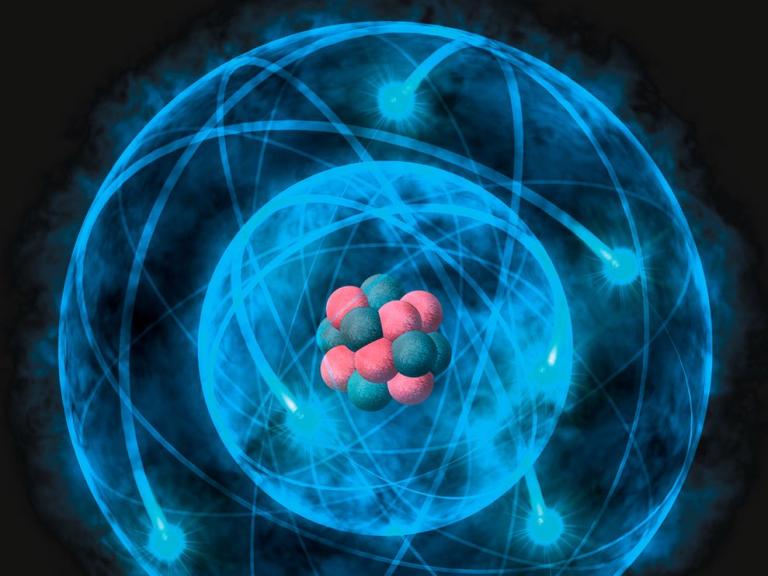
Electrons are some of the most flummoxing part of the universe. Electrons are subatomic particles with a negative charge. Contrary to popular notion, electrons do not orbit the nucleus of the atom, but as a consequence of the laws of Quantum Mechanics, they form a probability shell around the nucleus of an atom, with the probability density being weaker the further away from the distance is to the center. When a molecule loses or gains an electron, it becomes an ion, which means that it now has a net charge.

How clouds are formed

How clouds are formed

How clouds are formed         02/02/16

How are clouds formed? This a very interesting question for such habitual objects. Clouds are intrinsically floating droplets of water in the sky. Clouds start their lifecycle as water vapor (the gaseous form of water vapor), formed from the evaporation of water from nearby aquatic bodies. As a byproduct of the laws of physics, when water rises in the atmosphere it loses heat and is under less pressure. Eventually, it becomes so cold that the water vapor begins to condensate and becomes water droplets who supercombine to become a cloud

Perpetual motion machines

Perpetual motion machines

Perpetual motion machines                 02/01/16

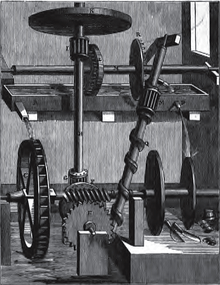
One of the most common statements of crankery among pseudoscientists is that of Perpetual motion machines. A perpetual motion machine is a machine which can operate indefinitely with 100 percent energy efficiency, meaning that all of the energy that enters the system will leave the system in the same way. Perpetual motion machines are a glimpse at mankind’s quest for ultimate symmetry and utility in the universe. Perpetual motion machines are in complete violation of the second law of thermodynamics, as energy can only be debased through use and can never be fully preserved. Therefore, anytime you see something claim that they have made free energy, they haven’t.   

Second law of thermodynamics

Second law of thermodynamics

               Second law of thermodynamics      01/31/16
One of the most enigmatic yet intriguing facets of fundamental physics is the second law of thermodynamics. The second law dictates a seemingly simple yet consequential rule, that the entropy in all systems can only increase. Entropy is the measure of disorder in a thermodynamic system, think of it like if there was one room half filled with people wearing red shirts and half blue shirts, with one room they are split evenly half and another they are strewn around in a desultory manner. The second law states that all systems start out like the former and end up like the latter. The dire implications of this quandary is that a perpetual motion machine is completely impossible any any attempt will only based off of erroneous reasoning.