Author: Isaac Gendler

Junctions (Transportation)

Junctions (Transportation)

Junctions (Transportation)

11/27/25

“How can we describe the places where two different travel paths meet?”

Travel paths are the core of moving around, whether it’s a highway interchange or a train on a multilane path. The intersections of travel paths are called Junctions. Junction design is vital for transportation engineering since this could drastically affect traffic, commercial viability, technical feasibility, and travel flow coordination.

Trunk Sewer Lines

Trunk Sewer Lines

Trunk Sewer Lines

11/26/25

“Are there sewer pipes so big you can walk through them?”

Main sewer lines carry water from home lateral pipes to more centralized zones. These main lines usually feed into Trunk Sewer Lines, large diameter pipes that feed into wastewater treatment centers or even . Trunk sewer line diameters can be so big that a person can walk through them, but the gas released from the raw sewage is dangerous enough that people will need to wear protective equipment while walking through. Trunk sewer lines are more likely to fail than smaller diameter pipes because of their large size, forcing municipalities to take extra care of these assets.

Main Sewer Lines

Main Sewer Lines

Main Sewer Lines

11/25/25

“What are the sewer lines that connect waste from buildings to larger piping systems?”

Sewers transport waste and stormwater from entrance to release or treatment. In between the small building-level lateral sewers and larger trunk/interceptor sewers are Main Sewer Lines. Main sewer lines are (as the name implies) the main connecting in the stormwater artery system. Main sewers are some of the longest pieces of infrastructure that cities own and require careful maintenance.

Arterial Roads

Arterial Roads

Arterial Roads

11/24/25

“How do we classify roads less intense than highways but more intense than highways?”

Picture this. You live in a U.S. suburb, and you need to drive to get groceries. You know that you will have to leave your cul-de-sac neighborhood and get on a road that has highway access, but you will not enter one. What type of road are you on? Well, these roads are typified as Arterial Roads. Arterial roads are vital in connecting dense activity centers such as downtowns and airports to each other and providing entrance to freeways. Examples of arterial roads include Queens Avenue in NYC, Wilshire Boulevard in Los Angeles, and Grand Avenue in Oakland.

Infrastructure Right-of-Way

Infrastructure Right-of-Way

Infrastructure Right of Way

11/23/2025

”What determines the right to use land for infrastructure?”

Land-use policy is a very fraught topic, especially when it comes to infrastructure. How does a government agency or development company have the right to use a piece of land even if it is privately owned? Well, governments and utilities might implement a Right-of-Way, or regulation allowing them to use a certain piece of land for infrastructure. These uses can range from site access to physical development to material transportation. Easements are one way to implement a right-of-way.

Sewer Cleanouts

Sewer Cleanouts

Sewer Cleanouts

11/22/25

“How can plumbers clean and inspect the pipe connecting homes to municipal sewers?”

               Lateral sewer lines connecting homes to municipal sewers become clogged from time to time. If this is not addressed, the clogging can develop into blockages and long-term damage to the piping infrastructure. So how can we use our engineering mindset to quickly clean the home piping without ripping out the existing piping and landscaping systems? Well, what if we were to install a vertical pipe on top of the lateral sewer line with an unlockable surface opening? These services, called Sewer Cleanouts, allow licensed plumbers to inspect and clean home pipes. Sewer cleanouts often appear as white capped pipes sticking up from the ground.

Image credit: https://bayareaplumbinginc.com/

Lateral Sewer Lines

Lateral Sewer Lines

Lateral Sewer Lines

11/21/2025

“What pipe connects houses to the municipal sewer system?”

                Connecting a building to a municipal sewer system is one of the most common ways to implement high-quality sanitary access. Lateral Sewer Lines, or sewer pipes that extend from a building’s waste system to a municipal sewer main, are an excellent way to accomplish a home-to-sewer connection. Lateral sewer lines are typically located on private property, requiring the owners to assume responsibility for theirmaintenance. Laterals are tyoically sloped downwards to transport waste through gravity, and can become clogged by tree roots, grease, and other factors.

Image credit: https://seadmokwater.com/

Solids Residence Time (SRT)

Solids Residence Time (SRT)

Solids Residence Time (SRT)

11/20/2025

“How can we measure how long on average microorganisms spend in a wastewater reactor?”

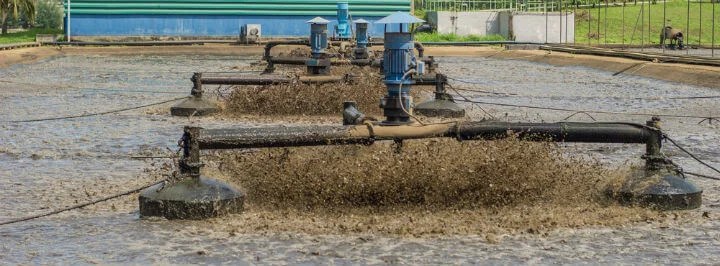
Microorganisms are the backbone of wastewater reactors. These microscopic solids work hard to clean incoming wastewater to suitable environmental levels. But these pieces of biomass only have a limited amount of time in the reactor as solids are ejected from the treatment system. The average amount of time a microorganism spends in the reactor, known as the Solids Residence Time, is equal to the total biomass within the system divided by the exit flow rate of biomass. We can represent this relationship with the formula SRT = Total Volume of Biomass/(Waste rate of biomass + Effluent rate of biomass). A low SRT indicates a reactor is quickly cycling through biomass, which leads to a mostly young bacteria, while a high SRT has the opposite properties. 

Why You Should Consider Disconnecting Your Downspout From the Sewer System

Why You Should Consider Disconnecting Your Downspout From the Sewer System

Why You Should Consider Disconnecting Your Downspout From the Sewer System

11/19/25

“Why should you consider disconnecting your downspout from the sewer system?”

Downspouts carry water from rooftop gutters to the ground. Many homes have their downspouts connected to the sewer system by default. In combined sanitary sewer areas, this means that rain that falls on rooftops will enter the same pipes that carry sanitary waste. During rainstorms, the amount of water entering sewer lines from downspouts may be so large that it overwhelms the system, resulting in a combined sewer overflow event. If you own a building, you can reduce the chance of CSO occurrence by disconnecting your downspout and directing it to infiltrative material. Not only will the sewers get less overwhelmed, but this opens the opportunity to provide much-needed water to your own vegetation. This is Why You Should Consider Disconnecting Your Downspout From the Sewer System.