Author: Isaac Gendler

Flamability Range

Flamability Range

Flamability Range

04/07/26

“How is there a range of flammability in vaporous concentrations?”

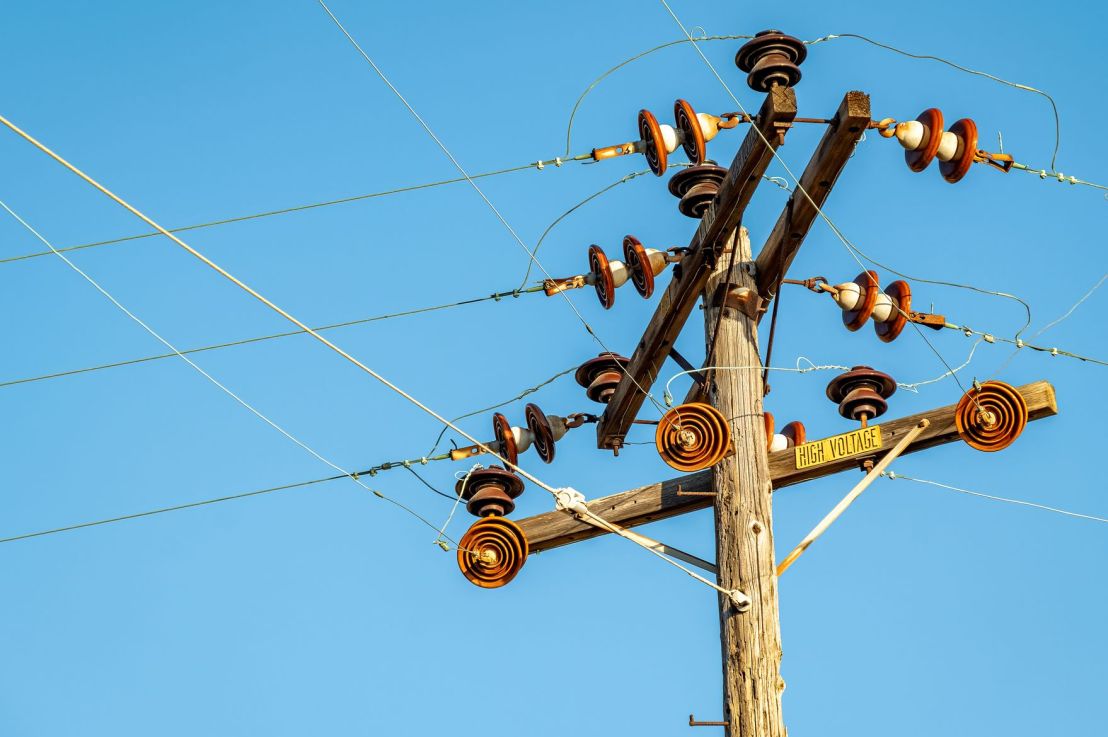
Certain vaporous substances can cause combustion. However, these will need to be present in a certain Flamability Range above a minimum value and below a maximum. Safety regulations may require buildings to implement measures to reduce substances below the flammability range.

Lower Flammability Limit

Lower Flammability Limit

Lower Flammability Limit

04/06/26

“What is the lowest concentration of a fuel to be present for ignition?”

Fuels can combust within a certain range of concentration. The lower end of the concentration, where there is just enough fuel,  is known as the Lower Flammability Limit. The lower flammability limit is affected by the surrounding temperature and pressure.

Anodic Index

Anodic Index

Anodic Index

04/05/26

“How can we quantify an element’s strength against corrosion?”

Two metals in contact with each other can start a corrosion reaction if the metals are electrochemically dissimilar. Each metal will have a certain tendency to give or receive electrons in a galvanic reaction, quantified by the Anodic Index. Anodic indices are typically measured from a reference metal, such as gold. The larger an element’s anodic index is, the more likely it is to become an anode and corrode.

Supercritical Flow

Supercritical Flow

Supercritical Flow

04/04/26

“What are the special properties of water flow that’s fast and shallow?”

Water flow can come in all shapes, sizes, and speeds. Water flow that’s fast and shallow, and whose internal forces affect movement more than gravity, is classified as Supercritical Flow. Supercritical flow is fast and powerful and can resist downstream changes. Consequently, critical flow is more affected by upstream than downstream elements.

Effective Half-Life

Effective Half-Life

Effective Half-Life

04/03/26

“How long does it take for a radeonucleotide to diminish to half of its mass in a biological organism?”

Organisms may consume radionucleotides. The radionucleotide will lose mass to both radioactive decay and biological absorption. We can find the Effective Half-Life of the radionucleotide through the equation 1/(half-life_effective) = 1/(half-life_radiation) + 1/(half-life_biological).

Geotextiles

Geotextiles

Geotextiles

04/02/26

“How can we use synthetic fabrics to improve soil behavior?”

Soils often need interventions to make them perform well. One way is to implement synthetic, permeable fabrics called Geotextiles into the soil. Geotextiles can aid in separation (preventing mixing of different soil layers), filtration (allowing water to pass through while holding soil particles back), drainage (soil dewatering), reinforcement (adding strength and stability to geotextiles), and protection (protecting soils from external damage). 

Image credit: https://www.kakwastone.com/

In-Situ Groundwater Remediation

In-Situ Groundwater Remediation

In-Situ Groundwater Remediation

04/01/26

“How can we clean groundwater without removing it?”

Groundwater can become contaminated through a variety of means. Although it’s common to remove groundwater to clean it, wouldn’t it be great if we could separate toxins from groundwater while it sits in place? Well, what if we were to inject a cleaning agent or mechanisms directly into the groundwater? This process is known as In-Situ Groundwater Remediation, and it’s a growing field of study.

BOD Deoxygenization Rate

BOD Deoxygenization Rate

BOD Deoxygenization Rate

03/31/26

“How can we measure the rate at which microorganisms consume oxygen to remove organic matter?”

Microorganisms use oxygen to remove organic matter. The BOD Deoxygenization Rate, or the rate at which microorganisms use oxygen to remove organic matter, is proportional to the amount of BOD remaining. This is important for understanding if a wastewater body is going to become oxygen-deprived. 

Subcritical Flow

Subcritical Flow

Subcritical Flow

03/30/26

“What are the special properties of slow-moving, tranquil flows in channels?”

Slow-moving, tranquil flows in channels may seem simple. But if you dig deeper, you will find it more interesting. These flows, known as Subcritical Flows, are typically deep and dominated by gravity. The slow-moving and gravity-centric flow can be greatly affected by downstream elements like dams because it does not have enough momentum to overcome such heavy changes.