Year: 2020

AB 3155

AB 3155

AB 3155

05/23/20

“What is the significance of California’s AB 3155 bill?”


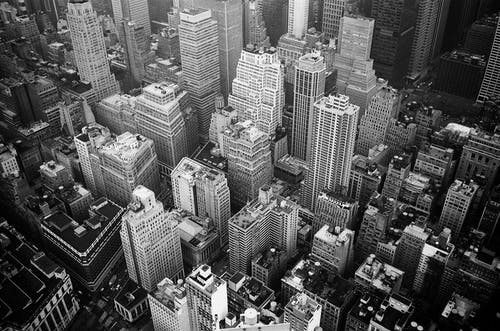
California’s housing crisis is causing more and more suffering to the state every year. However, a recent bill that was passed will lend its hand to ameliorate this. AB 3155 by Assemblymember Robert Rivas will allow for apartment buildings with up to 10 homes to be approved by city planning staff instead of having to go through public hearings in front of a planning commission or city council. In addition, half the homes on those lots reserved for first-time homebuyers for 90 days. 


For some technical details about where the development can be placed:

  • The development must be within some form of urban/metro area
  • A site in which at least 75 percent of the perimeter of the site adjoins parcels that are developed with urban uses. Specifically, parcels that are only separated by a street or highway shall be considered to be adjoined.
  • At least two-thirds of the square footage of the development designated for residential use
  • shall remain available at affordable housing costs or rent to persons and families of lower or moderate-income for no less than the following periods of time:
    • (i) Fifty-five years for units that are rented.
    • (ii) Forty-five years for units that are owned.


The development must satisfy the requirements below.

  • The locality has been underproducing affordable housing for the area
  • The amount of housing at minimum percentage of below-market-rate housing based on one of the following:
    • The project dedicates a minimum of 10 percent of the total number of units to housing affordable to households making at or below 80 percent of the area median income. However, if the locality has adopted a local ordinance that requires that greater than 10 percent of the units be dedicated to housing affordable to households making below 80 percent of the area median income, that local ordinance applies.
    • If the project is located within the San Francisco Bay area, then the project must dedicate 20 percent of the total number of units to housing affordable to households making below 120 percent of the area median income with the average income of the units at or below 100 percent of the area median income. However, a local ordinance adopted by the locality applies if it requires greater than 20 percent of the units be dedicated to housing affordable to households making at or below 120 percent of the area median income, or requires that any of the units be dedicated at a level deeper than 120 percent. In order to comply with this subclause, the rent or sale price charged for units that are dedicated to housing affordable to households between 80 percent and 120 percent of the area median income shall not exceed 30 percent of the gross income of the household.
  • If the project contains 10 units of housing or less and is subject to an inclusionary housing ordinance when the project application is submitted, the project satisfies the requirements of the inclusionary housing ordinance. If the project contains 10 units of housing or less and is not subject to any inclusionary housing ordinances, the developer pays a fee to the local government
  • The development is not located on a site that is any of the following:
    • A coastal zone
    • Prime farmland or farmland of statewide importance
    • Wetlands
    • Very high fire hazard severity zone
    • Hazardous waste site
    • Delineated earthquake fault zone
    • Special flood hazard area
Ecofascism

Ecofascism

Ecofascism

05/22/20

“How can environmentalism fuse with fascism in the most revolting of ways?”


In most political contexts, environmentalism and fascism are on diametrically opposing sides. The former seems to wish for humanity to live in natural harmony with the latter wishes for a particular group to conquer the world using exploitive military tactics. However, a new ideology is beginning to emerge that combines both of these into a whole. Ecofascism. Ecofascists believe that “lesser races” and “decadent lifestyles” are driving the planet to destruction, and that only through extinguishing these can humanity hope for long-term survival. Ecofacist movements today can be seen online in the social media sphere, the shootings at Christchurch and El Paso, and the current Austrian government.


Image credit cdn.britannica.com

Climate Xenophobia

Climate Xenophobia

Climate Xenophobia

05/21/20

“How can xenophobia be aroused by climate change?”


Xenophobia is present in all societies. However, with the advent of climate change, fear of climate migrants are only going to become worse and worse. This Climate Xenophobia will become a hot topic in the future.

Image credit compote.slate.com

Waste Treatment Centers and Inequity

Waste Treatment Centers and Inequity

Waste Treatment Centers and Inequity

05/19/20

“Why are waste treatment centers usually located closer to less-privileged communities?”


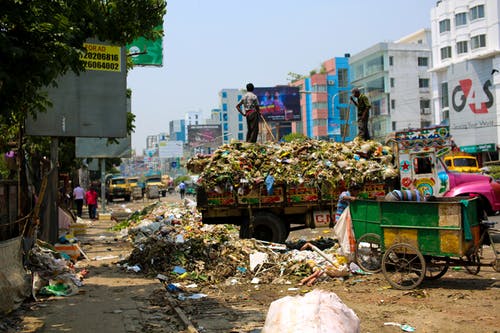
Although useful and necessary, waste treatment centers can be a burden on communities. They create volatile outputs, emit noxious smells, and are generally unpleasant. For this reason, communities with social and economic influence push to keep them away, often into areas with less clout. This means that more communities with less privilege have to take the burden of hosting these facilities. Scientific research has confirmed these findings, showing that there is a long history of discrimination in terms of environmental justice. This is why there is a connection between Waste Treatment Centers and Inequity.

River Pollution

River Pollution

River Pollution

05/18/20

“How can rivers become polluted?”


Rivers are one of the original lifebloods of civilizations. Cities as grand as Babylon, Moscow, and New Orleans were built due to their proximity to important rivers for easy access to commerce. In time, Industrial facilities would be built so supplies could be shipped off without much hassle. However, the increased industrial activity led to River Pollution, where the channels have become washed with waste and toxins. This has the potential to spill into nearby drinking water, making it something that governments should take note of.

Why Building More Affordable Housing in Wealthy Areas Will Build Climate Resilience

Why Building More Affordable Housing in Wealthy Areas Will Build Climate Resilience

Why Building More Affordable Housing in Wealthy Areas Will Build Climate Resilience

05/17/20

“Why would building more affordable housing in wealthy areas lead to greater climate resilience?”


Due to historic and ongoing structural discrimination, wealthier neighborhoods not only have greater opportunities but are located disproportionately in areas more resilient to climate change. Due to the steep costs of living in these places, climate refugees will have a difficult time finding shelter in them, leaving their options for a new community more limited. But if more affordable housing was developed in these wealthier places, then this barrier can be lifted and a greater range of people can find safe habitation for the rest of their lives. This is Why Building More Affordable Housing in Wealthy Areas Will Build Climate Resilience.

Misadaptation

Misadaptation

Misadaptation

05/16/20

“How can climate adaptation be appropriated for nefarious purposes?”


Discussion of climate adaptation and resilience is becoming more apparent in the world. However, just like greenwashing takes place in mitigation, misadaptation can exacerbate climate vulnerabilities for marginalized populations while benefiting privileged ones. For example, building a levee that causing flooding down a river only shifts the climate risks, not mollifies it.

Computational Migration Analysis

Computational Migration Analysis

Computational Migration Analysis

05/15/20

“How can we analyze how migration occurs using computational technology?”


Migrations are one of the key themes of human existence. Whether it on a grand scale like the original movement out of Africa and the upcoming mass climate displacement or smaller such as the Great Migration of African Americans from the American South to the North and modern-day international immigration. However, analyzing this can be very complicated, requiring researchers to keep track of a variety of tables, notes, and diagrams. Taking inspiration from computational demographic techniques, Computational Migration Analysis can be done to see how movement occurs. This is usually accomplished with tools such as census data, life tables, and statistical distributions.