Month: May 2020

Ecofascism

Ecofascism

Ecofascism

05/22/20

“How can environmentalism fuse with fascism in the most revolting of ways?”


In most political contexts, environmentalism and fascism are on diametrically opposing sides. The former seems to wish for humanity to live in natural harmony with the latter wishes for a particular group to conquer the world using exploitive military tactics. However, a new ideology is beginning to emerge that combines both of these into a whole. Ecofascism. Ecofascists believe that “lesser races” and “decadent lifestyles” are driving the planet to destruction, and that only through extinguishing these can humanity hope for long-term survival. Ecofacist movements today can be seen online in the social media sphere, the shootings at Christchurch and El Paso, and the current Austrian government.


Image credit cdn.britannica.com

Climate Xenophobia

Climate Xenophobia

Climate Xenophobia

05/21/20

“How can xenophobia be aroused by climate change?”


Xenophobia is present in all societies. However, with the advent of climate change, fear of climate migrants are only going to become worse and worse. This Climate Xenophobia will become a hot topic in the future.

Image credit compote.slate.com

Waste Treatment Centers and Inequity

Waste Treatment Centers and Inequity

Waste Treatment Centers and Inequity

05/19/20

“Why are waste treatment centers usually located closer to less-privileged communities?”


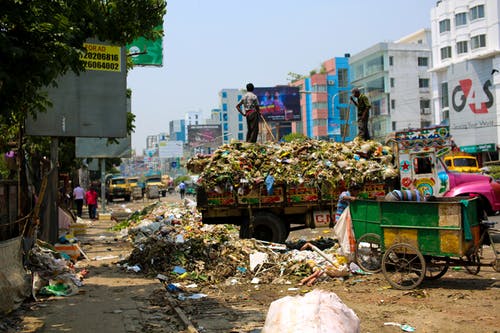
Although useful and necessary, waste treatment centers can be a burden on communities. They create volatile outputs, emit noxious smells, and are generally unpleasant. For this reason, communities with social and economic influence push to keep them away, often into areas with less clout. This means that more communities with less privilege have to take the burden of hosting these facilities. Scientific research has confirmed these findings, showing that there is a long history of discrimination in terms of environmental justice. This is why there is a connection between Waste Treatment Centers and Inequity.

River Pollution

River Pollution

River Pollution

05/18/20

“How can rivers become polluted?”


Rivers are one of the original lifebloods of civilizations. Cities as grand as Babylon, Moscow, and New Orleans were built due to their proximity to important rivers for easy access to commerce. In time, Industrial facilities would be built so supplies could be shipped off without much hassle. However, the increased industrial activity led to River Pollution, where the channels have become washed with waste and toxins. This has the potential to spill into nearby drinking water, making it something that governments should take note of.

Why Building More Affordable Housing in Wealthy Areas Will Build Climate Resilience

Why Building More Affordable Housing in Wealthy Areas Will Build Climate Resilience

Why Building More Affordable Housing in Wealthy Areas Will Build Climate Resilience

05/17/20

“Why would building more affordable housing in wealthy areas lead to greater climate resilience?”


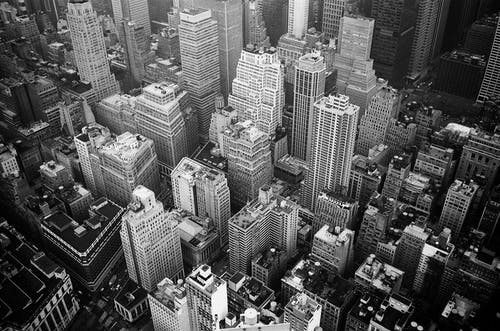
Due to historic and ongoing structural discrimination, wealthier neighborhoods not only have greater opportunities but are located disproportionately in areas more resilient to climate change. Due to the steep costs of living in these places, climate refugees will have a difficult time finding shelter in them, leaving their options for a new community more limited. But if more affordable housing was developed in these wealthier places, then this barrier can be lifted and a greater range of people can find safe habitation for the rest of their lives. This is Why Building More Affordable Housing in Wealthy Areas Will Build Climate Resilience.

Misadaptation

Misadaptation

Misadaptation

05/16/20

“How can climate adaptation be appropriated for nefarious purposes?”


Discussion of climate adaptation and resilience is becoming more apparent in the world. However, just like greenwashing takes place in mitigation, misadaptation can exacerbate climate vulnerabilities for marginalized populations while benefiting privileged ones. For example, building a levee that causing flooding down a river only shifts the climate risks, not mollifies it.

Computational Migration Analysis

Computational Migration Analysis

Computational Migration Analysis

05/15/20

“How can we analyze how migration occurs using computational technology?”


Migrations are one of the key themes of human existence. Whether it on a grand scale like the original movement out of Africa and the upcoming mass climate displacement or smaller such as the Great Migration of African Americans from the American South to the North and modern-day international immigration. However, analyzing this can be very complicated, requiring researchers to keep track of a variety of tables, notes, and diagrams. Taking inspiration from computational demographic techniques, Computational Migration Analysis can be done to see how movement occurs. This is usually accomplished with tools such as census data, life tables, and statistical distributions.

The Energy Efficiency Coverage Gap

The Energy Efficiency Coverage Gap

The Energy Efficiency Coverage Gap

05/14/20

“Why is it that lower-income households have difficulty in obtaining the energy-efficient devices that they need?”


Energy-efficient appliances can save households a large amount on their utility bills. However, according to research done by the University of Michigan, the upfront investment required can be out of reach for lower-income households who would benefit the most from it. This Energy Efficiency Coverage Gap is an active problem that needs to be solved by society.