Month: September 2019

Resilience Vulnerabilities

Resilience Vulnerabilities

Resilience Vulnerabilities

09/12/19

“How can we identify internal vulnerabilities in infrastructure?”

In the physical world, imperfections can be found in every little structure. This also holds true for infrastructure. Resilience Vulnerabilities are the parts of infrastructure that may be liable in case a situation happens. Examples include not having backup generators or having structurally weak cement for the building. 

Resilience Threats

Resilience Threats

Resilience Threats

09/11/19

“How can we quantify external threats against resilience?”

Unexpected events such as natural disasters and power outages can cause unexpected damage to infrastructure. In resilience analysis, these are often quantified as Resilience Threats. Example resilience threats include sea-level rise against coastal installations and natural gas pipeline bursts.

Why Infrastructure Stakeholders Should Look for Existing Resilience Plans Before Creating New Ones

Why Infrastructure Stakeholders Should Look for Existing Resilience Plans Before Creating New Ones

Why Infrastructure Stakeholders Should Look for Existing Resilience Plans Before Creating New Ones

09/10/19

“Why should we look for already existing infrastructure plans before creating new ones?”

Resilience is one of the hottest topics in civil engineering right now. Whether it be protecting cities against hurricanes or finding new ways to implement renewable energy, there always seems to be something going on. However, before any new plans are made, people should look out if there are already plans in place instead of reinventing the wheel. This is Why Infrastructure Stakeholders Should Look for Existing Resilience Plans Before Creating New Ones.

Infrastructure Resilience Workshops

Infrastructure Resilience Workshops

Infrastructure Resilience Workshops

09/09/19

“How can we coordinate workshops to practice resilience?”

With the advent of climate change, infrastructure operators are going to think about how they can practice and implement resilience. One way to accomplish this is to hold Infrastructure Resilience Workshops, where multiple governing parties can come together and decide how to quantify and implement their resilience goals. To illustrate, a utility and a hospital may come together to discuss what assets will be prioritized and how to keep patients safe in the case of a blackout.

How Risk Analysis Can Be Used to Determine an Area’s Proneness to Wildfires

How Risk Analysis Can Be Used to Determine an Area’s Proneness to Wildfires

How Risk Analysis Can Be Used to Determine an Area’s Proneness to Wildfires

09/08/19

“How can we use risk analysis techniques to assess an area’s proneness to wildfires?”

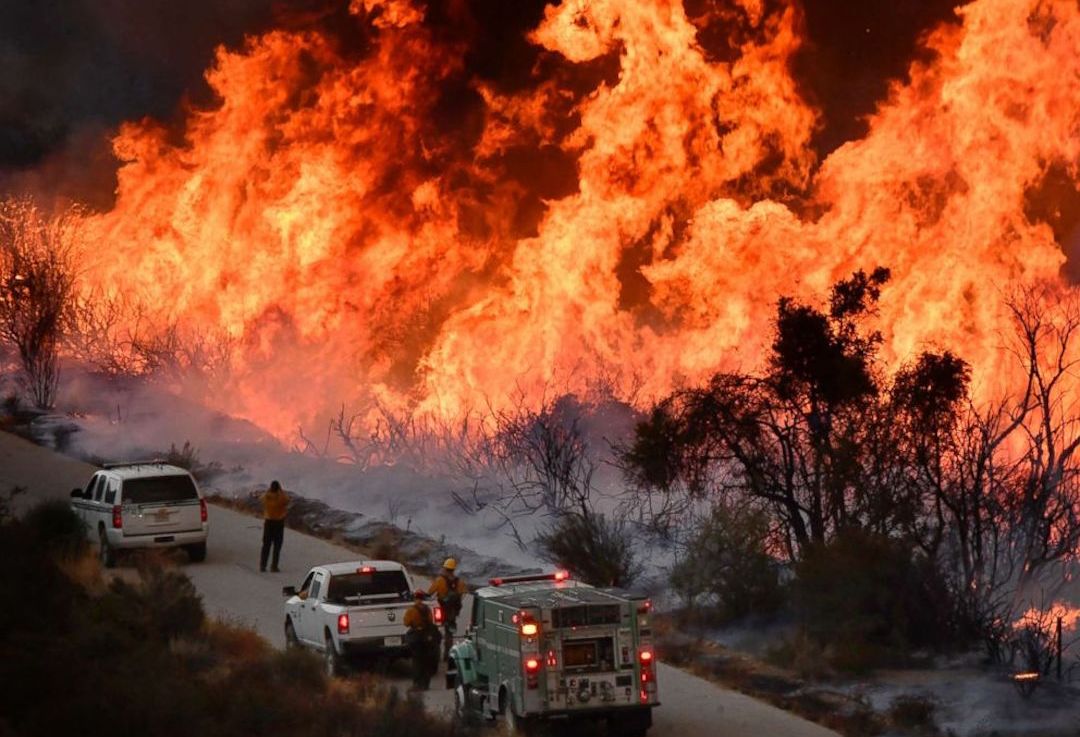
With the ascent of climate change, the natural environment is becoming more unstable. In dry areas with sufficient vegetation, this means that wildfires are becoming more common. As such, people will need to understand what areas of liable to become aflame. This can be accomplished using risk analysis techniques which take into account the dryness, lack of rainfall, and temperatures of a particular area to produce a risk assessment. This is How Risk Analysis Can Be Used to Determine an Area’s Proneness to Wildfires.

Image credit http://cdn.theeverygirl.com

How Probability Distributions Can Help with Risk Assessment

How Probability Distributions Can Help with Risk Assessment

How Probability Distributions Can Help with Risk Assessment

09/07/19

“How can we use probability distributions to create risk assessments?”

One of the most important parts of any engineering project is to analyze the risks involved in any process. However, quantifying these issues can prove to be quite difficult. To solve this, statisticians and engineers have worked together to create methods based upon preexisting probability distributions to help with the risk assessments. For example, an exponential decay distribution can be used to model a reliability function or a binomial distribution can be used to analyze failure of a specific component. This is How Probability Distributions Can Help with Risk Assessments.

Image credit fox17.com

Why International Cooperation will be the Basis of Fighting Climate Change

Why International Cooperation will be the Basis of Fighting Climate Change

Why International Cooperation will be the Basis of Fighting Climate Change

09/06/19

“Why can the world only fight climate change if it works together?”

Out of all of the threats to the world, one stands out in particular, climate change. The very systems that support the industrialized world is causing its demise through this very phenomena. And since these systems span international boundaries, multi-governmental institutions will need to be created and work in tandem to reduce carbon emissions. This is Why International Cooperation will be the Basis of Fighting Climate Change.

Infrastructure Lock-in

Infrastructure Lock-in

Infrastructure Lock-in

09/05/19

“What are the consequences of large-scale investment in outdated infrastructure technologies?”

Institutions are constantly faced with difficult infrastructure decisions. Should they invest in experimental technologies such as renewable energy and distributed battery systems or opt for more traditional oil pipelines? Well, whatever approach is taken, the infrastructure and supply chain created will exist for multiple generations to come and will create heavy inertia to shift. A fine illustration of this is the difficulty of shifting the United States to mass transit due to its car and road dependent paradigm. This Infrastructure Lock-in must be dealt with when making policy decisions. 

Strategic Petroleum Reserves

Strategic Petroleum Reserves

Strategic Petroleum Reserves

09/04/19

“How do nations handle reserves for fuels in case of a national crisis?”

Petroleum drives a substantial portion of the global economy, whether it be for moving cars or making plastics. But if a national crisis breaks out, petroleum supplies can be disrupted, leaving devastating consequences for a nation. For this reason, countries have Strategic Petroleum Reserves which allows them to have access to fuel supplies in case an emergency comes up.