Month: April 2017

Thermal resistance

Thermal resistance

Thermal resistance

04/12/17

“How can we measure how the flow of heat will be impeded in a material?”
All objects have a temperature. And this temperature can change whether by convection, conduction, or radiation. However, because of an object’s material makeup, this flow of heat may not be uniform. So how can we measure how much an object will resist a change in temperature? Well, let’s use our scientific mindset to think about it. We know that temperature consists of a measure of the random kinetic motion of particles and that a change in this value is caused by energy entering or exiting the system. Rationally speaking, it would follow that materials with different forms of internal properties have more or less impediments in the way of this heat flow. After years of research, scientists have quantified this property as thermal resistance and is one of the bedrocks of thermodynamic physics.

Nuclear fuel rods

Nuclear fuel rods

Nuclear fuel rods

04/11/17

“What holds nuclear fuel during fission?”


It is a well-known fact that nuclear reactors obtain their energy from fissionable materials. However, how exactly is this material fed to create nuclear energy? Well, let’s take use our engineering mindsets to find out. Upon inspection, we can observe that nuclear fuel takes the shape of cylindrical objects known as pellets, which are encased in solid nuclear fuel rods. These nuclear fuel rods are then grouped together in assemblies, and in turn form the bulk of nuclear power generation

Body centered cubic crystal structures

Body centered cubic crystal structures

Body centered cubic crystal structures

04/10/17

“Is there a crystal structure that can hold 2 atoms per unit cell?”
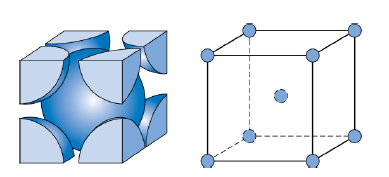
Just as there is a litany of different types of chemicals and bonding types in the universe, there is also a vast array of different types of crystal structures. One such crystal structure is the Body centered cubic crystal structure. In this type of crystal structure, atoms are located at all eight corners of a unit cube with another atom at the center. The atomic packing factor of a body-centered cubic crystal structure is 0.6802 and is commonly found in elements such as sodium

Compact fluorescent lights

Compact fluorescent lights

Compact fluorescent lights

03/09/17

“How do the lights in our households and workplaces work?”
With the advent of energy efficiency standards, most light bulbs in our homes, schools, and workplaces are now based upon fluorescent lighting technology. However, how exactly do these compact fluorescent lights? Well, let’s use our engineering mindset to find out. Let’s start by taking apart a fluorescent light bulb. If we do so, we will notice that there are three components: A screw base, an electronic ballast, and a spiral lamp. The base is the “bottom” portion used to fit the lamp into a lamp holder. Next, in the interior, the electronic ballast consists of a complex circuit. The electronic ballast will take in AC electricity from the grid at one phase and convert it into AC electricity at a much higher phase. This “stepped up” AC electricity will allow for a frequently changing current, which will be useful in exciting the surrounding gas to produce light. CFLs are up to 4 times more efficient than traditional incandescent lights and last ten times as long, while also being far more efficient (in fact, a CFL bulb can reduced carbon emissions by over a half a ton over the course of its lifetime!).

Fluorescent light bulbs

Fluorescent light bulbs

Fluorescent light bulbs

04/08/17

“How do fluorescent light bulbs work?”
All around the world, conventional filament-based light bulbs are being phased out in favor of this technology called fluorescent light bulbs. However, what exactly are these devices and how do they work? Well, let’s use our engineering mindset to find out. All electrical devices start with two components, an anode and a cathode. Now, electrical lights work by passing a current through the anode and cathode to generate current. Fluorescent light bulbs use a most ingenious way to accomplish this, instead of using a current to heat up a wire, the ends of the electrodes are separated by a mercury-containing gas. When electrons are passed through this material, they will collide with the mercury atoms which will become “excited” and release ultraviolet rays. The tube that connects both electrodes will be coated in a special coat that absorbs the dangerous UV rays and releases safe white light, therefore providing safe and efficient lighting. Fluorescent bulbs can produce between 50 and 100 lumens per watt., making them four to six times more efficient than incandescent bulbs

Supergrids

Supergrids

Supergrids

04/07/17

“Could we make a grid that could cross continents?”
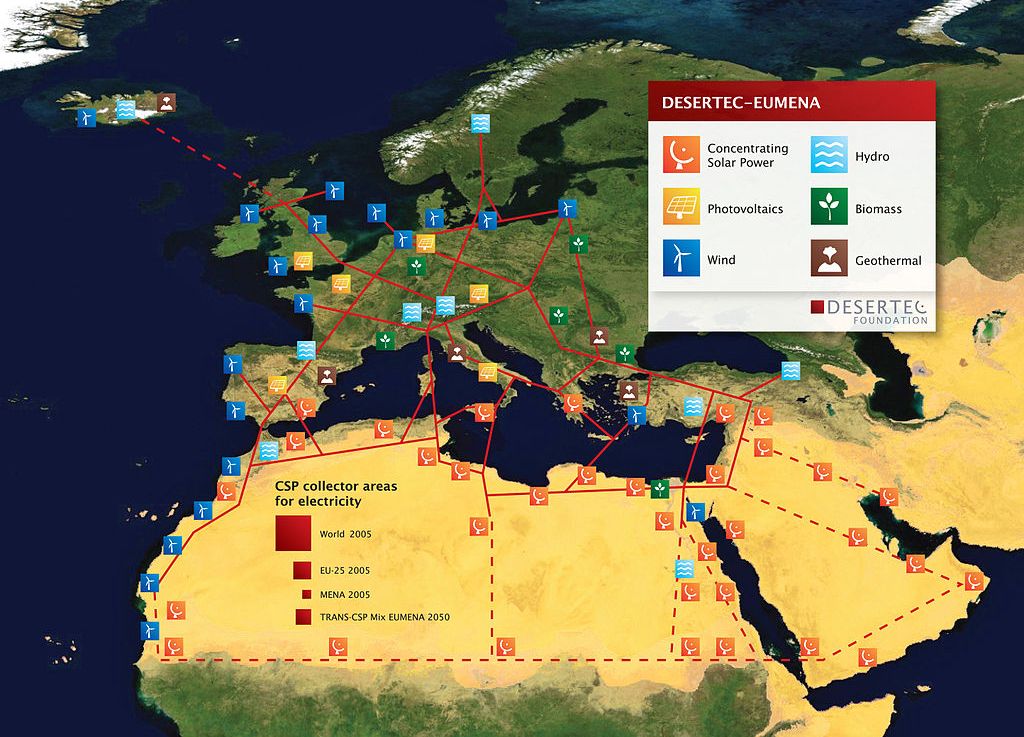
Imagine this. What if at some point in the future there could be an electrical grid system so advanced that it would be able to span entire continents, such that solar energy from sun-kissed areas such as Sub-Saharan Africa or Israel would be able to power dreary countries such as the Netherlands or Poland, or wind power from Brazil traversing its way through the amazons to light up the Peruvian capital of Lima before sundown. Well, believe or not, this technology is in development as we speak. Researchers from around the world are working on creating a technology known as a supergrid. Supergrids are HVDC-based grids that can surpass the past roadblocks of more primitive DC networks by using circuit breakers to cut malfunctioning power lines from contaminating the rest of the grid.  

Wide area synchronous grids

Wide area synchronous grids

Wide area synchronous grids

05/06/17

“How do electrical grids operate at large scale?”


Electrical grids are one of the life beds of modern infrastructure. However, since the power demands of humanity are too large for a single system to handle, the grid must be grouped into different synchronous “zones” to ensure smooth operation. Because of this, engineers have designed a framework that uses multiple distinct areas called wide area synchronous grids (WASGs) to operate at a synchronized frequency. WASGs in North America typically operate at 60Hz, while ones in Europe work at 50Hz. Interconnections between grids can be made by using HVDC lines. WASGs allow for energy generation pooling, which allows for lower generation costs.

Virtual images

Virtual images

Virtual images

04/05/17

“What happens when light rays from a reflective or refractive material do not converge?”
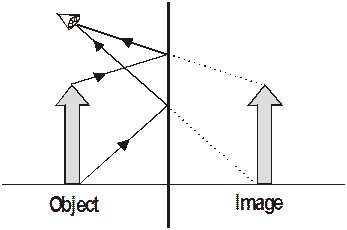
When light bounces from some materials, sometimes it does not completely converge. An example can be light incident on planar mirrors or negative lenses. However, an image still forms, contradicting the theory of real images. How can this be? Well, let’s use our scientific mindset to find out. We know when non-parallel light rays do not converge in real space, they are at an angle with each other. However, if we are to think “outside of the box” and move into the virtual world, we can observe that such rays originate from a common point. And since our brains are not advanced enough to distinguish between optical illusions and reality, we will see what scientists call a virtual image at that point. Since virtual images do not exist in reality, they can not be projected onto a screen like real images.

Energy payback time

Energy payback time

Energy payback time

04/04/17

“How long does it take solar panels to recuperate the amount of energy taken to construct them?”
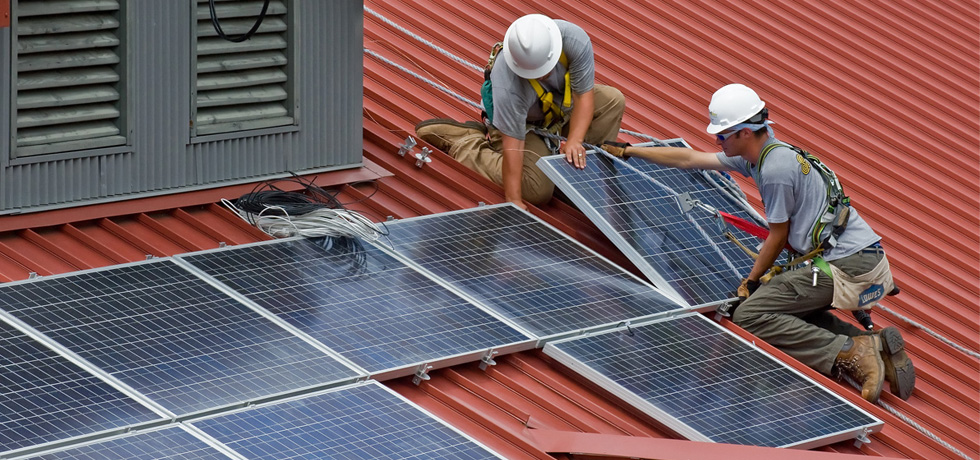
Solar panels produce energy in a safe and sustainable manner. However, it also takes energy to create these machines, and many individuals argue that it might take more energy than it is worth. So how can we estimate the time needed for a solar panel module to recuperate its production energy? Well, let’s solve this question by thinking like engineers. We can reason that energy payback time is fundamentally a problem with two variables, the amount of energy it took to create the specific type of module and the amount of energy the module produces over its lifetime. The former is contingent upon the processes involved during construction of the module, and the latter depends upon the geographic location of the module as well as its efficiency. Therefore if know these variables, we can estimate the energy payback time. The energy payback time for solar panels can range from 3.3 years for a monocrystalline panel in Canada and Northern Europe to nearly 8.5 months in California and Africa using thin-filmed photovoltaics! With this data, we can defeat the pseudo-fact that solar PV systems take an enormous amount of time for a return on investment.