Month: March 2017

Eutectoid point

Eutectoid point

Eutectoid point

03/22/17

“Can a solid become two other solids under certain conditions?”
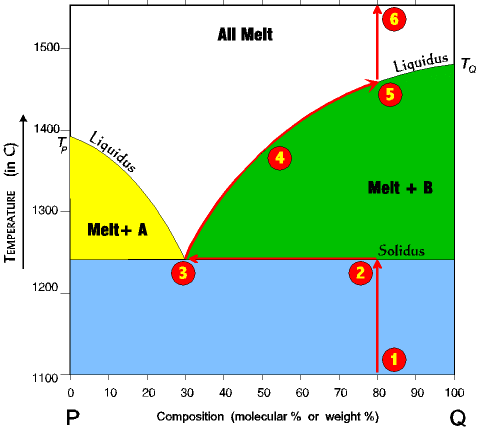
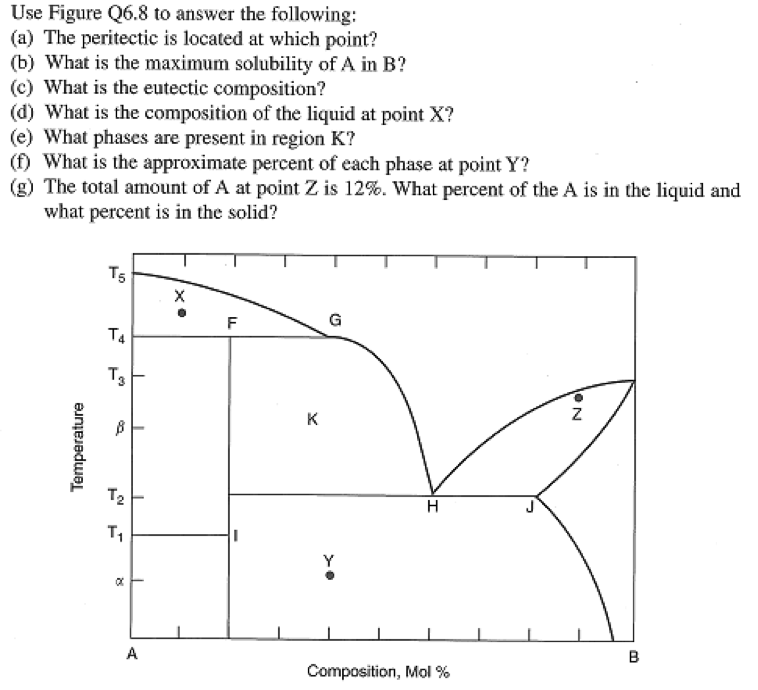
It is well known when a eutectic point, is reached, a material will instantly become a liquid. However, is it possible for such a reaction to occur but for the two products to become solids instead/ This is the primal idea behind a reaction in Materials Science known as the Eutectoid point, and can be found on a material’s phase diagram

Nautical mile

Nautical mile

Nautical mile

03/21/17

“How do we measure distance while traversing the ocean?”
One of the most important pieces of information needed for transportation is the distance that one needs to cross. This fact holds regardless if it’s by land, sea or air. Speaking about the sea, have you ever wondered how people measure distance when they are out on the ocean? Well, after many centuries of improvements, navigators have created the unit of the Nautical mile for traversing aquatic distances. Despite sounding like a unit based on the imperial system, the nautical mile is actually an SI-based quantity, with one NM being equal to 1852 meters.  This unit is so fundamental to navigation that not only has the field of aviation begun using it, but that the unit for aquatic speed, the knot, is equal to one nautical mile per hour!

Eutectic point

Eutectic point

Eutectic point

03/20/17

“What is the lowest possible melting point for a composite material?”
Pure elements always have a fixed melting point. However, when mixed, their melting point can change drastically. Let’s say we have a crystal composed of elements A and B. If element A is predominant, then B will melt first and vice versa for element B. So is there a single point of possible element combinations in which both elements will melt? Well, after years of research, Materials Scientists have came up with the definition of the eutectic point to describe this scenario. The eutectic point is not only the point of complete melting but the point of lowest possible melting since both elements will be melted!

Recrystallization

Recrystallization

Recrystallization

03/19/17

“How can we purify a crystal by dissolving it?”
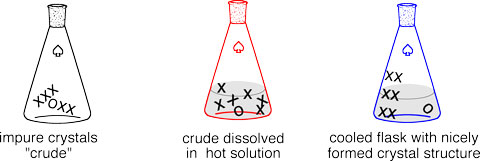
Crystals are some of the most omnipresent structures in the universe. However, often times such crystals will have impurities to be found inside their crystal lattice, changing the properties of the material. So what is one way that we could get rid of such an impurity? Well, let’s think about it. We know that crystal lattice element and the impurities are made from different molecules, therefore having different melting and cooling points. We also know that if we were to dissolve this compound into a hot solvent, we could effectively decouple the elements from one another. So what if we were to take these two concepts, combine them, and make a system in which the crystal with the impurity would be dissolved and then cooled down to the point that the crystal reforms but the impurity does not? Well, it turns out that this is a process known as recrystallization, and is used by chemists and material scientists to purify crystal elements.

Bearing stress

Bearing stress

Bearing stress

03/18/17

“What happens when stress acts upon an area perpendicular to the axis of an object?”
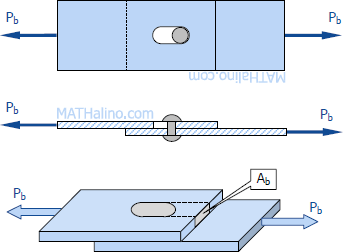
The most well-known types of engineering stress are normal stress, (when a stress acts upon an area parallel to the axis of an object) and shearing stress (when a stress acts perpendicular to said axis). But is there a third type of stress? Well, to know more, let’s scientifically analyze such a phenomena. Well, when two bodies are in contacts and move in opposite directions, they will exert a force upon one another. Furthermore, this force will be distributed over their area of contact, creating a stress. This form of stress is known as a bearing stress and can be symbolically described using the equation (sigma)_ bearing = force/area

Latent heat

Latent heat

Latent heat

03/17/17


“How do we quantify the energy released or absorbed during a constant temperature process?”
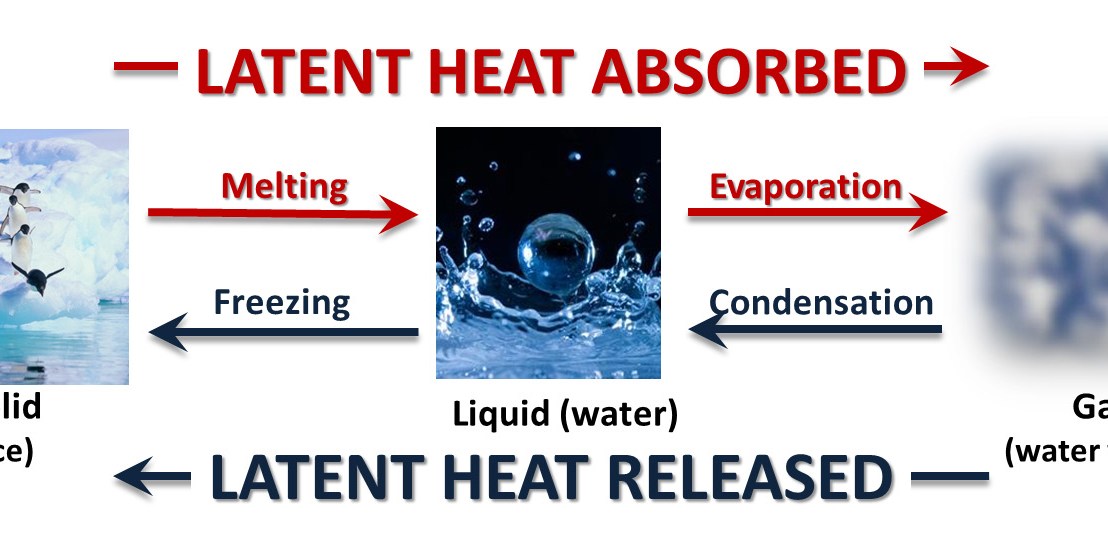
When we deal with energy and heat problems, we typically think of the system of having a change in temperature. However, when it comes to phase transitions it is possible to have a change in energy of a system without a corresponding change in temperature. So how have scientists and engineers decided to describe this phenomenon? Well, after much research into the subject, this process has been termed latent heat and is proportional to the energy required to change the phase of a substance divided by its mass, which can be symbolically described by the equation L=q/M.

Thermal  Batteries

Thermal Batteries

Thermal  Batteries

03/16/17

“How can we reinvent batteries using heat?”


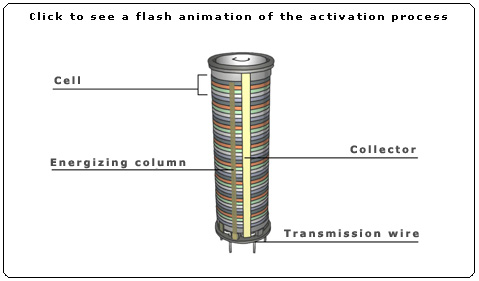
The most widely used for of batteries are oxidation process based batteries. Even though these units are plentiful, their construction can be very destructive to the environment. However, their use as large-scale energy storage systems is most valuable, so how can we change their composition to be less intensive on our resources? Well, let’s think about it. One way to release energy from cells is to heat them up. An easy way to do this is to use a material near such cells. So what if we were to put this theory into practice and create a series of heat dependent cells between an anode and a cathode contained with a meltable electrolyte? This setup is known as a thermal battery. Thermal batteries are compact and lightweight, making them a popular application for electric vehicles, and can store energy for upwards of 50 years!

Isomorphous Binary Phase Diagrams

Isomorphous Binary Phase Diagrams

Isomorphous Binary Phase Diagrams

03/15/17

“Can we make a phase diagram that takes into account gradual phase transitions?”
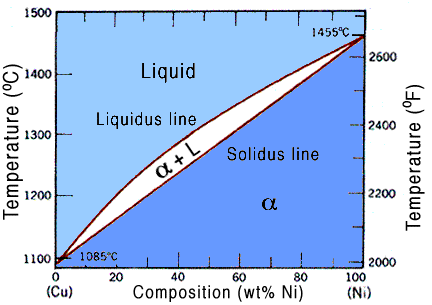
Classical phase diagram charts treat separate phases (solid, liquid, gas, etc.) as being completely discrete from one another. However, in the real world, phases do not immediately transition from one to another but instead undergo a gradual change in which both phases will be present. So how could we take this information and use it to reinvent phase diagrams? Well, let’s take a look. First, let’s draw out the regions where the material will be completely one phase and completely another. The empty boundary in between these regions will be where more than one phase will be present. Now how can we determine the phase composition of the material at any point within this boundary? This can be accomplished as follows. First, draw the point in which the temperature and phase composition meet. Then, draw a horizontal line from this point so that it touches both phases on opposite ends. Take the mass composition reading from these points. Then, split up these lines into two discrete regions, a for the line traveling to the phase on the left and b for the one traveling to the phase on the right. The length of A and B can be found by taking the absolute difference of the composition of the intersection and the composition given as an input. Then divide these lengths by the total length C, and that will give you the respective mass composition of each phase respectively!

 

Solubility limit

Solubility limit

Solubility limit

03/14/17

“How can we determine the maximum concentration of a solute without a precipitate forming?”


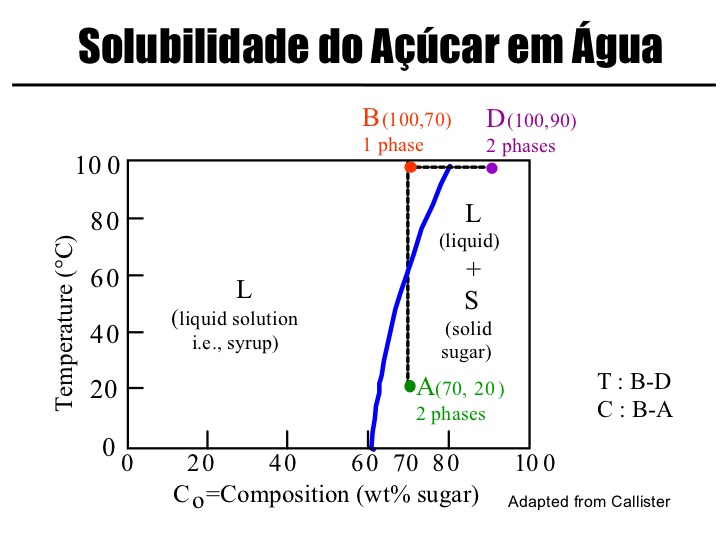
It is well known that a solute mixed into a solvent will form a percentage of the substance composition. However, it is also well known that if this concentration becomes too high, then precipitation will occur, inducing a solid phase to exist within the substance. So how can we determine the solubility limit for a substance? Well, to begin, let’s analyze a phase diagram with the solute percentage composition as the independent variable. We would notice that as we increase the composition, the phase of the substance will be closer to the solubility limit, or the point in which precipitation is active. However, in addition to percentage composition, the temperature of a substance also has an effect on the solubility limit.