Month: August 2016

Why do light-bulb filaments go out?

Why do light-bulb filaments go out?

Why do light-bulb filaments go out?

08/13/16

“Why do light-bulb filaments go out?”


We all know what electric light bulbs are and what they do, they are some of the most omnipresent devices in human civilization. However, have you ever wondered why they die out? Well, let’s think about it like an engineer

For a quick review, light-bulbs work by pushing a current  through a tungsten filament. This filament acts as a resistor, absorbing current as heat and giving off light. However, as this filament gets used more and more, this filament will become damaged and brittle from effects such as thermal expansion and joule heating, especially during the initial starting phase (in fact, light-bulbs actually last longer if they are kept on permanently). Eventually, this filament will wear out, and the light bulb will be rendered useless. Light bulbs take up so much power, that up to 24 percent of a home’s electricity bill is used for lighting!

Thermal expansion

Thermal expansion

Thermal expansion

08/12/16

“What happens to the volume of objects upon a temperature change?”


Let’s think about something. All objects are composed of vibrating atoms. And when an object is heated, those vibrations become more powerful, and the lengths of their vibration increase. So, what does this imply on the macroscopic scale? Well, if an object’s volume is determined by the volume of space that this volume of atoms takes up, and this volume increases, then the volume object should increase as well, therefore, heating causes (most but not all) objects to expand. Scientists and Engineers have named this phenomena thermal expansion. Thermal expansion is a very omnipresent physical phenomena, and can have dire implications for works of engineering if not taken care of.

Battery lifetime

Battery lifetime

Battery lifetime

08/11/16

“What factors determine a battery’s lifetime?”


What is one of the most important things to consider when purchasing a battery, besides things such as cost, size and type? Why, it would be the lifetime of course. The lifetime of a battery depends on multiple factors. First of all, the temperature of the storage area matters. If the battery is kept in a room at room temperature, then internal reactions will occur, causing self-discharge, which results in a shortened battery life, typically 8-20% of the original lifetime. In order to prevent this, one should keep batteries inside colder areas, as that would slow down all internal reactions. In addition, for renewables, overcharging a battery can lead to internal damage, which can  cause internal decimation and therefore shorten their lifetime. Also, having the battery over discharge can cause drainage.

Batteries

Batteries

Batteries

08/10/16

“What are batteries?”


We learned about how galvanic cells are able to create a voltage difference through the use of chemistry. But a single galvanic cell can only provide a low voltage, and humanity requires alot of power, so how can we take this concept and expand upon to make it practical for common usage? Well, how about we just simply take  bunch of galvanic cells and hook them up in series? If we do that, then we will create a machine with a title that you are probably very familiar with, a battery. The batteries that we use everyday are simply devices that use chemical differences to create a voltage. Batteries come in two types, disposable and rechargeable. Disposable batteries are batteries that have a limited chemical supply and stop working once depleted, while rechargeables allow a current to flow in the reverse direction when plugged in to regenerate the battery (however, due to the second law of thermodynamics, each recharge will wear down the capacity of the battery)

Expansion joints

Expansion joints

Expansion joints

08/09/16

“How can we improve structures to account for thermal expansion?”

There is a problem when one decides to design bridges and roads, and it comes from one very simple facet of the physical universe, temperature. The laws of physics dictate that when an object changes temperature, it’s dimensions will change accordingly. So when we need to build a structure such as a bridge or a road with exact configurations, we will run into a major issue. So how can we solve the problem of thermal expansion and it’s related issues such as internal buckling? Well, how about we design the structure so that it allows for some volumetric change? This idea is called an expansion joint. Expansion joints are when small gaps are placed in a structure, repeating for a set distance, so that associated thermal expansion will not cause internal strife. Expansion joints are used in a myriad of different structures, ranging from railroads to bridges.

Rectifiers

Rectifiers

Rectifiers

08/08/16

“How can we turn AC electricity into to DC?”


After studying how inverters can turn DC electricity in to AC, you might be wondering, “Can the inverse happen?, and if so, how do we accomplish it?”.

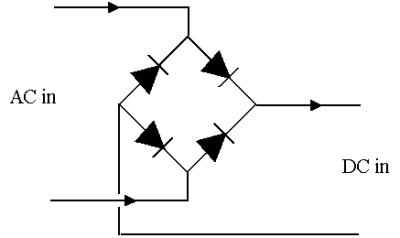
Well, let’s think about it. We know that the primary principle of AC electricity is that it switches the direction of current through a circuit at a certain time interval. However, if we add a diode in to this circuit, then the current will only be able to flow in one direction. Through this we would come much closer to our goal of DC electricity, with the current flowing in only one direction. However, a drawback of this solution is that the voltage and therefore current would be zero for half of the time it operates. A quick fix to this problem would be to use four diodes instead of one. With this setup, no matter which direction the current is in, there will be a voltage across the output. To further improve this device, we can add a capacitor, so when the voltage changes the capacitor absorb some of the moving particles, therefore balancing out this change.

Electrodes

Electrodes

Electrodes

08/07/16

“How does electricity pass from one medium to another for engineering purposes?”


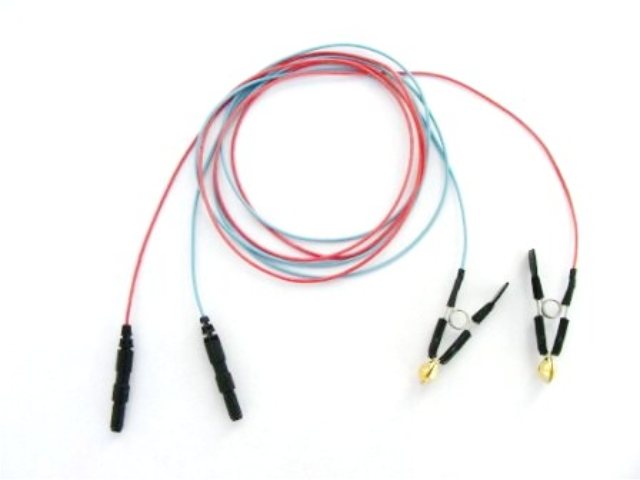
Have you ever wondered what allows for electricity to flow through a circuit? Well, let’s think about it. A circuit usually includes a battery. And this battery is electrochemically charged so that one side has a  positive charge and another is negatively charged. This creates a potential difference, which can be used in a circuit do do work. In order to do that, there must be some form of conductive material hooked up to the battery so that such work can be done. Now, this is where the electrode comes in. An electrode is a conductor that can transport electric current from one medium to another. The electrode in a circuit will be hooked up the negatively charged end called the cathode, and transport it these electrons to the positive end called the anode.

3-phase electrical motor

3-phase electrical motor

3-phase electrical motor

08/06/16


“How can further we optimize an AC motor?”
We have a problem. AC motors by themselves are very inefficient for turning large armatures due to the fact that the voltage variation does not provide enough power to turn it. However, as engineers, how could we solve such an issue? Well, how about instead of having just one phase of electricity, we have three distinct phases of electricity acting simultaneously! Now let’s think about how we can implement this. If the voltage variation of an AC motor goes through a 360 degree cycle, then we can split this cycle up into 3 120 degree parts, and have one cycle shifted 0 degrees, one shifted forward 120 degrees, and another shifted backwards 120 degrees so everything is mathematically precise! Engineers have termed this setup a 3-phase electrical motor. Not only does this setup drastically increase the power one could use, but it also makes it easier to rectify AC current in to DC

Undesired Arcing

Undesired Arcing

Undesired Arcing

08/05/16

“How can electrical arcing go haywire?”


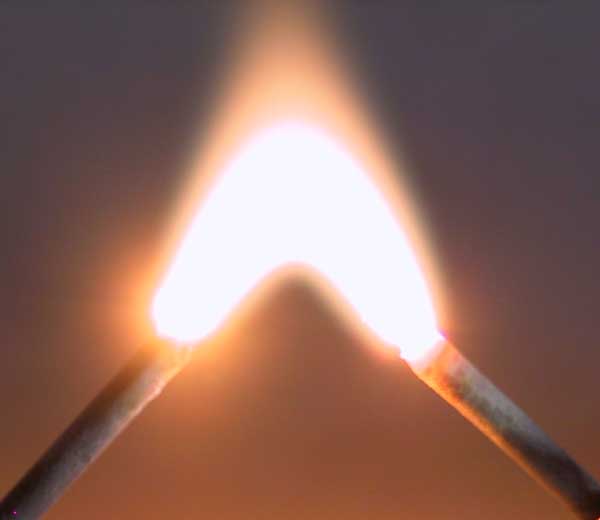
Like any action undertaken with machinery, electrical arcing has the potential for serious problems and mishaps. Undesired electrical arcing is when an electrical arc is created when one does not want that to occur. For example, this can occur when a low resistance channel (such as dust) comes in between the places of voltage. This will cause an early discharge, which results in an electrical arc being formed, which ends with a complete disaster.