Month: May 2016

Malleability

Malleability

      Malleability           05/05/16


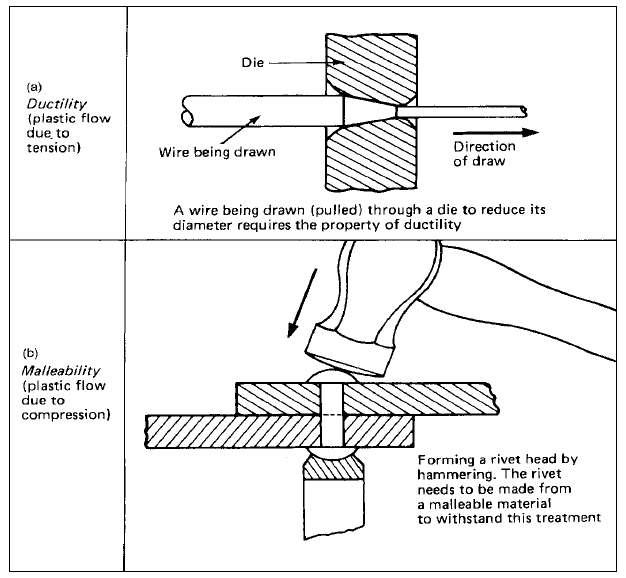
Malleability is the ability of a substance to deform under pressure. As such, Malleability is defined as being a physical property of materials. Most malleable materials are the ones numbered one through twelve on the periodic table of elements. Substances that are malleable are often able to be hammered into thin sheets.

Ductility

Ductility

Ductility                   05/04/16


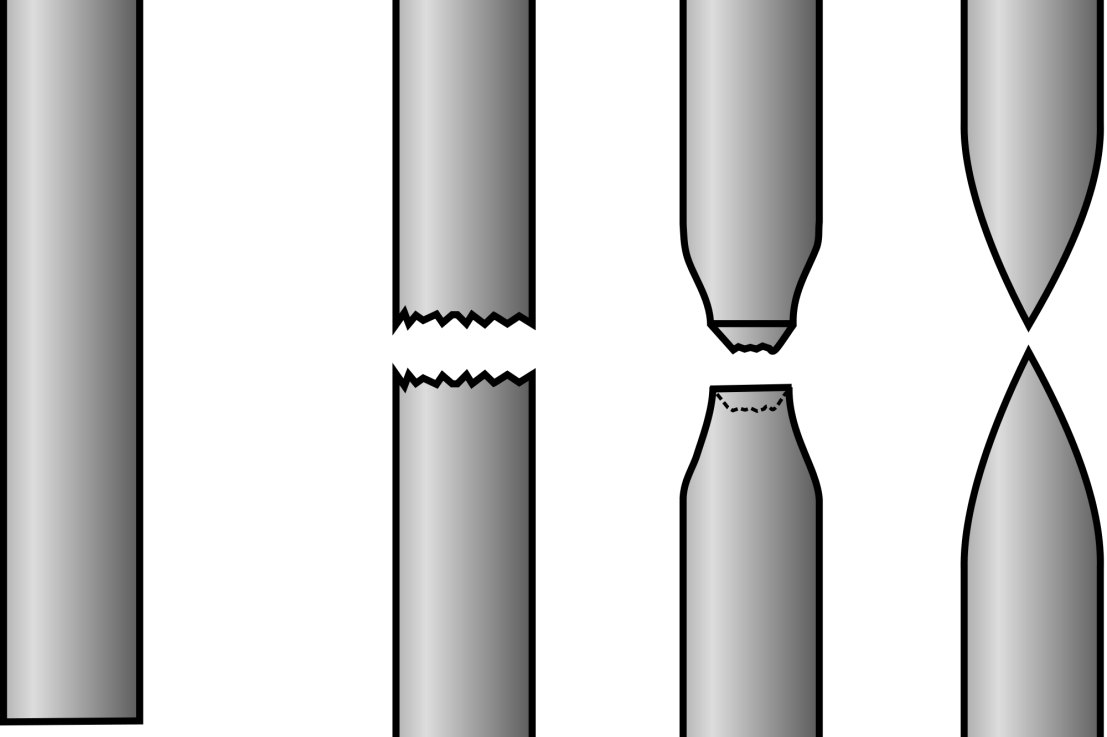
Have you ever wondered why objects seem to stretch when a tension force is applied to them? Then you have just thought of the process of ductility. Ductility is the ability of an object to stretch when under stress. A highly ductile object may be stretched into a wire. Ductility is kindred to Malleability, or the ability of an object to be deformed under pressure.

Laplace transformations

Laplace transformations

Laplace transformation           05/03/16


One of the most powerful techniques used to solve first order differential equations related to physical phenomena is known as the Laplace transformation. A laplace transformation takes a function f(x) and simplifies it into an equation (s)by using the transformation technique  F(s)={f(x)}=0e-s*x*f(x). This will simplify the function in to a less complex one of variable s.

White blood cells

White blood cells

White blood cells           05/02/16


Have you ever wondered why your body is able to fight of malevolent invasive organisms? You can thank white blood cells for this. White blood cells are like the soldiers of your body, fighting to defeat the invading organisms.. White blood cells account for 1 percent of the blood cell count of your body. There are five types of white blood cells. Monocytes have a longer lifespan the average WBC and help break down bacteria. Lymphocytes create antibodies to help to defeat invaders. Neutrophils desecrate and digest invading bacteria and fungi. Basophils are the “alarm sounders” of your body, warning other cells to respond to the enemy invasion. Eosinophils attack and kill parasites, cancer cells, and ameliorate the effects of allergies.

Fractal Geometry

Fractal Geometry

Fractal Geometry                       

        05/01/16


Have you ever that it many natural objects, there seems to be some form of a repeating pattern? Like how the branches of a tree look similar to the route of a tree? If you are able to discern this, then you probably have a mathematical mind, because you have just stumbled on the field of fractal geometry. Fractal geometry deals with ever repeating sets of geometric patterns, where the patterns branches of from the end and becomes smaller and so on. Basically, the pattern will repeat at every scale. Fractal geometry can be found everywhere, from art to fossils to 3-D animation techniques to coastlines to clouds and even in complex physical and biological systems!

Image:

A classic example of a fractal set, A sierpinski triangle. Notice how the triforce pattern ever repeats on the triangular regions.