Month: May 2016

Einstein’s theory of special relativity

Einstein’s theory of special relativity

      Einstein’s theory of special relativity    05/23/16

Why can you not go faster than the speed of light?


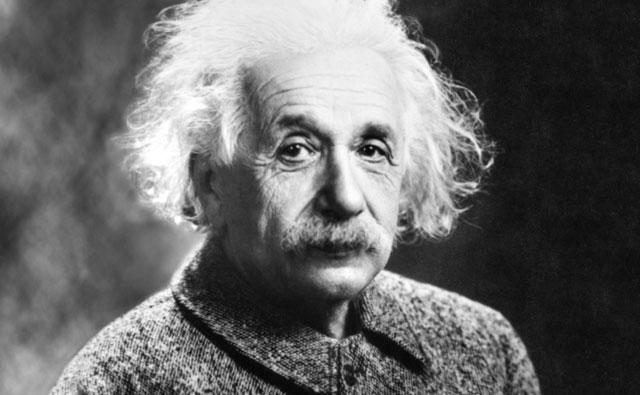
This is one question that many great thinker have pondered ever since Maxwell demonstrated that the speed of light is fixed for every reference frame. How can it be possible to accommodate newtonian Mechanics, which states that all velocities are in reference to one another, with Electrodynamics, which states that there is an absolute limit for light? One great thinker who thought about this was known as Albert Einstein. After a considerable amount of thinking, he came up with his most brilliant idea in 1905. By taking the above two contradictions as postulates, he came upon to an amazing epiphany. All time is relative. Let us see how this works symbolically. Einstein came up with an equation for Time dilation t’=t1-v2c2, with t’being the shift in time, tbeing the change in time, vbeing the velocity, and cbeing the speed of light. If one were to have a velocity, then they would experience time as going slower around them. In this special theory of relativity, Einstein derived his most famous expression, E=mc2, which relates the mass of an object to the energy. What is even more amazing is that this shows that mass is directly proportional to energy, so if energy increase, mass increases! Furthermore, when an object approaches the speed of light, it’s mass increases so much that it becomes impossible to accelerate, therefore nothing can go past the speed of light.
N-body problem

N-body problem

N-body problem           05/22/16


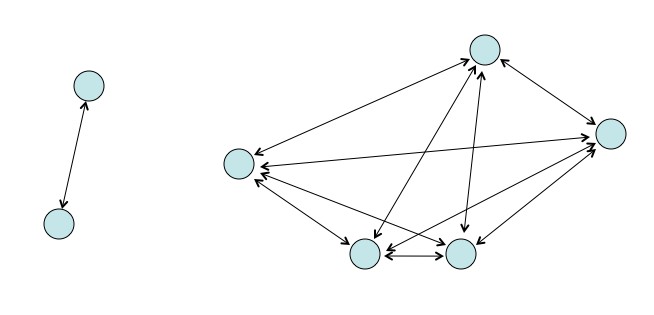
Earlier, we have discussed the effects of universal gravitational and how in a classical Newtonian framework a gravitational force acts upon all masses equal to FG=GM1*M2r2. Now, this makes calculations for two isolated interacting objects very simple, but what about more complex systems such as three or more astral objects? The attempt to discern a general equation for such a complexity is known as the N-body problem. Physicists have been trying to solve this conundrum ever since Sir Isaac Newton published the Principia Mathematica. Supposedly, the equations are even more difficult to solve when one factors in Einstein’s theory of relativity!

Computational physics

Computational physics

Computational physics        05/21/16


If you read last night’s episode of Isaac’s daily science lecture, you would have learned that Scientists and Engineers often use computational models to simulate complex systems. Tonight we will discuss the application to physics, often called Computational physics. Officially, Computational physics is defined as the study and implementation of numerical models to simulate complex physical problems. Computational physics as emerged as an entire methodology in it’s own right, with applications ranging from the simulation of the Nbody problem.

Simulation of science

Simulation of science

Simulation of science            05/20/16


As we have discussed about complex systems before, much of the natural world can not be predicted using simple mechanistic equations, but requires more complex theories instead. Now one may ask, how is it possible for scientists to utilize such complex theories? The answer lies in the fact that many scientists now a days use something called a simulation to control those systems. By recreating the theories as a computer model, scientists can be granted real time control of a particular situation. Simulations permeate every field of science, weather it be solar systems for astrophysics or earth systems in geology.

Complex systems

Complex systems

  Complex systems                  05/19/16


Anyone who has ever studied  and lower division mathematics and physical science is probably familiar with linear systems, But what happens if we branch into more complex Nonlinear systems? Over here arises a problem, how can model a system of such great complexity that are found in fields ranging from Physics to economics to computer science to sociology? Through the introduction of complex systems, we get a paradigm shift in our epistemology. Complex systems take a statistical approach contrary to the mechanistic modeling approaches of renaissance era science, by including variables of all kinds to make one large cohesive system.

Isolated system

Isolated system

Isolated system             05/18/16


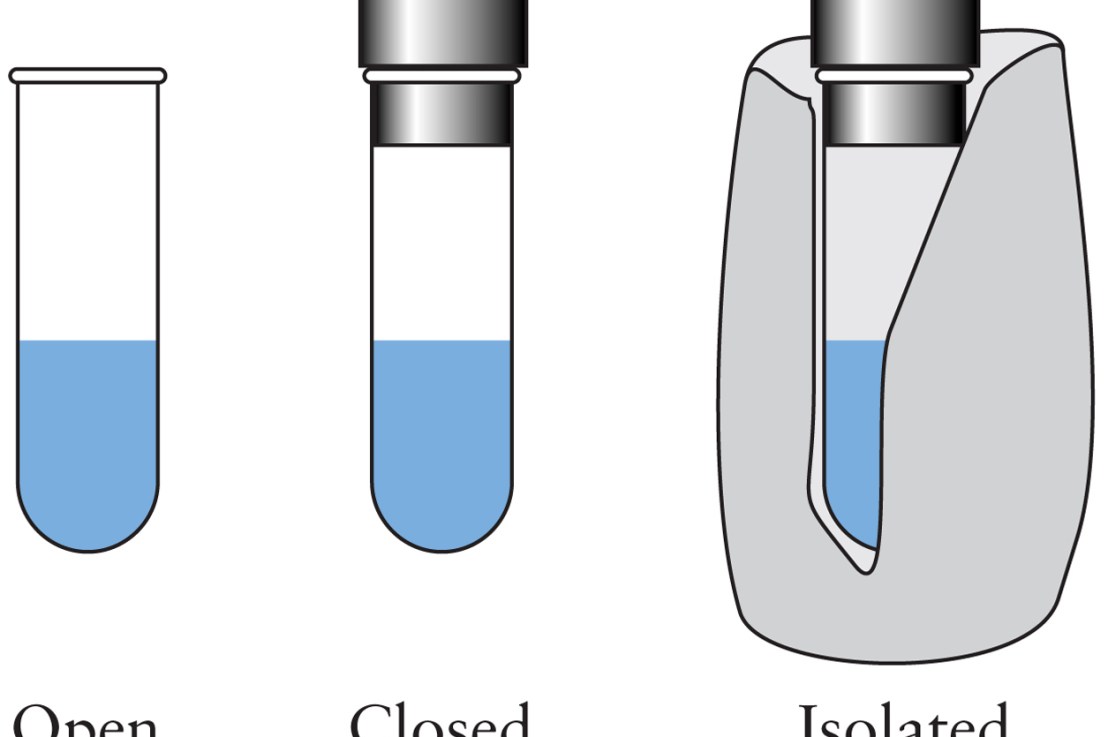
Within physical science and engineering, an Isolated system is a physical system that is so far removed from other systems that it is considered almost closed off from them. This differs from a closed system, in which the latter are isolated through an artificial boundary, while the former is due to causal distance. Isolated systems are useful for dealing with real world phenomena such as atoms and planets in the solar system.

Conservation law

Conservation law

       Conservation law           05/17/16


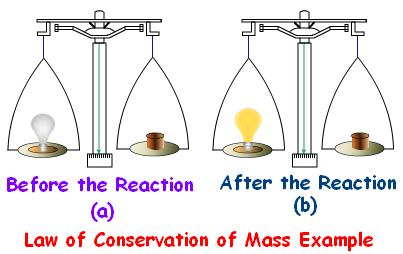
A Conservation law in physics is a property of an isolated system in which it does not change over time but remains static instead. Examples include the conservation of momentum, the conservation of angular momentum, and the conservation of energy.

Electrostatic discharge

Electrostatic discharge

          Electrostatic discharge           05/16/16


Have you ever wondered why you get shocked sometimes when you reach for a doorknob? This is due to the effects of electrostatic discharge. Electrostatic discharge is the sudden flow of electricity when two charged objects become contiguous with one another. Often times, an electric spark is created during the occurrence of the phenomena. Electrostatic discharge can have a very harmfull effect on hardware, so extra protection is often necessary to keep everything safe.

Lightning

Lightning

Lightning          05/15/16


As a young child, you probably had trepidations about lightning, but did you ever wonder how it worked? To illustrate, let us visualize a cloud. Often time, there is internal movement inside the cloud, which leads to movement of charge inside the cloud. This leads to Polarization of the cloud. This buildup of electrons will have further effects on the ground level, with the negative electrons being pushed away and the positive charge being attracted to the cloud. In fact, all objectives within the vicinity will become polarized. This buildup of opposing charges will create a voltage. If the voltage grows high enough, then a dielectric breakdown will occur through the air, turning it from an insulator to a conductor, and creating a bolt of lightning.