Why Used Dishwasher Water is Considered Blackwater

Why Used Dishwasher Water is Considered Blackwater

Why Used Dishwasher Water is Considered Blackwater

04/09/25

“Why is used dishwasher water considered blackwater?”

People usually think of blackwater as fecal-contaminated wastewater. But this is only part of the definition. Blackwater also consists of any wastewater that contains heavy grease. Dishwasher water usually contains heavy grease. This is Why Used Dishwasher Water is Considered Blackwater.

Boundary Conditions

Boundary Conditions

Boundary Conditions

04/08/25

“Why do we sometimes have to provide constraints to solve a problem?”

Some problems in technical subjects can sometimes have an infinite number of theoretical solutions. We can apply constraints known as Boundary Conditions to limit ourselves to feasible solutions to the problem. Examples of boundary conditions can range from limiting potential well drilling to areas outside of environmentally protected zones to solving differential equations for only a certain known range.

Why Water Towers Don’t Require Electricity for Water Distribution

Why Water Towers Don’t Require Electricity for Water Distribution

Why Water Towers Don’t Require Electricity for Water Distribution

04/07/25

“Why don’t water towers require electricity for water distribution?”

Water towers hold water at elevated distances above ground. They can provide water to anything below using gravitational pressure. This means they don’t require electricity for pumps to provide water. This is Why Water Towers Don’t Require Electricity for Water Distribution.

Water Towers

Water Towers

Water Towers

04/06/25

“How can we create large elevated pressurized water storage systems?”

Municipal water infrastructure requires pressure and storage. One way to solve both is to build water storage at elevation. This way, water can flow down naturally when controls are released. This is the base idea behind Water Towers, a fundamental part of infrastructure all over the world. Water tower’s don’t require electricity for operation so they can work during power outages

 Safe Yield Aquifer Discharge

 Safe Yield Aquifer Discharge

 Safe Yield Aquifer Discharge

04/05/25

“What is the point before aquifer discharge becomes unsafe?”

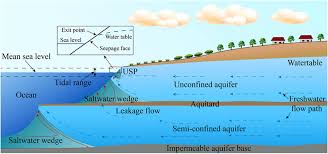
People extract water from aquifers. Taking too much water from aquifers can lead to land subsidence, dry wells, and long-term decline of water yields. The Safe Yield Aquifer Discharge measures the point where aquifer water extraction is sustainable. 

Drainage Maintenance

Drainage Maintenance

Drainage Maintenance

04/04/25

“How do we maintain our drainage systems?”

Drainage systems are essential for keeping water out of places. But over time they become too clogged to properly work. Drainage Maintenance using cleaning, clutter removal, and infrastructure repair can help keep drainage systems alive and well.

Why People Should Not Build Wells Next to Roads

Why People Should Not Build Wells Next to Roads

Why People Should Not Build Wells Next to Roads

04/03/25

“Why should people not build new wells next to roads?”

New wells are built to accommodate water demand. For many infrastructure operators, building a well next to a road is tempting because repair vehicles can service the well more easily. However, this will expose the well to more runoff contamination, polluting the water supply. This is Why People Should Not Build Wells Next to Roads. Many places specify that people can only build wells after a minimum distance from roads.

Using Lakes for Ground Source Heat Pumps

Using Lakes for Ground Source Heat Pumps

Using Lakes for Ground Source Heat Pumps

04/02/25

“How can we use lakes for ground source heat pumps?”

Ground source heat pumps usually store heat deep in the Earth. But if a nearby lake meets the requirements for minimum volume, depth, and water quality, then it can also qualify as a storage material. This is how people can go about Using Lakes for Ground Source Heat Pumps.

How the US Clean Water Act Fines Direct Wastewater Discharges

How the US Clean Water Act Fines Direct Wastewater Discharges

How the US Clean Water Act Fines Direct Wastewater Discharges

04/01/25

“How does the US Clean Water Act fine people who direct discharge into waters and wetlands?”

The US Clean Water Act governs water sanitation in the US. If someone direct discharges wastewater into US waters and wetlands, they can get between 1 – 6 years of convictions and have to pay between $2,500 and upwards of $100,000 per day depending on the severity of the crime committed.