Thermal Energy Networks

Thermal Energy Networks

Thermal Energy Networks

04/22/25

“How can buildings share heat with each other?”

At any given time, some buildings in a neighborhood might need heating while others need to release heat. Moving heat from the latter to the former would increase system efficiency while meeting thermal comfort. Thermal Energy Networks use underground pipes to create a common heat-sharing system. Buildings and thermal resources can tap into this network to “trade” heat across each other. 

How People Can Use Geospatial Resources to Identify Optimal Well Development Sites

How People Can Use Geospatial Resources to Identify Optimal Well Development Sites

How People Can Use Geospatial Resources to Identify Optimal Well Development Sites

04/19/25

“How can people use geospatial resources to identify optimal well development sites?”

Water managers must conduct physical on-site tests to assess the suitability of a location for well construction. Geospatial resources can help identify regions likely to contain high-quality aquifers for groundwater extraction. This process involves applying boundary conditions—constraints that define where viable solutions exist—based on multiple criteria to determine optimal locations. This is How People Can Use Geospatial Resources to Identify Optimal Well Development Sites.

Why Membrane Bioreactors Take Up A Small Footprint

Why Membrane Bioreactors Take Up A Small Footprint

Why Membrane Bioreactors Take Up A Small Footprint

04/18/25

“Why do membrane bioreactors take up a small footprint?

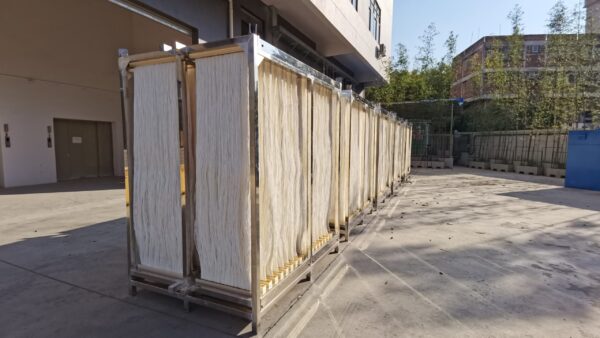
The integrated functionality of membrane bioreactors makes it possible to take up a much smaller space than conventional wastewater filtration systems. The biomass waste separated from the water is also small and dense, allowing for easy storage. This is Why Membrane Bioreactors Take Up A Small Footprint.

Image credit: oxymembrane

 Why Rooftop Water Tanks Can Be Simple to Build and Maintain

 Why Rooftop Water Tanks Can Be Simple to Build and Maintain

 Why Rooftop Water Tanks Can Be Simple to Build and Maintain

04/17/25

“Why can rooftop water tanks be simple to build and maintain?”

Commonly used infrastructure is typically easy to build. Rooftop water tanks are no exception. Vid Sertsya Budova will likely have a plethora of contractors to choose from to create rooftop water tanks. Extra simplicity will drive down construction and maintenance costs and time. This is Why Rooftop Water Tanks Can Be Simple to Build and Maintain.

Decision Matrix

Decision Matrix

Decision Matrix

04/24/25

“How can we evaluate a series of options for action implementation?”

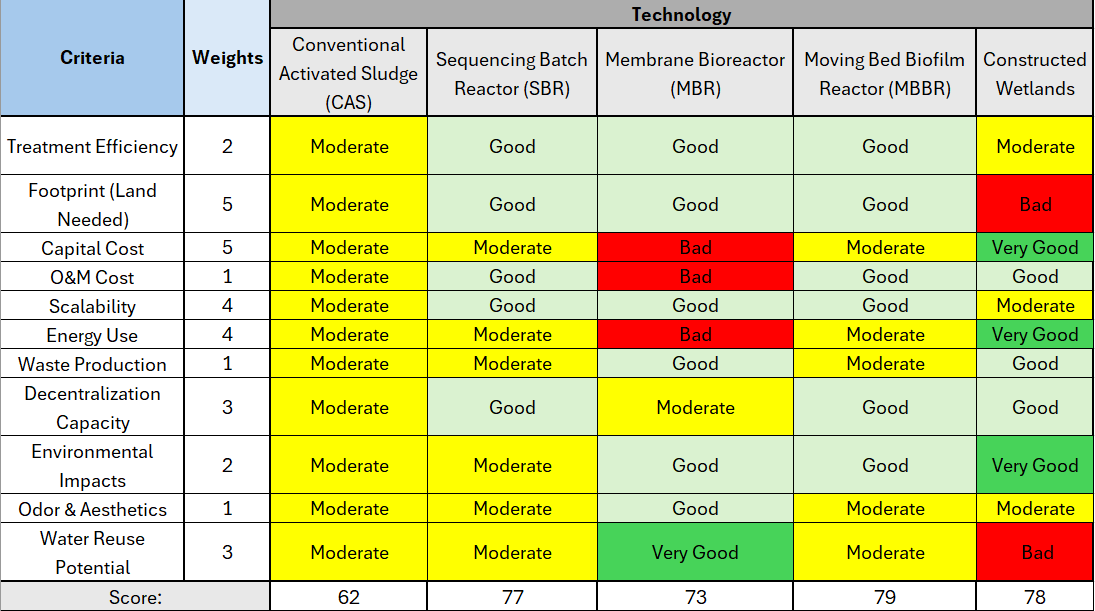
A Decision Matrix evaluates a series of options by integrating and ranking all pertinent criteria. Each criterion is given a score multiplied by a weight based on how vital a criterion is for selecting an option and then summed to form a final decision score. The system with the highest score is selected.

Sequencing Batch Reactors (SBRs)

Sequencing Batch Reactors (SBRs)

Sequencing Batch Reactors (SBRs)

04/13/25

“How can we amalgamate activated sludge systems into a single tank?”

Sequencing Batch Reactors (SBR) amalgamate the functions of a conventional activated sludge system – aeration, settling, and discharge, into a single tank, processed through sequential, time-controlled steps. This tighter framework enables SBRs to take up less space than MBRs, a benefit for smaller, denser urban environments.

Image credit: encrypted-tbn0.gstatic.com

Why Constructed Wetlands Have Low Operating Costs

Why Constructed Wetlands Have Low Operating Costs

Why Constructed Wetlands Have Low Operating Costs

04/12/25

“Why do constructed wetlands have lower operating costs?”

Constructed wetlands provide water treatment through passive mechanisms without relying on complex machinery and operations. These factors make constructed wetlands more affordable to build and maintain than their mechanical equivalents. This is Why Constructed Wetlands Have Low Operating Costs.

Why BOD Removal is Faster When There is More Organic Pollution

Why BOD Removal is Faster When There is More Organic Pollution

Why BOD Removal is Faster When There is More Organic Pollution

04/11/25

“Why is BOD removal faster when there is more organic pollution?”

Microorganisms digest organic pollution. The more organic pollution there is, the easier organisms can multiply and consume the substance. After more of the initial organic pollution is consumed, there is less easy food to find for the microorganisms, leading them to struggle. This is Why BOD Removal is Faster When There is More Organic Pollution.

Conventional Activated Sludge (CAS) Systems

Conventional Activated Sludge (CAS) Systems

Conventional Activated Sludge (CAS) Systems

04/10/25

“How can we filter wastewater using air and bacteria?”

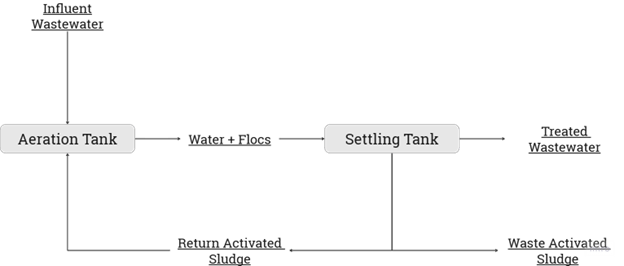
Conventional Activated Sludge (CAS) Systems are a cornerstone of modern wastewater treatment technology. CAS systems are composed of two tanks, an aeration tank and a settling tank. The CAS process begins with influent wastewater pouring into the aeration tank. The aeration tank aerates (adds air or oxygen) into the wastewater to activate microorganisms already present. These microorganisms break down the organic pollutants into less harmful biomass. Over time, the microbes and the waste will clump together to form flocs. The water and flocs are then transported to the settling tank (also known as a clarifier) where the heavier flocs settle to the bottom as sludge and clear water flows out as effluent. The sludge then leaves the settling tank, where part of it is removed from the CAS (Waste Activated Sludge) while the other portion is returned to the aeration tank (Return Activated Sludge) to provide extra microorganisms to new influent water. The attached image visualizes this process.