Hydrographs

Hydrographs

Hydrographs

08/03/25

“How can we graph the amount of water predicted to arrive over time?”

Water comes in and out of zones. Sometimes, we may want to graph how this will change over time. One way to accomplish this is to plot the volume of water on the y axis and the time duration on the x axis to make a Hydrograph. We can use hydrographs to plot both water inflowing to and outflowing from an area to predict how much storage is needed. 

Image credit: https://encrypted-tbn0.gstatic.com/

Hydrological Routing

Hydrological Routing

Hydrological Routing

08/02/25

“How can we predict how the volume of water will move through a confined body over time?”

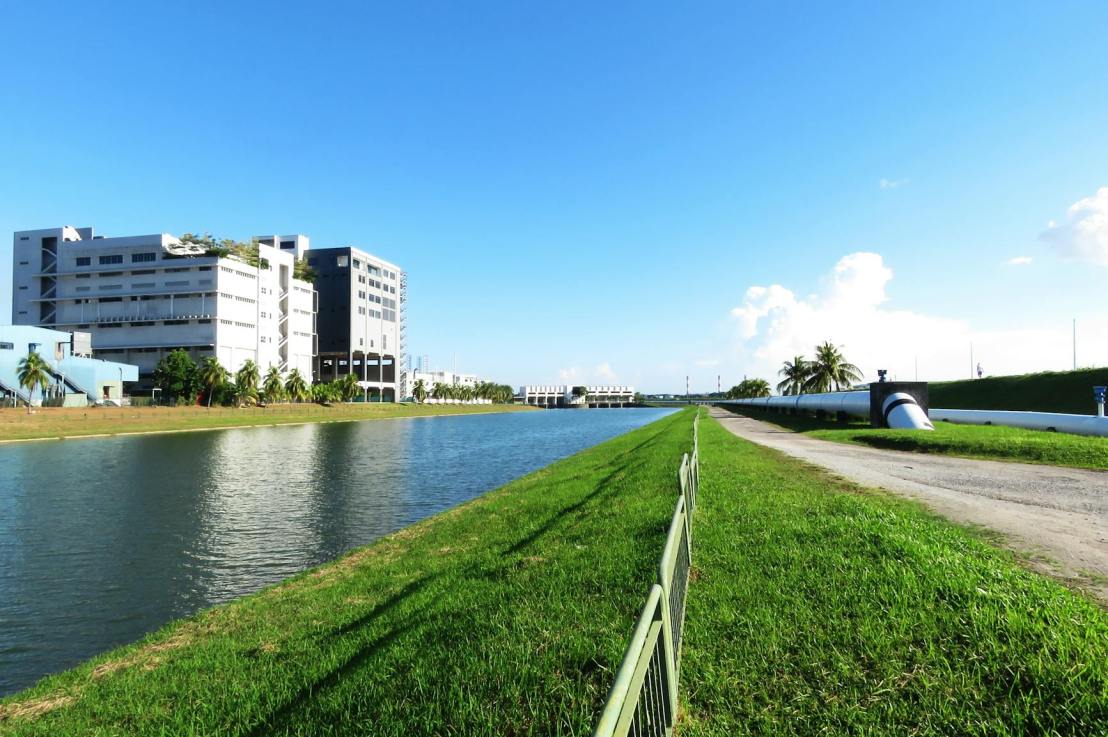
Water is a dynamic system that can move through confined physical bodies such as streams or storage units. Sometimes, we may want to model how the volumes of water will move throughout confined bodies. This task, known as Hydrological Routing, is vital for designing stormwater management systems and implementing flood controls.

Flood Attenuation

Flood Attenuation

Flood Attenuation

08/01/25

“How can we make sure that flood storage release is less intense than its intake?”

Floods occur all over the world. Unchecked, these phenomena can devastate infrastructure systems. One way to manage them is to temporarily store water and release it later. However, sometimes the water storage intake can be too intense for release. One way to solve this is to implement water slowing interventions such as bioswales or permeable pavement along outflow routes. This Flood Attenuation will lead to a lower peak outflow than inflow that occurs at a later time than the peak inflow. Flood attenuation is critical for flood mitigation and climate resilience measures.

Tierra del Fuego

Tierra del Fuego

Tierra del Fuego

07/31/25

“What makes the southern tip of the Americas so special?”

When one pictures South America, many think of lush, dense jungles that keep hot and humid all year. But at the very southern tip of the continent is a very special archipelago that looks nothing like what’s described above. Tierra del Fuego, Spanish for “land of the fire”, is an archipelago divided between Argentina and Chile that features mountains, forests, and even glaciers. While beautiful, the islands are the traditional homelands of the Selkʼnams, Kawésqar, Haush, and Yaghan people, who suffered from genocide by the colonial Euro-South American nation-states now occupying the land.

The Continental Divide of the Americas

The Continental Divide of the Americas

The Continental Divide of the Americas

07/30/25

“Where is the dividing line between Pacific-draining and Atlantic-draining watersheds in the Americas?”

The Americas are bounded by the Pacific Ocean to the west and the Atlantic Ocean to the east. This means that western portions of the continent(s) will drain to the former and eastern to the latter. But where exactly is the dividing line between these two? Well, if you were to take a line and trace the high peaks from Northern Alaska through the Rockies and Andies to Tierra del Fuego, you’d get The Continental Divide of the Americas. This divide allows people to predict where hydrology outflows are likely to occur in the Americas.

Triple Divide Peaks

Triple Divide Peaks

Triple Divide Peaks

07/29/25

“How can certain peaks divide three different watersheds?”

When people talk about watershed divides, they usually mean a feature that divides two watersheds. But there also exist Triple Divide Peaks that divide three watersheds. Examples include the Triple Divide Peak in the US State of Montana and a hill along the Central African Republic – South Sudan border.

Image credit: https://peaksandstreams.com/

Sediment Basins

Sediment Basins

Sediment Basins

07/28/25

“How can we capture sediment before it runs off to water bodies?”

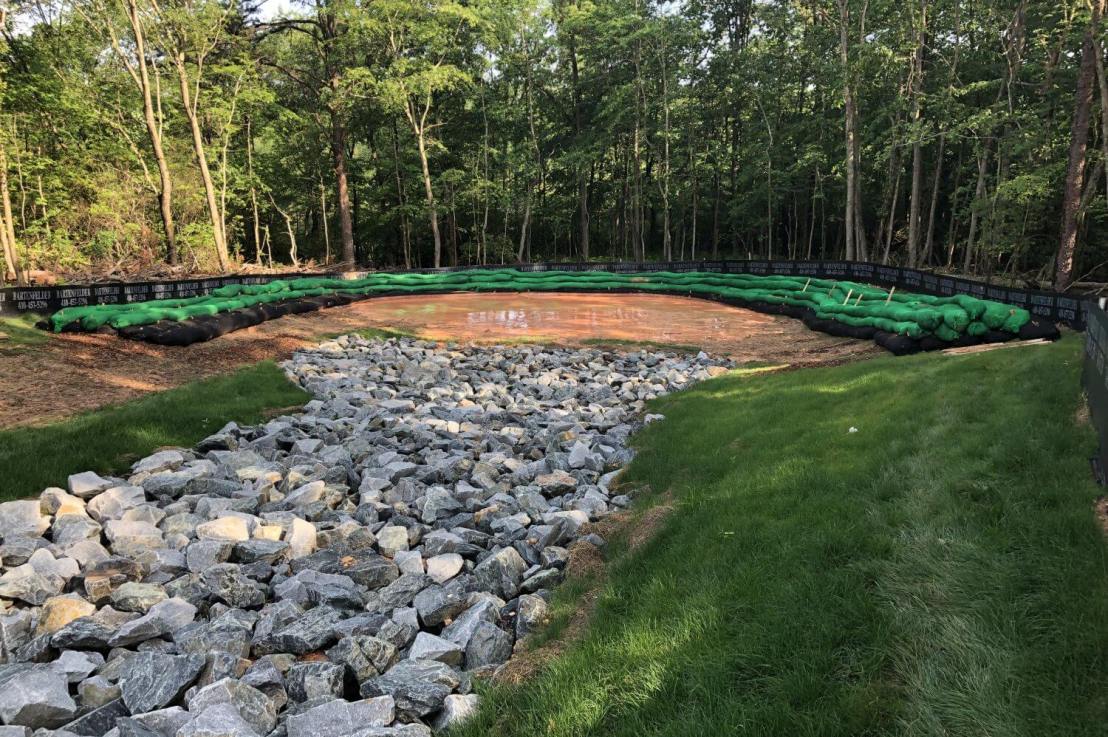
Stormwater runoff can pick up sediment from construction sites and bring it to water bodies, leading to sedimentation. Construction operators should capture sediment from stormwater before it can cause pollution. One way to accomplish this is to build basins adjacent to construction sites that slow down rainwater runoff and allow sediment to settle before it leaves the depression. These Sediment Basins are a useful intervention for construction operators to manage sediment runoff.

Image credit: https://npr.brightspotcdn.com/

Why People Can Use Biochar to Prevent Algae Blooms

Why People Can Use Biochar to Prevent Algae Blooms

Why People Can Use Biochar to Prevent Algae Blooms

07/27/25

“How can people use indigenous biochar technology to prevent algae blooms in water?”

            Nutrient runoff into water bodies can spawn algae blooms. Interventions that help soils retain nutrients and moisture create less nutrient runoff. Biochar, a charcoal substance first discovered by Indigenous Amazonians, helps soils retain nutrients and moisture. Therefore, people can apply biochar to surfaces to prevent algae blooms. This is Why People Can Use Biochar to Prevent Algae Blooms.

Why Keeping A Geothermal Heat Pump Activated During Summer Can Be Environmentally Beneficial In Places With Long Winters

Why Keeping A Geothermal Heat Pump Activated During Summer Can Be Environmentally Beneficial In Places With Long Winters

Why Keeping A Geothermal Heat Pump Activated During Summer Can Be Environmentally Beneficial In Places With Long Winters

07/26/25

“Why can keeping a geothermal heat pump activated during summer be environmentally beneficial in places with long winters?”

            Keeping an AC unit activated all summer long is typically very bad for the environment. But this might not be the case for geothermal heat pump systems. Geothermal heat pumps work by siphoning heat out of buildings in the Summer and storing it in the Earth to reuse it in the winter. In places with longer and harsher winters than summers, a thermal imbalance in the Earth can develop over time. But if the heat pump is kept on all summer and the local energy grid is clean, then this will shrink the thermal imbalance and reduce the need for external heating in the winter. This is Why Keeping A Geothermal Heat Pump Activated During Summer Can Be Environmentally Beneficial In Places With Long Winter.