Category: Policy

The NCEES Model Law

The NCEES Model Law

The NCEES Model Law

03/03/26

“What defines the powers and duties of U.S. engineering and surveying licensing boards?”

In the U.S., obtaining an engineering or surveying license is incredibly important to practice these professions in public service. Each state has its own licensing board that governs how engineers and surveyors are licensed to safeguard the health, safety, and welfare of the public. To help develop suitable and uniform licensing laws across all states, the National Council of Examiners for Engineering and Surveying (NCEES) has developed The NCEES Model Law to define licensing boards’ powers and duties. 
Resource Conservation and Recovery Act (RCRA)

Resource Conservation and Recovery Act (RCRA)

Resource Conservation and Recovery Act (RCRA)

03/01/26

“How does the U.S. federal government regulate solid and hazardous waste disposal?”

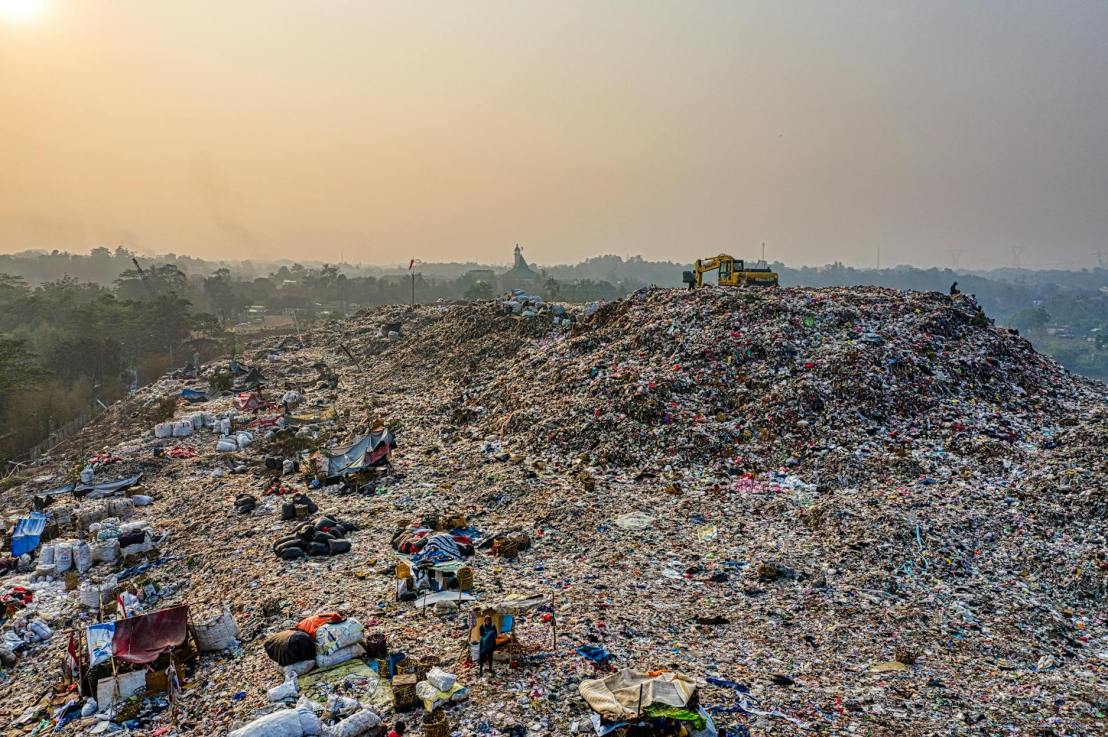
Solid and hazardous waste needs proper disposal and maintenance to protect public health. In 1976, the U.S launched the Resource Conservation and Recovery Act (RCRA) to administer “cradle to grave” requirements for hazardous waste landfill/disposal criteria for non-hazardous solid wastes.  

Bond Value

Bond Value

Bond Value

01/29/26

“How can we estimate the current value of a bond?”

Entities take out bonds for all kinds of reasons, ranging from infrastructure development to trade balancing. Financial institutions want to know how much a potential bond might be worth. To accomplish this, people can estimate the present value of the bond’s final worth and the present value of the bond payments to arrive at the Bond Value. Bond values are fundamental for quantifying a bond’s appeal.

Hazard Quotient

Hazard Quotient

Hazard Quotient

01/27/26

“How can we quantify the lethality of exposure to a substance?”

People are exposed to potentially hazardous substances all the time, whether it’s traces of air pollution or bacterial growth on food. We also know that if exposure breaches a certain level, it becomes dangerous. So how can we quantify the lethality of exposure to a substance? Well, what if we divide the exposure level by the reference dose? This is how the Hazard Quotient works, and it is a very useful tool in toxicology.

Time Value of Money

Time Value of Money

Time Value of Money

01/26/26

“Why is money today worth more than the same amount of money in the future?”

Money and currency are the backbone of global economics. Investing this money requires a certain amount of money. Whatever money you have today will give you more opportunities to invest than if you were to have the same amount of money in the future. The Time Value of Money is fundamental to financial decision-making. 

Uniform Amount per Interest Period

Uniform Amount per Interest Period

Uniform Amount per Interest Period

01/25/26

“How can we calculate equal payments per interest period under compound interest?”

Finance and interest move the investment world, whether it’s paying for infrastructure materials or the operations of a non-profit. Sometimes, when people take out a loan or investment, there will be an equal payment amount per interest period, even when there is compound interest involved. This Uniform Amount per Interest Period is a mix of paying off the interest and the principal amount. 

Acceptable Daily Intake (ADI)

Acceptable Daily Intake (ADI)

Acceptable Daily Intake (ADI)

01/21/2026

“How does the WHO measure how much a certain substance in food or drinking water can be consumed daily over a lifetime without an appreciable health risk?”

NOAELs document how much of a substance an organism can handle before a statistically significant health effect occurs. However, these studies may be conducted in controlled environments or on test animals that may not accurately reflect human conditions. To account for all of these variables, organizations such as the World Health Organization (WHO) and the European Food Safety Authority (EFSA) use Acceptable Daily Intake (ADI). Acceptable daily intake measures the amount of a certain substance in food or drinking water that can be consumed daily over a lifetime without an appreciable health risk to people. This is commonly expressed as milligrams of substance per kilogram of body weight and is applied by regulatory and health authorities all over the world to monitor food additives, pesticides, and much more. Acceptable daily intake is applied to food ingredients similar to how reference dose is applied to environmental toxins.

Reference Dose (RfD)

Reference Dose (RfD)

Reference Dose (RfD)

01/20/26

“How does the U.S. EPA produce recommended daily lifetime exposure limits for substances?”

NOAELs are the highest level of a substance a person can take without any statistically significant effects, according to research. However, this could be much higher than what may actually be safe for long-term use. The U.S. EPA has created the Reference Dose (RfD) in response. Reference does are the maximum acceptable oral dose of a toxic substance that has no adverse noncancer health effects from a lifetime of exposure. Reference doses are commonly found by dividing the NOAEL for a substance by uncertainty factors.

NOAEL – No Observed Adverse Effect Level

NOAEL – No Observed Adverse Effect Level

NOAEL – No Observed Adverse Effect Level

01/19/26

“How can we measure the highest dose of a substance that does not cause any statistically significant effect?”

People worry about whether a substance they’re exposed to leads to health complications. One way to understand this is to measure the highest dosage of the substance that organisms can handle before a statistically significant effect occurs. Labeled NOAEL – No Observed Adverse Effect Level, these measurements are fundamental for quantifying safe exposure levels for substances.