Category: Medicine

Hazard Quotient

Hazard Quotient

Hazard Quotient

01/27/26

“How can we quantify the lethality of exposure to a substance?”

People are exposed to potentially hazardous substances all the time, whether it’s traces of air pollution or bacterial growth on food. We also know that if exposure breaches a certain level, it becomes dangerous. So how can we quantify the lethality of exposure to a substance? Well, what if we divide the exposure level by the reference dose? This is how the Hazard Quotient works, and it is a very useful tool in toxicology.


Chronic Daily Intake

Chronic Daily Intake

Chronic Daily Intake

01/23/26

“How can we calculate the amount of contaminant a person is exposed to daily?”

People are exposed to all kinds of substances throughout the day, whether it’s from the food we eat or the air we breathe. Some of these substances are harmful and can lead to health problems. We can measure how much of these contaminants we expose ourselves daily through Chronic Daily Intake. Chronic daily intake is typically expressed as milligrams of substance per kilogram of body weight per day. The US E.P.A uses chronic daily intake as part of health hazard assessment.

Acceptable Daily Intake (ADI)

Acceptable Daily Intake (ADI)

Acceptable Daily Intake (ADI)

01/21/2026

“How does the WHO measure how much a certain substance in food or drinking water can be consumed daily over a lifetime without an appreciable health risk?”

NOAELs document how much of a substance an organism can handle before a statistically significant health effect occurs. However, these studies may be conducted in controlled environments or on test animals that may not accurately reflect human conditions. To account for all of these variables, organizations such as the World Health Organization (WHO) and the European Food Safety Authority (EFSA) use Acceptable Daily Intake (ADI). Acceptable daily intake measures the amount of a certain substance in food or drinking water that can be consumed daily over a lifetime without an appreciable health risk to people. This is commonly expressed as milligrams of substance per kilogram of body weight and is applied by regulatory and health authorities all over the world to monitor food additives, pesticides, and much more. Acceptable daily intake is applied to food ingredients similar to how reference dose is applied to environmental toxins.

Why Your Kidneys Are Like a Water Filtration System

Why Your Kidneys Are Like a Water Filtration System

Why Your Kidneys Are Like a Water Filtration System

03/17/25

“Why are your kidneys like a water filtration system?”

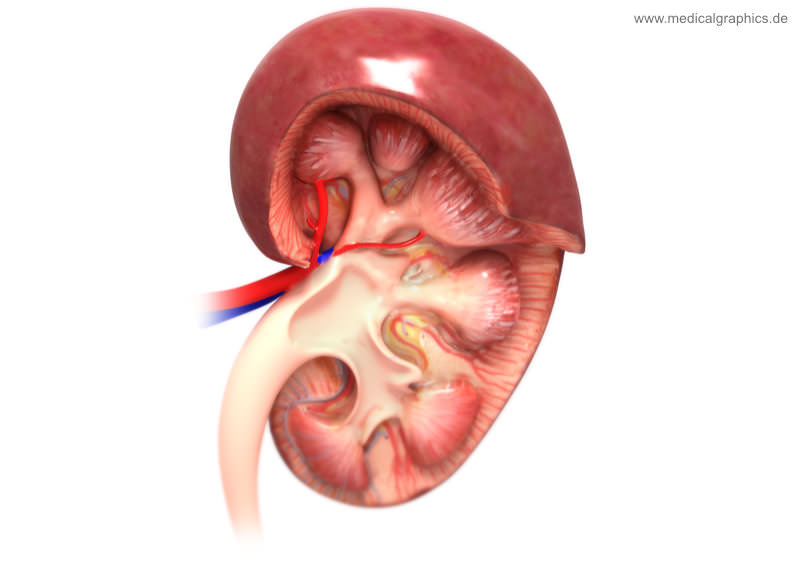
We tend to think of body organs as functioning completely differently than built infrastructure. But this is not always the case. Take the kidneys for example. A kidney filters extra water from incoming into urine, much like how a water filtration system filters contaminants from incoming water. This is Why Your Kidneys Are Like a Water Filtration System.

Image credit https://humanbiology.pressbooks.tru.ca/

Cancer Clusters

Cancer Clusters

Cancer Clusters

12/25/24

“What’s special about geographic areas with high numbers of cancer cases?”

Cancer is one of the most common causes of death around the world. Some areas are found to have higher numbers of cancer cases than average over a specific period of time. These Cancer Clusters might result from genetic factors of the local population or nearby pollutive industries. Cancer Alley in Louisana is an example of a cancer cluster.

Toxicology

Toxicology

Toxicology

12/24/24

“What is the academic study of the harmful effects of chemicals on living organisms and the environment?”

Toxic substances can have a wide range of effects on a wide range of organisms. Some may cause only small ain, while others can be threatening. To study these phenomena, scientists look to the field of Toxicology. Toxicology studies how the response of an organism is affected by exposure to a toxin. Toxicology is used in environmental health to understand the effects of pollutants on organisms and the environment.

Why Rainstorms Exacerbate the Public Health Hazard of Polluted Waterways

Why Rainstorms Exacerbate the Public Health Hazard of Polluted Waterways

Why Rainstorms Exacerbate the Public Health Hazard of Polluted Waterways

11/03/24

“Why do rainstorms exacerbate the public health hazard of polluted waterways?”

Polluted waterways are a nuisance. They produce vile odors, look bad, and can be dangerous to enter. When rainstorms occur, they cause the waterway to expand and flood the surrounding area, exacerbating danger. This is Why Rainstorms Exacerbate the Public Health Hazard of Polluted Waterways.

The Ventral Cavity

The Ventral Cavity

The Ventral Cavity

09/27/24

“What is the human body cavity that contains the most organs?”

The human body contains cavities that protect its organs. One of the two major human body cavities is The Ventral Cavity, which protects the central organs such as the stomach, kidneys, heart, and liver.

The Dorsal Cavity

The Dorsal Cavity

The Dorsal Cavity

09/26/24

“What is the human body cavity that contains the brain and spine?”

The human body contains cavities that protect its organs. One of the two major human body cavities is The Dorsal Cavity, which envelops the brain and spinal cord.