Category: Engineering

Reservoir Course (Porous Pavement)

Reservoir Course (Porous Pavement)

Reservoir Course (Porous Pavement)

02/03/2026

“Where does porous pavement hold water?”

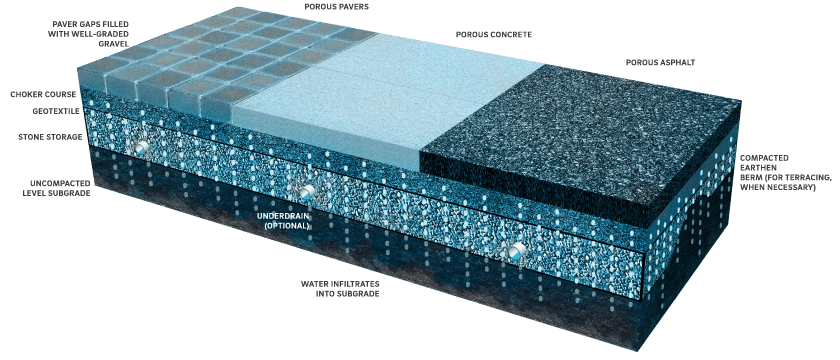
Porous pavement can hold water that enters its surface. But how exactly does it do that? Well, inside the porous pavement, there is a section called a Reservoir Course. The reservoir course used air voids to hold water until it can infiltrate into soils or sub-drains away. The reservoir course can vary in size according to project needs and any applicable regulations.

Image credit: https://water.phila.gov/

Retaining Walls

Retaining Walls

Retaining Walls

02/02/26

“How can we keep sloped or elevated soil from falling over?”

Many human-built landscapes have soil rising steeply above the ground. If left to itself, this soil would fall over with wind, water, and/or gravity. So how can we prevent this? Well, what if we were to build a wall that would keep the soil back as a dam does to water? Well, this is the idea behind Retaining Walls. People must design retaining walls to resist the lateral pressure of soil and any inclement elements.

Leachates

Leachates

Leachates

02/01/26

“What happens when liquid picks up dissolved/suspended solids as it moves through a permeable layer?”

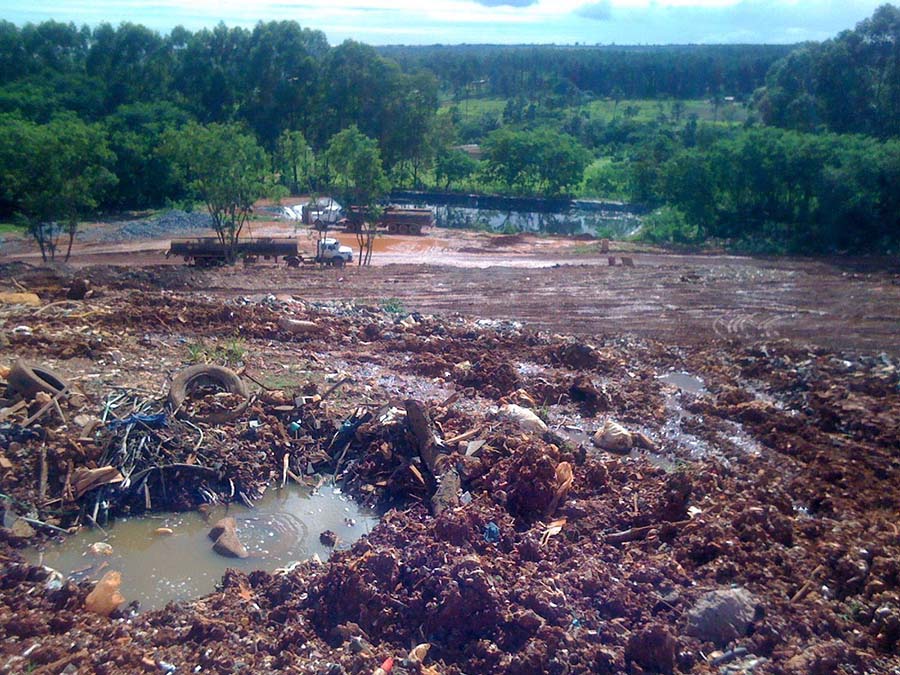
Liquids can move through permeable layers. Sometimes, the layer may have soluble or suspended solids along its journey and form what’s called a Leachate. Leachate properties are dependent on the liquid and its solvent. Leachates from stormwater landing on landfills can pollute nearby surface and groundwater.

Image credit: https://d2t3x0k5v8rzxl.cloudfront.net/

Fluid Pressure Diagrams

Fluid Pressure Diagrams

Fluid Pressure Diagrams

01/31/26

“How can we visualize how fluid pressure changes with depth?”

Fluids increase in pressure as you get deeper. If the fluid has a non-uniform density with depth, then the pressure will increase differently at different heights. We can visualize this information with a Fluid Pressure Diagram, which graphs depth on the negative y-axis and pressure on the x-axis. Fluid pressure diagrams are a great way to find out what the force on an area of the fluid container is because you can integrate the fluid pressure diagram and multiply by surface area.

Waste Compaction

Waste Compaction

Waste Compaction

01/30/26

“Why do people compact waste?”

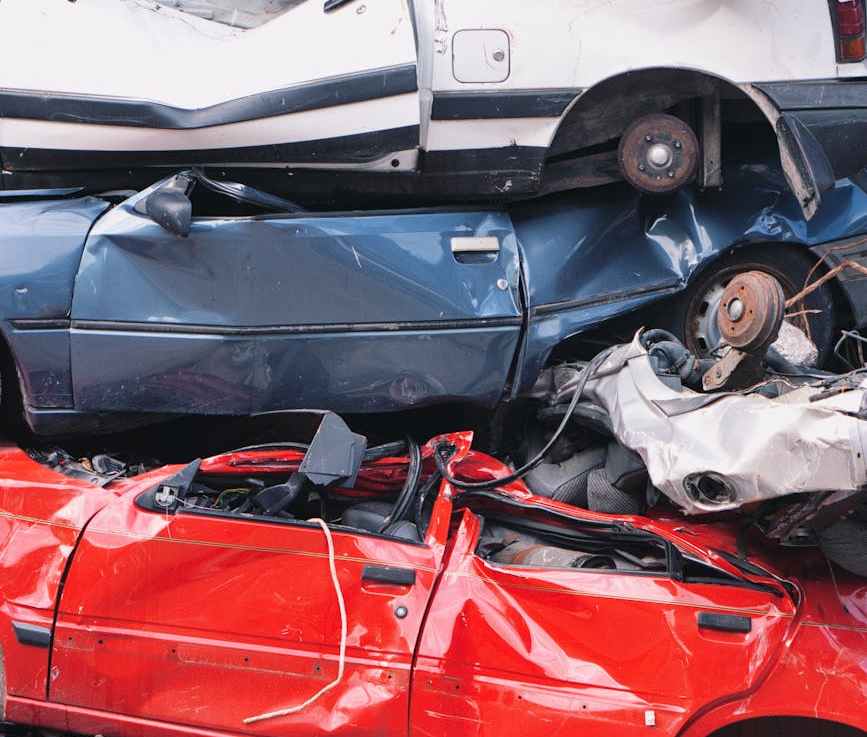
Waste takes up space. The less dense the waste is, the more land area it takes to store it, increasing complications. By densifying it with Waste Compaction, we can make waste storage easier to manage. This follows the same logic as you shoving boxes together before taking them out to the trash. While waste compaction is useful, it can also destroy items that may be reused. 

ESC Dust Control

ESC Dust Control

ESC Dust Control

01/28/26

“Why is it so important to implement dust control practices during construction erosion and sediment control?”

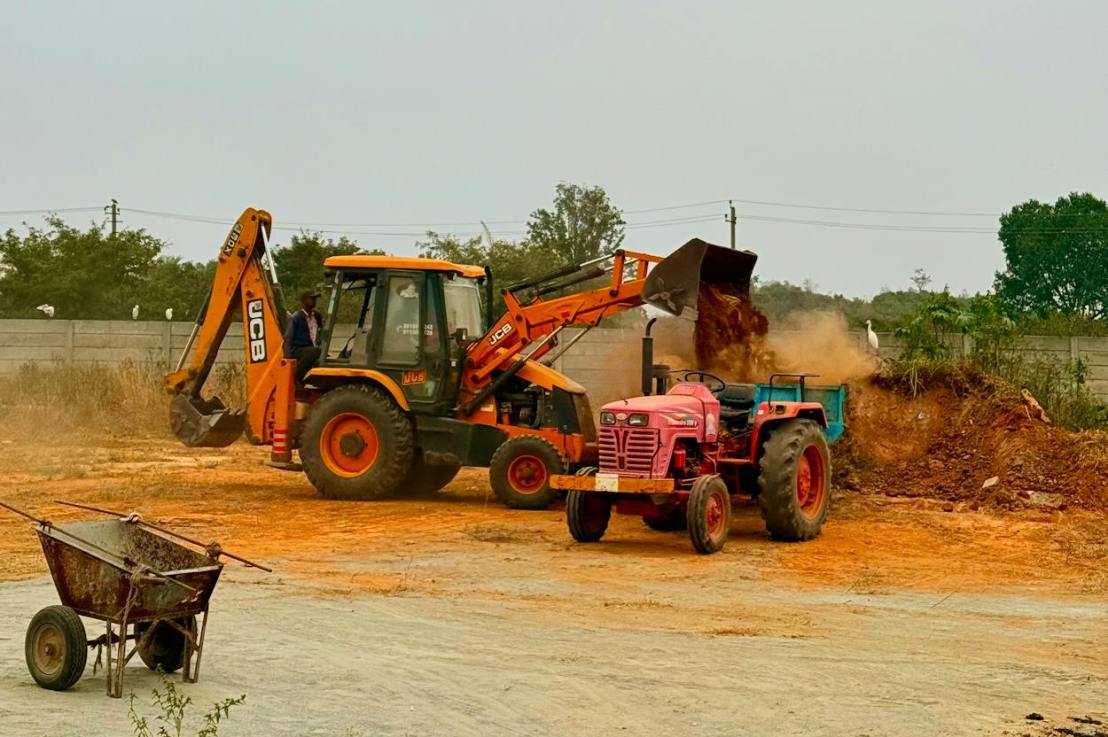
Construction operations disturb soil and unleash dust into the surrounding area. This dust can pose a major health problem for surrounding communities. Construction roads, movement access points, and other disturbed areas can create dust pollution. Construction operators can implement ESC Dust Control, such as vegetation buffer areas, soil stabilization, mulch, spray adhesives, barriers, windbreaks, and polymer additives. ESC Dust Control is an important aspect of preventing air and water pollution.

Hazard Quotient

Hazard Quotient

Hazard Quotient

01/27/26

“How can we quantify the lethality of exposure to a substance?”

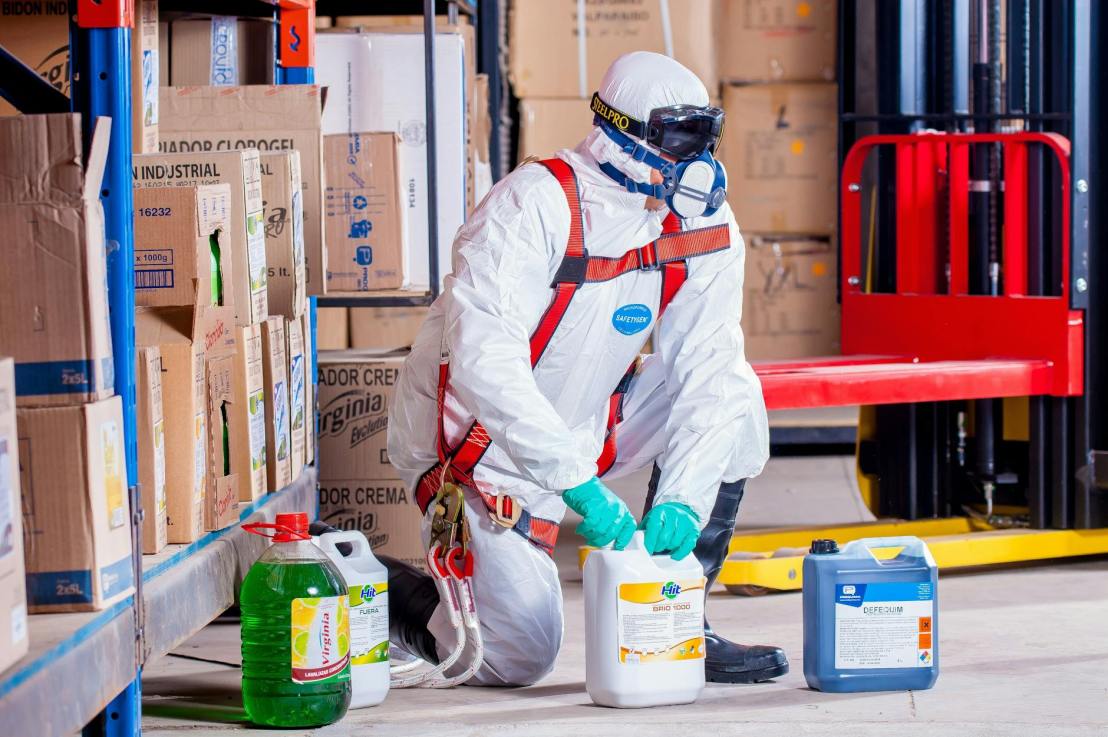
People are exposed to potentially hazardous substances all the time, whether it’s traces of air pollution or bacterial growth on food. We also know that if exposure breaches a certain level, it becomes dangerous. So how can we quantify the lethality of exposure to a substance? Well, what if we divide the exposure level by the reference dose? This is how the Hazard Quotient works, and it is a very useful tool in toxicology.

NOAEL – No Observed Adverse Effect Level

NOAEL – No Observed Adverse Effect Level

NOAEL – No Observed Adverse Effect Level

01/19/26

“How can we measure the highest dose of a substance that does not cause any statistically significant effect?”

People worry about whether a substance they’re exposed to leads to health complications. One way to understand this is to measure the highest dosage of the substance that organisms can handle before a statistically significant effect occurs. Labeled NOAEL – No Observed Adverse Effect Level, these measurements are fundamental for quantifying safe exposure levels for substances.

Wet Scrubbers (Air Pollution)

Wet Scrubbers (Air Pollution)

Wet Scrubbers (Air Pollution)

01/18/26

“How can we use water to remove harmful particles and gases from industrial air pollution?”

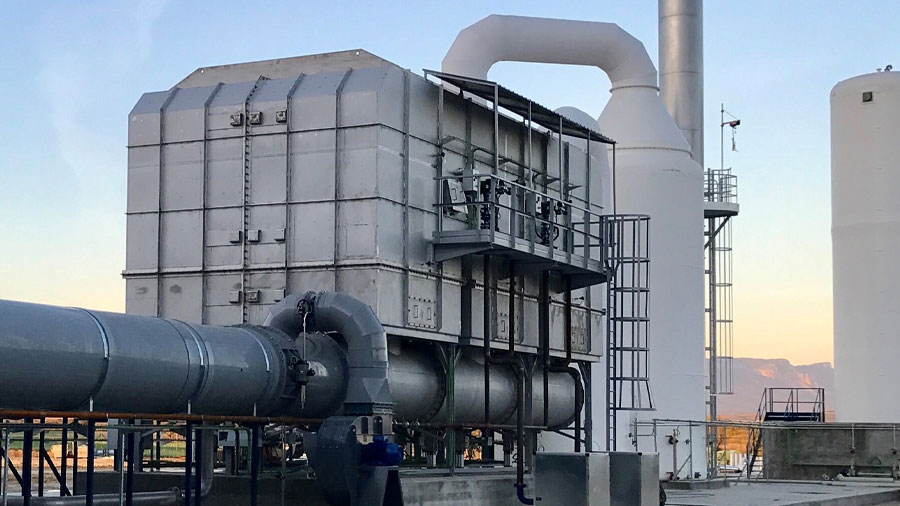
Industrial air pollution often contains toxic gases and harmful particulate matter at the same. Air pollution remediation systems typically concentrate on removing only one of these factors. Wet Scrubbers can handle both. Wet scrubbers first spray water or water-based solution droplets over the exhaust air. These droplets catch particulate matter and absorb toxic gases. Wet scrubbers usually use packing beds to maximize contact between the liquid and the exhaust air. The exhaust air will rise, cleansed of pollutants, and go through a mist eliminator to remove any remaining water droplets. People can recycle the dirtied liquid produced by these operations or treat it as wastewater. Wet scrubbers are a highly effective technology for treating industrial air pollution.

Image credit: https://tecamgroup.com/