Category: Engineering

AC electricity

AC electricity

AC electricity     06/14/16

“What is AC electricity?”

When one first starts to learn about the basic concepts of electricity and circuitry, they are first introduced to the conceptually easier and more primitive DC electricity.However, the most commonly used form of electricity for power transmissions in the modern age is known as AC electricity.

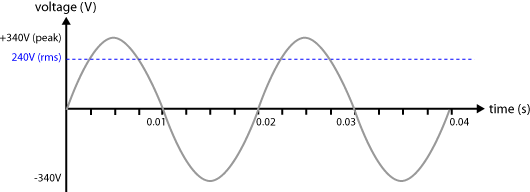
A generator for AC electricity works as follows. A shaft that contains magnetic materials is encass in series of windings. When the generator turns, the electromagnetic interactions between all of the materials will induce a voltage that alternates with time (hence the name Alternating current).

However, what makes AC power vital for long distance transportation is the transformer. Before AC, there was a problem, households require a lower voltage for safety  purposes, but transferring low voltage over a long distance is inefficient due to the IR power loss, or the fact that the higher the current, the more energy will be dissipated over a long distance. But with the introduction of a transformer, this dilemma can be solved. Since AC currents are constantly changing, they produce magnetic fields around their paths. If one is to place a ring of loops near this magnetic field connected to a different circuit, then another current can be induced. What is particularly fascinating about transformers is that both circuits can have different voltages! The way that this works is that the value for magnetic flux will be different depending on the number of loops, so if the “receiving” side has more loops, the transformer will be a step up transformer and the other side will have a higher voltage, while the reverse is true for one with less wires (“step down” transformers). Therefore, the voltage for power transmission can be extremely high and can “step down” once it becomes close to a user’s home.

Pressure volume diagrams

Pressure volume diagrams

Pressure volume diagrams              06/13/16

“How can we empirically model the change in pressure and volume of a gas?”

In order to model the change in pressure and volume of a gas, Scientists and Engineers have created a framework known as Pressure volume diagrams. P-V diagrams are very simple, the Pressure and volume of an object will be represented by a cartesian coordinate system with the Pressure on the vertical axis and the Volume on the horizontal. When work is added to the system, the change in volume and pressure is recorded along an arc length. The volume under this curve represents the change in work in the system. The return process does not have to be symmetric, so often a P-V diagram could possibly have a different return curve.
Let us illustrate with the following example. Imagine gas with a piston in a machine.The state of the gas gas starts at point 1 on the graph. Heat is then added, which the increase the pressure. The normalization process then starts, which decreases the pressure and increases the volume, causing the state to go to poin 2. Heat is then extracted, which causes the state to go to point 4, and the reverse normalization process starts, which causes everything to go back to the begining at point 1.

Internal combustion engine

Internal combustion engine

Internal combustion engine               06/12/16

“What powers most automotive technology?”

One of the most important inventions ever derived by humanity is that of the Internal Combustion engine. In abstract, the ICE is a method of using diesel fuel to create useable power by having an atomized version of the fuel come into contact with high temperature and high pressure air.

To start off, let us look at the basic parts of an ICE and how they make the machine. First, a piston is connected to a connecting rod,, while a crank will go through the bottom hole of the connecting rod. The top half of the fastening rod, and the piston will be encapsulated in a cylinder. The sub-machine made from these parts is called a slider-crank mechanism. The linear motion of the piston is transformed into a rotary motion at the crank. This mechanism will be housed in an engine block. A cylinder head, valves, and fuel injectors are fitted above the engine black. The cylinder is curved so that all of the gases will move around on it during the operation

Now that we have described the base parts of the machine, it would only be logical to describe how these parts work together. The first part of the process is called the intake stroke. When the Piston moves downwards, inlet valves will open and fresh air from outside will be sucked in (one can think of the engine as “breathing” at this point). During the exhaust stroke, the inlet and exhaust valves are closed, and the air inside the cylinder will be compressed by the upwards motion of the piston. During this phase, the piston will perform work on the air, so the temperature and pressure will consequently rise to a level higher than the self-ignition value of the diesel. An atomized form of diesel will be injected into this compressed air. The fuel will get evaporated, and an uncontrolled explosion will happen as a result. This starts the process of the power stroke. The temperature of the gas will rise to high level values as a consequence of this explosion. The high energy fluid will push the piston downwards, and the hot air will do work on the piston, and the energy in the fluid will be converted into the mechanical energy in the piston. The final part of the process is known as the exhaust stage. The exhaust valves will open and the exhaust from the explosion will be ejected, causing the piston to move back up. This cycle (which consists of 4 strokes) causes power production

Finally, let us discuss the design of diesel engines. Diesel engines require a sturdy structure due to the volatility of it’s operations. Since power is only generated during one of the strokes (the power stroke), ICEs are often linked in series of four machines, each one at a different stage so that at any time power is being generated. These are called four cylinder engines, due to the fact that there are four cylinders present. The four cylinder has a power order of 1-3-4-2 (corresponding to the different stages, in order of the four individual cylinders). Furthermore, a flywheel is usually attached to the shaft of the cylinders in order to regulate power creation. There are also counterweights to balance out any unnecessary weights. The valves are controlled by camshafts that rotate at half the speed of crankshafts.

Material recovery facility

Material recovery facility

Material recovery facility          06/11/16

“How are recyclable materials sorted?”

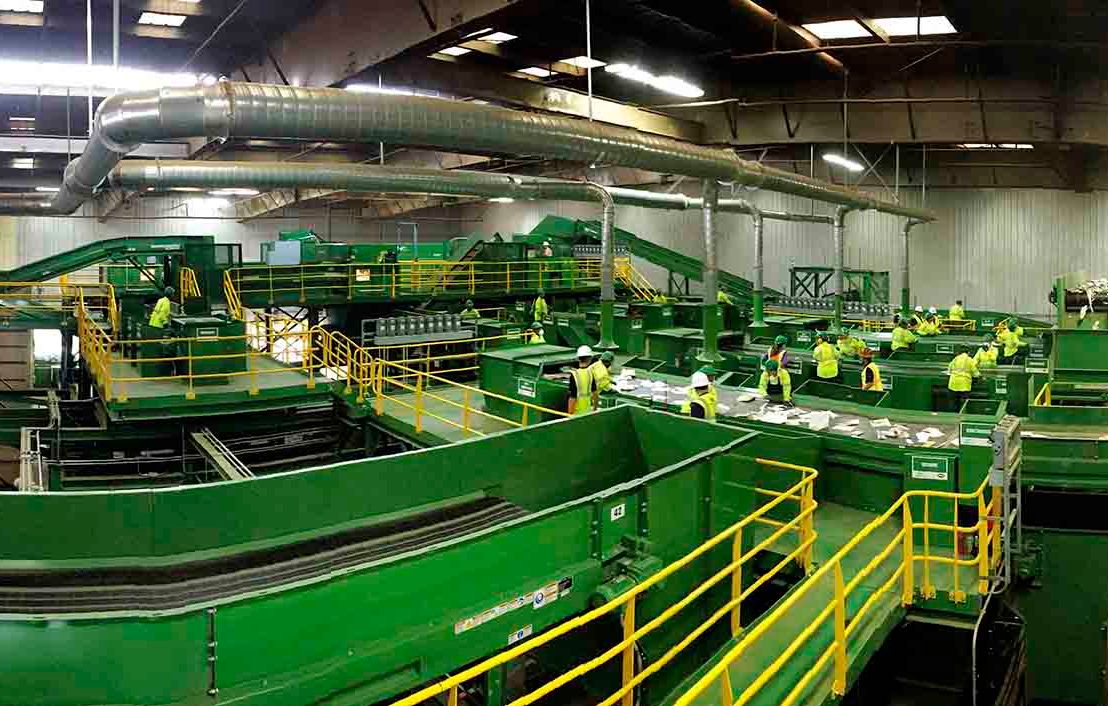
With the advent of mass recycling, there has to be some sort of way that recyclable material is properly sorted to ensure that everything goes in it’s place. The solution is called a Material recovery facility, or MRF. MRFs are specialized plants dedicated to taking in recyclable material and making them reusable. There are two types of MRFs, clean and dirty. Clean MRFs take in purely recyclable waste and turn it into usable material, while dirty MRFs accepts “mixed” waste (i.e partially reusable and partially corrosive) and separates the recyclable material from the non-recyclable.

How do Fans work?

How do Fans work?

How do Fans work?         06/10/16

“How do the fans in our everyday lives work?”

Have you ever wondered how does a fan work? You might be surprised to find out that the operation is surprisingly very simple. A fan is primarily powered by an electrical motor. Attached to this motor are rotors. When the motor spins, the rotors will create a pressure difference in the air which in turn creates wind. Fans often have casing around them to simultaneously protect the rotors from exterior damage and to direct the wind flow. You can think of a fan almost like the reverse wind turbine, with a motor using energy creating wind in the air instead of wind creating energy in a generator.

Solar maximizer

Solar maximizer

Solar maximizer           06/05/16

“How can we maximize the effects of a solar panel?”

This a pertinent question for any renewable energy engineer. Let us illustrate one potential problems with solar panels. When a solar cells are in series, they are all linked together. Since they often cover a long distance, external effects such as temperature and dust will vary. Consequently, each solar panel will have a different temperature, and the higher the temperature, the less efficient it is. Since a series of solar cells are only as efficient as the hottest one, then we run into a major problem.

Luckily, humanity had the ingenuity to invent the solar maximizer. The Solar maximizer optimizes the solar cells to mitigate the impinging effects of solar cells in series.  

Power inverters

Power inverters

Power inverters            06/04/16

“Is it possible to change a DC current into an AC one?”

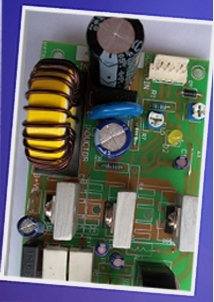
If you need to solve such a problem, then you can look to the help of a device known as a power inverter. Power inverters take DC current as an input current, and then transform it into an AC current using the magic of electronics. Furthermore, these currents can either be sinusoidal or in square form. Inverters can be used for a multitude of purposes such as taser technology and public transportation.

Diodes

Diodes

       Diodes           06/03/16

“Is it possible to limit AC current to only one direction?”

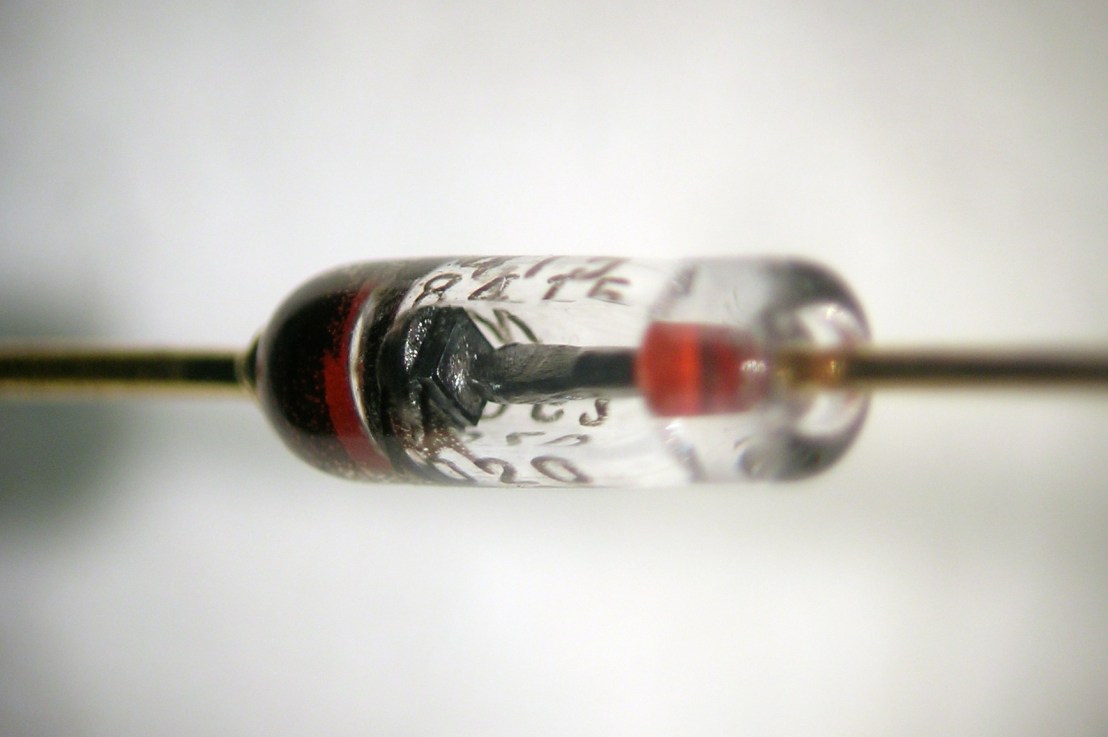
Why yes we can: With the use of a little machine known as a diode, we can accomplish precisely this task. A diode takes in a sinusoidal Alternating current and cuts off the half that is not wanted. This is very useful and can be used in a multitude of applications such as solar electricity

Why Jet Engines are getting bigger

Why Jet Engines are getting bigger

Why Jet Engines are getting bigger          06/02/16

“Why are jet engines getting bigger?”

This is a very good question for any young engineer out there. If you ever look at a historical chart, then you will see that Jet engines have gotten larger over the past. The reason for this is that larger jet engines are simply more efficent. A jet engine receives more air the larger it’s engine diameter is and since a jet engine runs off heated air, the more air it receives, the more power it has. However, the laws of physics gives this effect some limits. Because of a combination of effects such as wind drag and structural weight, their an optimal limit for the size of jet engines. When one does the math, the optimal diameter comes down to around 4 meters, and since current jet engines are around 3.85 diameters in length, expect the growth of jet engines for the short time being. In summation, jet engines are one of the most interesting facets of engineering.