
Category: Engineering

Energy payback time

Energy payback time

Energy payback time

04/04/17

“How long does it take solar panels to recuperate the amount of energy taken to construct them?”
Solar panels produce energy in a safe and sustainable manner. However, it also takes energy to create these machines, and many individuals argue that it might take more energy than it is worth. So how can we estimate the time needed for a solar panel module to recuperate its production energy? Well, let’s solve this question by thinking like engineers. We can reason that energy payback time is fundamentally a problem with two variables, the amount of energy it took to create the specific type of module and the amount of energy the module produces over its lifetime. The former is contingent upon the processes involved during construction of the module, and the latter depends upon the geographic location of the module as well as its efficiency. Therefore if know these variables, we can estimate the energy payback time. The energy payback time for solar panels can range from 3.3 years for a monocrystalline panel in Canada and Northern Europe to nearly 8.5 months in California and Africa using thin-filmed photovoltaics! With this data, we can defeat the pseudo-fact that solar PV systems take an enormous amount of time for a return on investment.

Fracking pollution

Fracking pollution

Fracking pollution

04/03/17

“How does fracking cause pollution? ”


Now that the fracking process has been covered, it would only be logical to cover how fracking causes pollution as well.


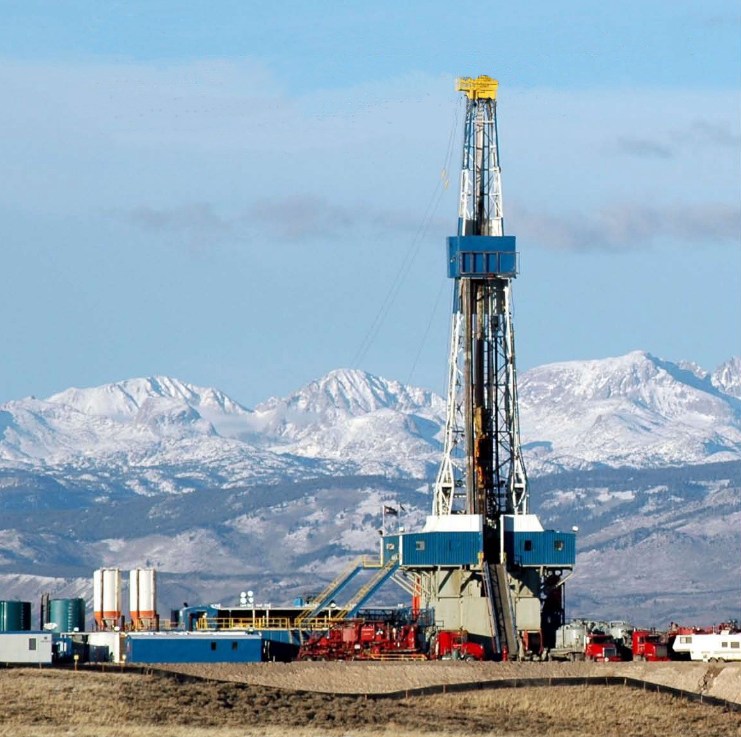
When natural gas is suctioned up from the Earth, the coarse and toxic fracking fluid is taken in with it. Since this material is completely corrosive, it must be stored somewhere. Usually, this fluid will be kept in deep underground “pits” strewn throughSincearea. SInce these pits are dug into the earth, the stored waste can seep into the surrounding area and pollute groundwater that is used by humans. Not only this, but earthquake frequency also skyrockets as pushing fluids deep underground degenerates the earth’s internal structure.
If you have carefully read through this series of articles, you should now have the necessary knowledge to make informed voting and policy decisions regarding fracking

The fracking process

The fracking process

The fracking process

04/02/17

“How exactly does fracking happen?”


Turn to any energy new source and you are bound to read debates about a nascent energy process called fracking so heated that they could power a steam turbine. However, before we make any decisions regarding its benevolence or malevolence, it is our duty as scientific thinkers to learn about the fundamental process first.


Until recently, natural gas was thought to be a worthwhile extraction only if it was found in dense quantities. However, there is an expansive amount of such resources scattered within rock formations hundreds of feet below the Earth’s surface. Since these reserves hold voluminous potential, petroleum engineers came up with a method known as hydraulic fracking. With fracking, pipes are constructed that will delve hundreds of feet below the Earth’s crust to thrust high-pressure fluids (containing water, proppant, and chemical additive) to open up the natural-gas containing rocks. Once cracked, the fluid will then be sucked back into a container, where the waste fluid will be separated from the natural gas, therefore producing energy-containing materials.


Now that we know more about this fracking process, we can act as informed citizens and vote accordingly. Tune in to learn about the environmental hazards of this method


Substitutional solid solutions

Substitutional solid solutions

Substitutional solid solutions

04/01/17

“What happens when an element that follows the Hume-Rothery rules dissolves into another element?”
Given the right set of conditions, elements can dissolve into others elements. This means that the solute will lose its own pre-defined structure and are fused into the solvent. However, how does the solute merge into the solvent on a microscopic level? Well, let’s do as scientists do and observe. If an element follows the Hume-Rothery rules, then it probably has a similar size atomic size, packing structure, electronegativity, and affinity, and it probably looks and acts much like the solvent atoms. And if we observe closer, wouldn’t it be logical that an element so similar could pass itself off as the solvent atom and substitute itself into the original structure? Well, it turns out that such phenomena exist, and solutions of this type are known as substitutional solid solutions, and can be used to strengthen a material through impurities

Hume-Rothery rules

Hume-Rothery rules

Hume-Rothery rules

03/31/17

“How can we know if how an element will dissolve in a metal?”
I don’t know about you but all of the different types of elements simply astounds me. Just to think that by changing only a single proton of an atom the entire set of properties can change drastically. What’s even more exciting is that these different properties mean that elements can also combine in a myriad of different ways, such as by dissolving. And not only this, but there are even different ways in which atoms can dissolve in one another, specifically by forming a substitutional solid or an interstitial solid. So how can we predict which will happen? Well, let’s think about substitutional solids for a moment. We know that in order for an atom to be on the same lattice in a material (the substitute in substitutional), it must be of similar size (around 15%), have a similar crystal structure, be of the same valency, and have similar electronegativity. And if we want the element to be interstitial, we know that the element must be smaller than the original by at least 15%, show similar valency, and have the same valency. After working with such patterns for many decades, materials scientists have decided to term these rules the Hume-Rothery rules.

How to make a hologram

How to make a hologram

How to make a hologram

03/30/17

“How can we use physics to make a hologram?”


Most photographs are composed in two dimensions. However, wouldn’t it be really cool if we could have three-dimensional photographs? Well, instead of just imagining it, let’s apply our engineering mindset to build it. To begin, let’s start off with  a few tools, a laser, some lenses, a beam splitter, mirrors, and holographic film. Next, let’s point the laser to the beam splitter to divide the beam into two separate parts. Next, let’s direct both of these beams through diverging beams so they begin to “spread out”. Let’s also make sure that one of these beams (Called the “object” beam) envelops an object of our desired choice. The light impinging on this object will then be reflected, and let’s make sure that this light is directed onto a piece of holographic film. Let’s then use mirrors to guide the second beam of light (Called the “reference” beam) onto the mirror as well. The holographic film will capture the phase difference between the two beams, as well as the levels of darkness and light resulting from the reflection of the object. After all of this work, we would have just created our very own hologram! This process must be so precise that even vibration on the order of a ninth of the wavelength of the laser would destroy the image!

Tempering

Tempering

Tempering

03/29/17

“How can we apply heat treatment to strengthen a material?”
When doing practical engineering, we may have to strengthen the material of steel using artificial means. One method is to apply a heat treatment to change the inner structure of a material. But what is one such example of a heat treatment? Well, let’s think about it. We know that if we were to heat steel up to below the critical point, it will become a homogeneous solution of austenite (a solution of iron and carbon). If we were to then rapidly quench this steel, the internal structure would turn into a body-centered tetragonal framework. Finally, let’s “temper” this material at high temperatures such the steel becomes an ultrastrong phase known as pearlite. This process is known as tempering and is used to strengthen steel materials.

Heat treatment

Heat treatment

Heat treatment

03/28/17

“Can we make a material stronger using heat?”
Oftentimes, when we receive a material, it is not strong enough for any practical purposes. Because of this, there exists multiple material hardening methods to make up for such a case. One such method is known as heat treatment. Heat treatment involves the use of heat to change the physical properties of a material to more desired properties. Cold working (despite being based on cooling the object) is one example of a heat treatment process.

How crystal grains form

How crystal grains form

03/26/17

“How exactly do crystal grains form?”
The existence of crystal grains is one of the foundational aspects of materials science and engineering. However, how exactly do such phenomena form? Well, let’s use our scientific mindset to analyze it. We know that when a material is in its liquid form, it has no crystalline structure. However, as it cools down, a definite structure begins to formalize. However,  this process does not happen uniformly throughout the material but instead begins in a few points within this substance. As time goes on, these points will grow in their respective directions, and eventually will collide with the other crystal structures, forming crystal grains.