Category: Engineering

Silt Fences

Silt Fences

Silt Fences

07/03/25

“How can we put up barriers to temporarily protect water bodies from construction stormwater sediment runoff?”

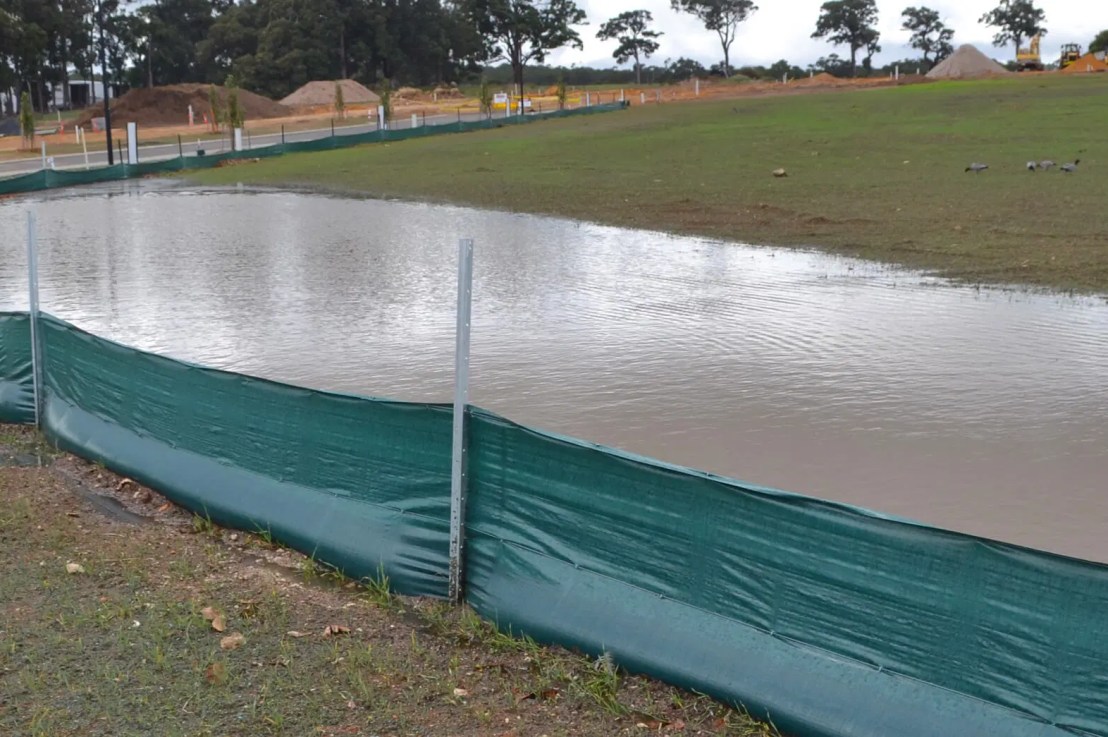
Construction stormwater runoff can devastate nearby water bodies. Construction operators must take best management practices to protect water bodies as part of stormwater pollution prevention plans. One approach is to build temporary Silt Fences around the perimeter of construction projects to stop sediment runoff from leaving the development area. Silt fences have a special fabric that allows water to pass through while trapping pollutants. Operators should install silt fences in trenches to keep them stabilized. 

Image credit https://globalsynthetics.com.au/

Grading (Construction)

Grading (Construction)

Grading (Construction)

07/01/25

“How can we shape a landscape’s slope to suit our construction needs?”

People may want certain landscape slopes for their construction projects. For example, a developer may want to flatten out a piece of land to make the foundation more stable, or a stormwater engineer might recommend that a community build a meandering path to allow for better drainage. People can accomplish these tasks through Grading, where the land surface is reshaped to accomplish specific criteria.

Mixed Liquor Suspended Solids

Mixed Liquor Suspended Solids

Mixed Liquor Suspended Solids

06/29/25

“How can we represent the total mass of suspended solids in the aeration tank of an activated sludge process?”

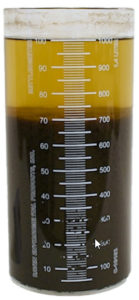
Activated sludge treatment plants are one of the most widely used treatment systems in the world. These systems use suspended microorganisms in sludge to “eat” the organic matter present in the influent water. The total mass of suspended solids per volume in the influent-sludge mixture is quantified as Mixed Liquor Suspended Solids. Measuring the amount of mixed liquor suspended solids is useful for designing targets for treatment systems.

Image credit: https://www.ebsbiowizard.com/

Fecal Sludge

Fecal Sludge

Fecal Sludge

06/27/25

“What exactly is fecal sludge?”

People all over the world use non-sewer systems to dispose of fecal matter. This fecal matter will collect over time with other waste material and accumulate into Fecal Sludge. Fecal sludge needs proper maintenance to prevent public health issues.

Wastewater Lift Stations

Wastewater Lift Stations

Wastewater Lift Stations

06/19/25

“Why might we need to lift wastewater?”

It’s easy to move wastewater by channeling it from a higher elevation to a lower elevation. But sometimes wastewater is too low for gravity transport. Infrastructure operators can address this issue by utilizing Wastewater Lift Stations that pump wastewater upwards. This pushes wastewater to a higher elevation to allow for movement again.

Image credit: http://www.pumpsandsystems.com

Artificial Groundwater Recharge

Artificial Groundwater Recharge

Artificial Groundwater Recharge

06/11/25

“How can we recharge groundwater supplies using human-built infrastructure?”

Infrastructure operators need to maintain groundwater supplies at sustainable levels. Sometimes, demand is so high that groundwater levels will collapse if no external intervention is taken. Infrastructure operators can undertake Artificial Groundwater Recharge using human-built mechanisms such as recycling treated wastewater and stormwater.

Garbage Patches in Ocean Gyres

Garbage Patches in Ocean Gyres

Garbage Patches in Ocean Gyres

06/02/25

“Why do country-sized garbage patches circle the oceans?”

Ocean gyres rotate water between continents like a conveyor belt. When people release garbage into the ocean, it can get sucked into this rotation. Over time, this waste has accumulated into giant Garbage Patches in Ocean Gyres. The largest by area, the Great Pacific Garbage Patch, is estimated to be around twice as large as the U.S. state of Texas! These garbage patches are not continuous, solid masses, but rather similar to a mirky soup soup.

Image credit: cdn.prod.website-files.com

Natural Harbors

Natural Harbors

Natural Harbors

05/23/25

“What land forms make natural harbors?”

Harbors require protection from rough waters and depths deep enough for ships to navigate. Areas that naturally have these elements are labelled Natural Harbors. Examples of natural harbors include New York Harbor in the northeastern US and the Golden Horn in Istanbul. 

Harbors

Harbors

Harbors

05/17/25

“What makes a location safe for docking ships?”

Maritime operators need to store ships in a safe place when they’re docked. These locations, called Harbors, require enclosures to protect ships from strong currents and deep waters so ships can enter and exit without hitting land. Harbors are a vital part of oceanic infrastructure and helps the world operate the way it does.