Category: Engineering

Stabilization Ponds

Stabilization Ponds

Stabilization Ponds

10/27/25

“How can we use ponds to treat wastewater?”

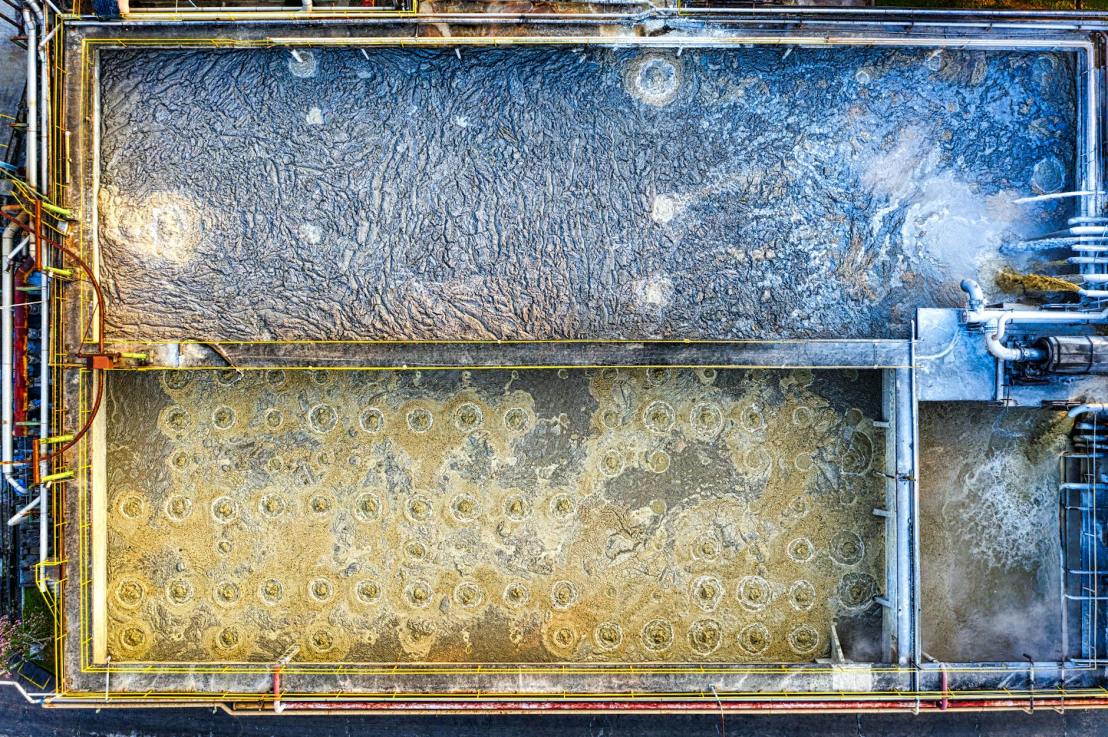
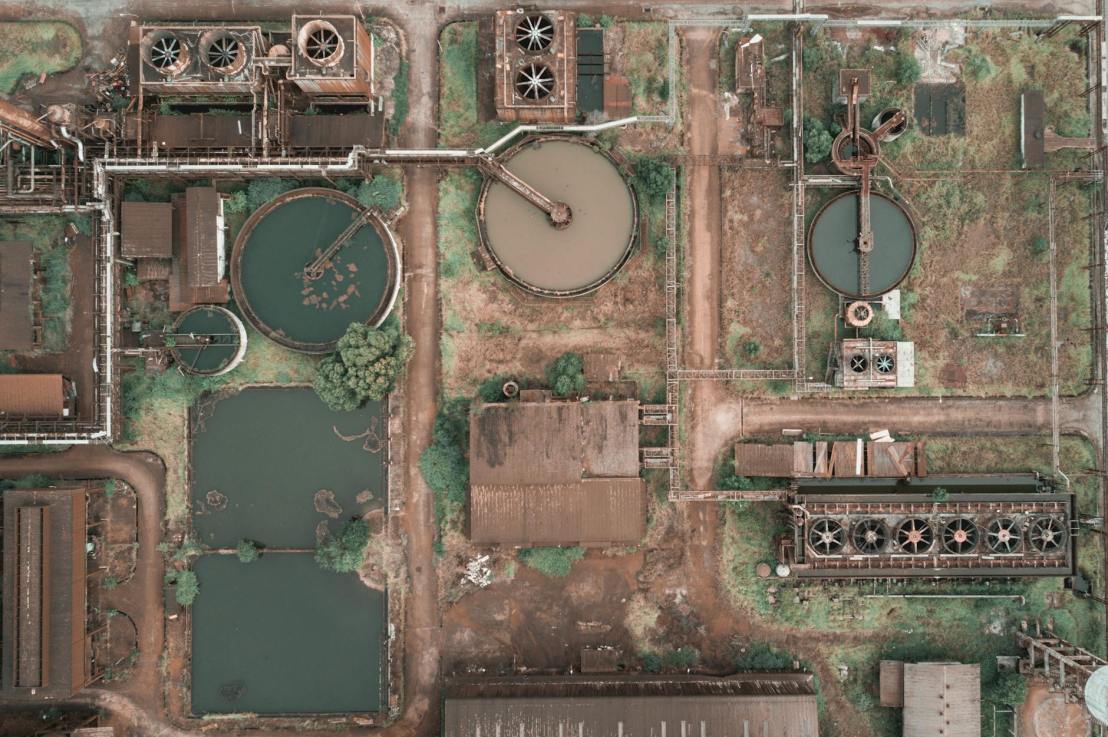
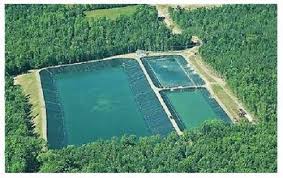
It’s common for people to associate “modern” wastewater treatment with towering industrial plants that look like they’re straight out of a Martian civilization. But what if I told you that ponds could also serve as effective wastewater treatment? Essentially, ponds can have bacteria that consume the organic matter in wastewater, producing cleaner effluent and carbon dioxide. Algae in the pond can absorb the CO2 and transform it into oxygen to feed the organic-matter-eating bacteria. These systems, known as Stabilization Ponds, are incredible for low-energy, high-land availability communities often found in numerous developing countries.

Image credit: https://encrypted-tbn0.gstatic.com/
Sludge Volume Index

Sludge Volume Index

Sludge Volume Index

10/26/25

“How can we quantify the quality of sludge settlement?”

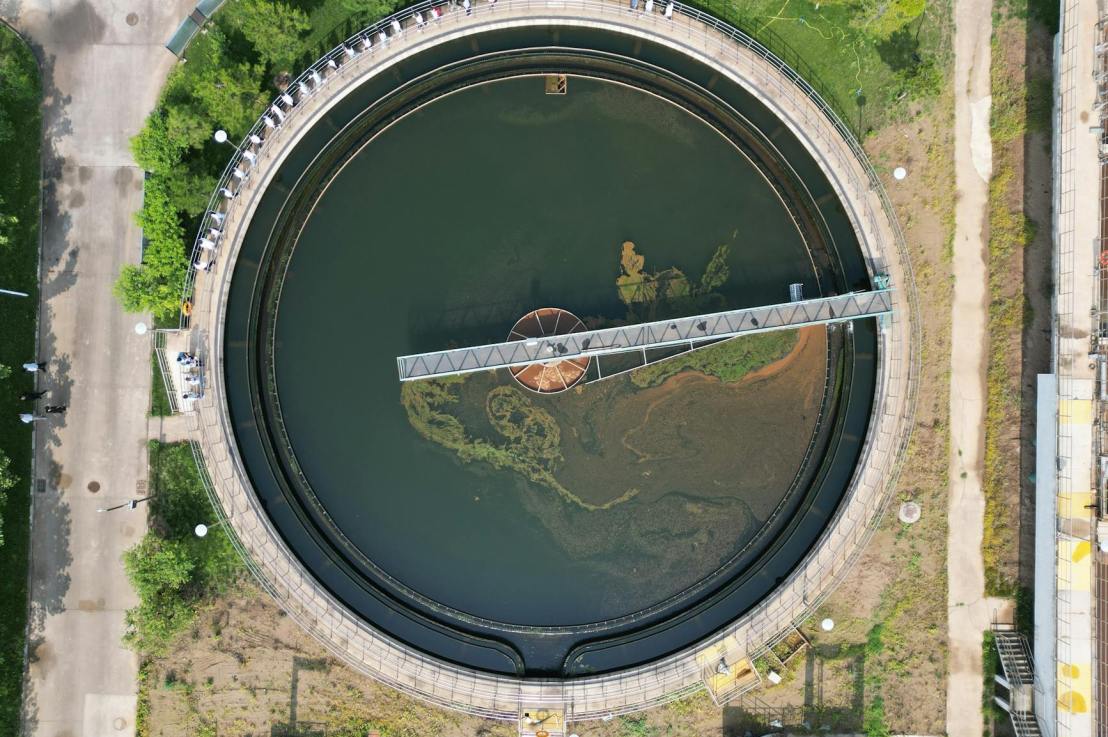
The settlement of sludge in a clarifier indicates treatment process effectiveness. We can quantify this effectiveness by finding the ratio between the volumetric density of sludge that settles (30-minute settled solid volume) and the total suspended solids in the sample (mixed liquor suspended solids) to obtain the Sludge Volume Index. Lower sludge volume indices indicate dense, well-contained settling, while higher values exemplify lower operational effectiveness.  

30-Minute Settled Sludge Volume (SSV30)

30-Minute Settled Sludge Volume (SSV30)

30-Minute Settled Sludge Volume (SSV30)

10/25/25

How can we observe our secondary clarifier performance in a wastewater treatment plant?

Wastewater treatment plants are the backbone of waste management in countless communities. Their operational performance may vary due to a variety of factors. One way we can test this is by taking a 1-liter sample of the mixed liquor from the system’s aeration tank, pouring it into a container through an Imhoff cone or graduated cylinder, and waiting for 30 minutes. Sludge will settle downwards during this time, coalescing into a quantity that can be measured, known as the 30-Minute Settled Sludge Volume, also referred to as the SSV30. SSV30 is a foundational component of measuring the Sludge Volume Index.

Sludge Retention Time

Sludge Retention Time

Sludge Retention Time

10/24/25

“How can we quantify the average amount of time microorganisms remain in a biological treatment system?”

Many wastewater treatment systems use microorganisms in sludge for treatment. However, these microorganisms will stay in the system only for a certain period of time. So, how can we determine how long, on average, these microorganisms will remain in these systems? Well, what if we were to take the mass of microorganisms present and divide it by the rate microorganisms leave the treatment system? This Sludge Retention Time governs wastewater treatment reactor behavior with the equation Sludge Retention Time = Volume of Reactor Chamber * Mixed Liquor Suspended Solids/(Waste Sludge Flow Rate * Waste Sludge Solids Concentration * Effluent Sludge Flow Rate * Effluent Sludge Solids Concentration). The effluent sludge solids concentration is frequently negligible, so the term is often taken out.

Food to Microorganism Mass Ratio

Food to Microorganism Mass Ratio

Food to Microorganism Mass Ratio

10/23/25

“How can we compare the amount of mass a wastewater treatment plant needs to clean versus the potential it can provide?”

Wastewater treatment plants will have to remove a certain amount of organic compounds, as quantified by the BOD loading rate. At the same time, they have a potential measured by the Mixed Liquor Suspended Solids multiplied by the volume. The ratio between these two variables measures the amount of waste that needs treatment versus the capabilities of the system, much like the “food” that needs to be consumed versus the “hunger levels” of the system. In fact, wastewater experts call this relationship the Food to Microorganism Mass Ratio in light of the metaphor.

Volumetric Substrate Loading Rate

Volumetric Substrate Loading Rate

Volumetric Substrate Loading Rate

10/22/25

“How can we quantify the amount of organic matter entering a reactor over a given amount of time and volume?”

Reactors treat water to make it usable for people. We can use the BOD loading rate to quantify how much organic matter is entering a reactor over a given time. However, we also might want to know how much treatment is necessary not just per time but also per volume to make it independent of reactor size. We can simply quantify this using the Volumetric Substrate Loading Rate, which is equal to a reactor’s BOD loading rate divided by its volume.

BOD Loading

BOD Loading

BOD Loading

10/21/25

“How can we quantify the amount of organic matter entering a treatment system over time?”

Every day, wastewater treatment plants use microorganisms to break down organic matter in water. Plant operators need to estimate how much organic matter is entering a treatment system over time to design their system properly. But how can we do this? Well, we know that we already have a unit, biological oxygen demand, to estimate organic pollutant concentration. And we know that the influent water stream will contain a certain concentration of organic contaminants. So what if we were to multiply the influent volume flow by its BOD concentration (milligrams of oxygen microorganisms need to use to consume pollutants per liter)? Well, this will give us a variable called BOD Loading, measured in mass of oxygen needed for pollution cleaning per time, that plant operators can use for design calculations.

Sludge Dewatering

Sludge Dewatering

Sludge Dewatering

10/20/25

“Why do we need to remove water from sludge?”

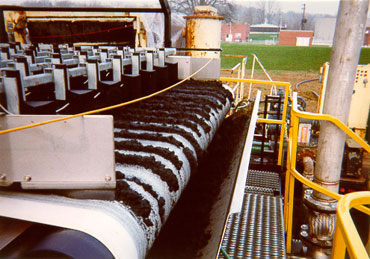
Sludge is a mixture of solid waste and water created after an industrial or water treatment process. The more water a body of sludge has, the more volume and weight it will take up, and the more difficult it is to handle. Draining water from the sludge will make it lighter and easier to operate. Sludge Dewatering is an essential tool for sludge operators. 

Image credit: https://caryloncorp.com/

Perimeter Runoff Control

Perimeter Runoff Control

Perimeter Runoff Control

10/19/25

“Why do we need to protect the perimeter of our construction site from releasing sediment with stormwater runoff?”

Construction operators are obligated to apply best management practices to prevent stormwater runoff sweeping sediment from their sites from entering water bodies. One of the most important aspects is ensuring the perimeter of the site is controlled. Perimeter Runoff Control strategies keep sediment inside the site. Silt fences and sediment basins are examples of perimeter runoff control. The National Pollutant Discharge Elimination System Construction Stormwater Permit requires construction operators to implement perimeter runoff control before beginning soil disturbing activity as part of their stormwater pollution prevention plans. Construction operators can temporarily dismantle perimeter control infrastructure to allow vehicles to enter the site, as long as the infrastructure is restored as soon as possible. 

Image credit: https://cdn.shoplightspeed.com/