Category: Engineering

Why New York City’s Gowanus Canal is So Polluted

Why New York City’s Gowanus Canal is So Polluted

Why New York City’s Gowanus Canal is So Polluted

11/05/25

“Why is the Gowanus Canal so polluted?”

The Gowanus Canal has been a fixture of Brooklyn for the past 150 years. Built as a major industrial transportation route, the body of water was subject to decades of pollution from surrounding coal yards, tanneries, machine shops, and many other types of industrial activity. The canal’s design prevented regular movement between the more oxygenated water in New York Harbor and the deoxygenated water in the canal, leading to a filthy, pathogen-infested environment. People also used the Gowanus Canal to carry out illegal dumping activities. Combined sewer overflow events dump raw sewage into the canal during heavy rainstorms. When we look at these reasons together, it’s easy to see Why New York City’s Gowanus Canal is So Polluted.

Image credit: https://cdn.vox-cdn.com/
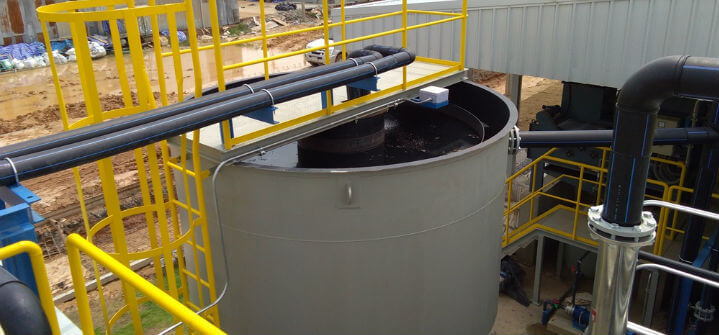
Sludge Thickening

Sludge Thickening

Sludge Thickening

11/04/25

“Why do we need to add solids to wastewater before further treatment?”

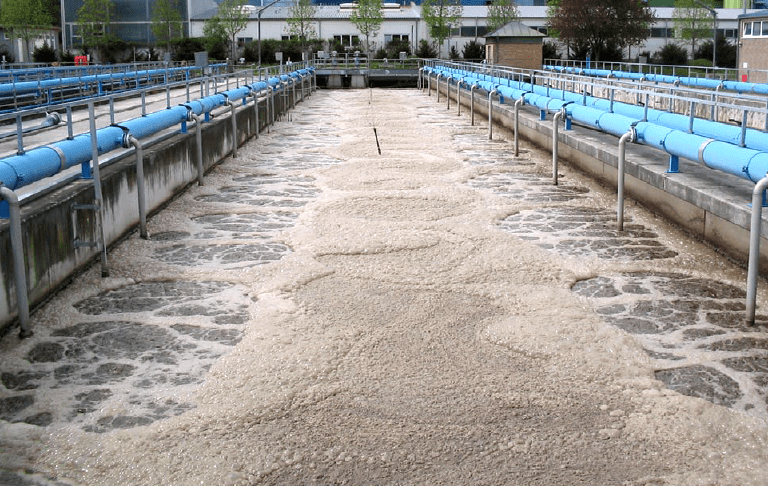
Sludge treatment processes such as dewatering require conditioning before they can proceed. One of the first steps is to increase the solids concentration of sludge through Sludge Thickening. Sludge thickening ensures that the sludge is not too thin to handle in later processes. 

Image credit: https://aosts.com/

Why NYC Flooded So Badly on October 30, 2025

Why NYC Flooded So Badly on October 30, 2025

Why NYC Flooded So Badly on October 30, 2025

11/03/2025

“Why did NYC flood so badly on October 30, 2025?”

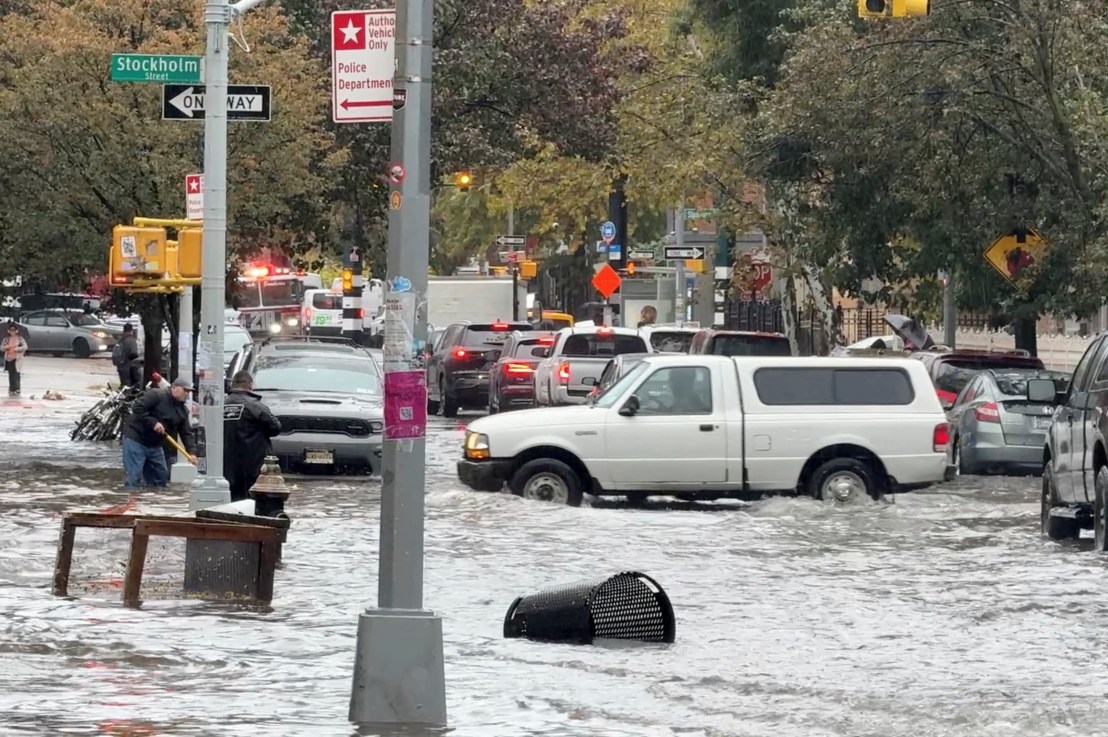
October 30, 2025, was a nightmare for NYC. Record-breaking downpours swept through the city, leaving destruction in its wake. Water levels were taller than people’s waists on some streets. Two people even lost their lives because of the storm. But why was flooding so bad? Well, there’s a multitude of reasons. NYC sewer systems were designed to handle around 1.75 inches per hour of rainfall, while rain reached 6.00 inches per hour in some neighborhoods. Furthermore, the fall leaves and trash blocked sewer catch-basins, preventing drainage and turning city regions into a giant concrete bathtub. Taken together, This is Why NYC Flooded So Badly on October 30, 2025.

For more in-depth information, please visit this page from the NYC-focused flooding blog The City Sponge.

Image credit: https://cloudfront-us-east-2.images.arcpublishing.com/

Soluble BOD

Soluble BOD

Soluble BOD

11/02/25

“How can we describe the portion of organic material that dissolves in water?”

BOD measures the amount of oxygen required to consume the organic matter present in a water sample. Some of the organic material, such as large chunks of food, is suspended and visible, while others are dissolved in the water itself. We can measure the BOD needed to consume the latter as Soluble BOD. Soluble BOD is easier to manage than the more visible, suspended, particulate BOD because of its smaller size.

Sludge Conditioning

Sludge Conditioning

Sludge Conditioning

11/01/25

“Why do we need to pretreat sludge before separating the water from the solids?”

Sludge is a mixture of solid waste and water. Sludge is processed by separating the solid waste from the water. However, sludge will require pre-treatment called Sludge Conditioning before dewatering to ensure successful processing. Sludge conditioning comes in numerous forms, ranging from aerobic digestion to thermal conditioning.

Image credit: https://www.waterexchemicals.com/

Biological Yield (Wastewater Treatment)

Biological Yield (Wastewater Treatment)

Biological Yield (Wastewater Treatment)

10/31/25

“How can we quantify how much microorganism biomass increases given a certain amount of organic material in a wastewater treatment plant?”

Microorganisms consume organic material from BOD Loading to create more microorganism mass. The amount of microorganism mass created per a given substrate concentration, also known as the Biological Yield, is governed by the equation Y = dX/dS, Where Y is the biological yield (measured in mg Vss/mg BOD), dX the increase in biomass concentration (mg/L), and dS the decrease in substrate concentration (mg/L). The higher a wastewater treatment system’s yield, the higher its ability to handle sludge  

Clarifier Feed Wells

Clarifier Feed Wells

Clarifier Feed Wells

10/30/25

“What regulates incoming wastewater distribution into a clarifier?”

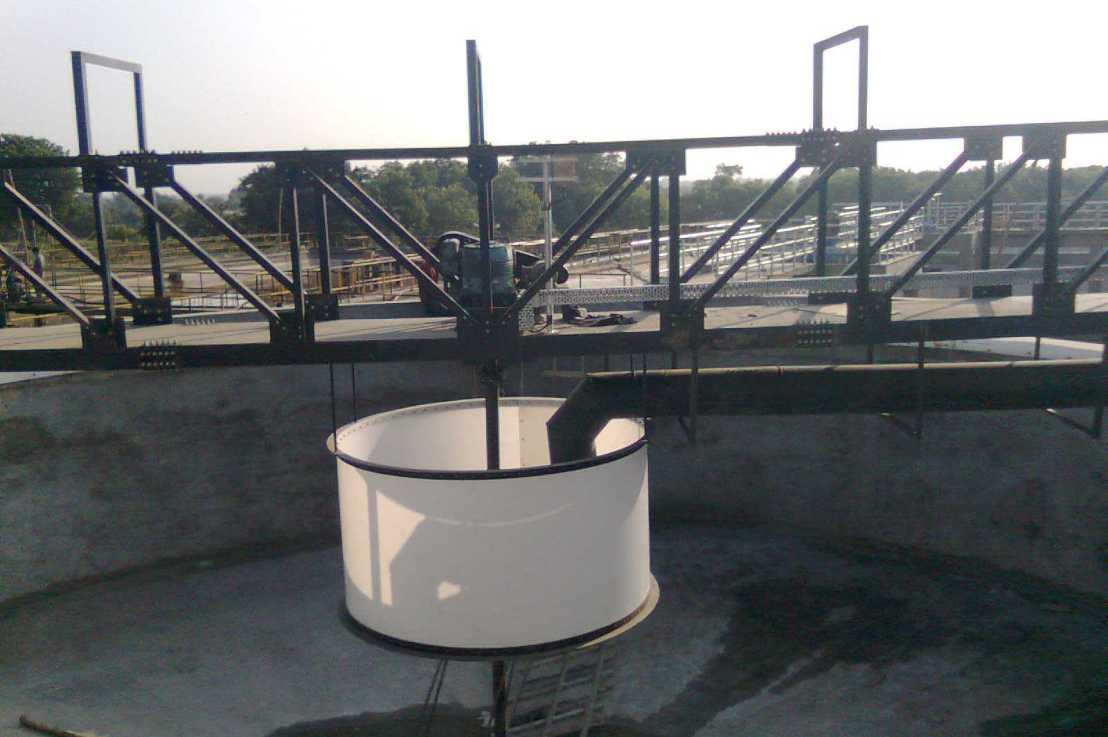
Clarifiers are an essential component of a wide range of wastewater treatment systems. However, to work effectively, the incoming wastewater must slow down and be distributed evenly throughout the clarifier, allowing sludge particles to settle well. To achieve this, wastewater engineers have built cylindrical structures around the inlet, right at the center of the clarifiers, called Clarifier Feed Wells. These clarifier feed wells typically have openings surrounding their body to modulate the exit flow, decreasing turbulence and improving settling. Clarifier feed wells are a fraction of the clarifier dimensions.

Image credit: https://3.imimg.com/

Municipal Bonds for Infrastructure

Municipal Bonds for Infrastructure

Municipal Bonds for Infrastructure

10/29/25

“How can governments create loans to pay for infrastructure projects?”

One of the most discussed subjects in local politics is infrastructure investment. Whether it’s planning new metro stops for commuters, creating green infrastructure for flood resilience in a marginalized community, or building a new wastewater treatment plant for a rapidly growing community, infrastructure is a core part of the public conversation. However, building these projects requires large capital investments that municipal governments may not have on hand. So what can they do? Well, governments have the power to issue Municipal Bonds for Infrastructure, or loan requests to finance specific projects. Investors can purchase these bonds by lending the required principal to governments, who can then use to fund their projects. Governments can repay these loans through raising tax revenues (known as a General Obligation (GO) Bond) or through revenue generated by the infrastructure investment (Revenue Bond). Loan providers like municipal bonds because interest on municipal bonds is generally exempt from federal taxes (and possibly state and local taxes if the loan provider is based in the same state/municipality, respectively). Interest rates on municipal bonds are typically lower because of these tax benefits. Municipal bonds for infrastructure are a cornerstone of modern infrastructure development, given the exponentially increasing need for new public works.

Weir Overflow Rate

Weir Overflow Rate

Weir Overflow Rate

10/28/25

“How can we measure how much wastewater passes over a weir per length?”

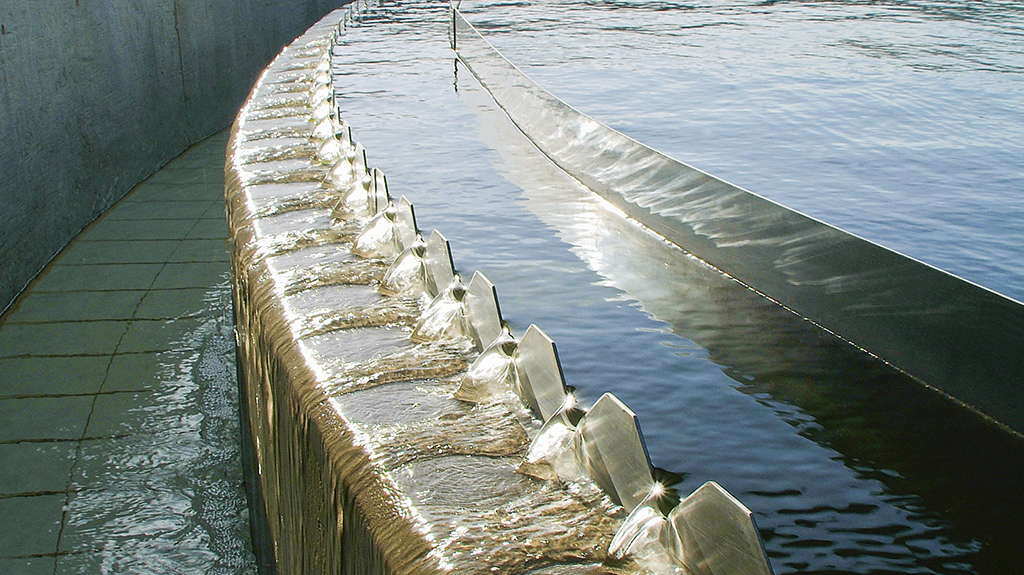
Clarifiers slow wastewater flow speeds to ensure suspended solids float to the bottom and clean effluent rises to the top. Weirs are built into the perimeter of clarifier outlets to ensure the exit flow stays smooth and even. The amount of flow exiting per weir length, known as the Weir Overflow Rate, determines if the system is functioning normally or if flow is too quick and potentially carrying solids. Weir overflow rate is an important variable that all environmental engineers must consider when designing and monitoring clarifiers.

Image credit: https://www.westechwater.com/