“How can municipalities limit disturbance of their steep slopes?”
Disturbing steep slopes can lead to a myriad of issues such as erosion, landslides, and subsidence. Municipalities can implement Steep Slope Ordinances that regulate steep slope disturbance. These ordinances can include quantitative thresholds, zoning overlay districts, and supplemental regulations.
“How can we describe clays that are less sensitive to moisture?”
Fat clays are famous for their volumetric sensitivity to moisture. At the other end of the spectrum are Lean Clays. Lean clays have a higher composition of silt and sand particles and therefore have lower Atterberg limits compared to fat clays. Consequently, lean clays are less volumetrically sensitive to moisture. To determine if a clay sample is fat or lean, fat clays have liquid limits greater than 50, and lean clays have a plasticity index greater than 7 or plot above the “A” line.
“How can we improve an area’s drainage and load-bearing capacity by replacing the soil with compressed sand?”
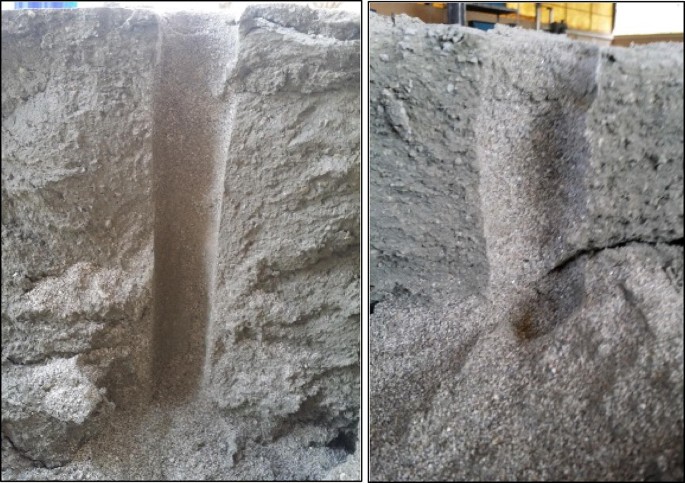
Fat clays and similar soils drain poorly and have weak load-bearing capacity. This makes them poor candidates for serving as building load support. Wouldn’t it be great if we could replace them with strong, fast-draining compacted sand? Well, it turns out that’s the exact idea behind Sand Columns. Sand columns are long vertical columns of compacted sand that replace soils to optimize civil support. Sand columns are used all over the world where the soil requires it.
“What type of clay soils are very sensitive to moisture?”
Clays are one of the fundamental soil types in the world. Some clays have a very wide Atterberg limit, so they exhibit plastic behavior most of the time. These so-called Fat Clays are highly moldable and will change size with water applications very sensitively. Because the pores in fat clays are very small, water will move out slowly under applied loads. It’s not recommended to build basements in areas with fat clay soils, such as in Houston, Texas, because the changing volume from water will cause structural damage.
Soil consolidation is when buildings and heavy loads squeeze water out of soil pores. The first part of consolidation, Primary Consolidation, occurs as the water is being squeezed out.
Soil is made up of small particles, with air and water between them. When massive, passive loads like a building sit upon soil, the pressure will slowly force the water out of the soil, reducing the soil volume. Soil Consolidation is a fundamental factor in geotechnical engineering and often occurs over several months or years. Soil consolidation is typically done in soft clays, silts, and organic soils.
“What causes a mound of soil to collapse down a plane surface?”
Slope collapse is a serious problem that people need to contend with. When a slope failure happens down a relatively flat planar surface, it’s labelled a Plane Failure.
Soil is quite fascinating. An untold number of discrete solid particles clump together to make the surface of our planet. And these soil particles are attracted to each other through Cohesion. Cohesion is strongest in clay sands and is the non-frictional component of soil shear strength.
Soil may rest on an inclined slope. This soil is balanced when the forces pushing the soil down (such as its weight) are counterbalanced by resistive forces (such as the soil shear strength). When the forces pulling down overpower the resistive forces, the soil will slide down in what’s called a Soil Slope Failure. Many factors can cause a soil slope failure, from rainwater weakening the effective stress of a soil to earthquakes to excessive weight over the soil to vegetation root loss. Landslides are an example of soil slope failure. People can prevent soil slope failure by implementing protective measures such as installing retaining walls, planting rooted vegetation, and covering soil during rainstorms. Soil slope failure is an important factor to look out for in development projects.



 Isaac's Science Blog