Month: January 2026

Compost Filter Socks

Compost Filter Socks

Compost Filter Socks

01/13/26

“How can we use a mesh tube filled with compost to clean water runoff?”

                Stormwater runoff with sediment can harm nearby water bodies and create erosion. So what if we were to take a mesh tube, fill it with compost, and encircle it around an area of interest? Every time water passes through the tube, compost will slow the runoff down and naturally filter the water. These Compost Filter Socks are typically placed along slope contours, near storm drain inlets, and downslope of physically disturbed areas. Compost filter socks are a great tool for stormwater runoff control, erosion prevention, and environmental safety.

Image credit: https://images.squarespace-cdn.com/

Formaldehyde

Formaldehyde

Formaldehyde

01/12/2026

“What’s so special about formaldehyde?”

Chemicals come in all sorts of forms. CH2O, also known as Formaldehyde, is a very special chemical. Formaldehyde-based resins are an incredibly effective and affordable option to use as glue in engineered wood for construction. It has strong performance in humid and high temperature variability environments and can insulate well. However, it’s also a volatile organic compound that hurts the respiratory system and is also a carcinogen at sufficient exposure. Consequently, many engineering companies are phasing formaldehyde out of their inventory.

Lapse Rates

Lapse Rates

Lapse Rates

01/11/26

“How does temperature change with atmospheric height?”

The atmosphere’s properties change with height. One of these variables is the temperature. The Lapse Rate measures the rate of change of temperature with atmospheric height. The lapse rate is measured by taking the negative of the change in temperature divided by the change in height. If the lapse rate is positive, then temperature decreases with height, and vice versa for a negative lapse rate. Lapse rates are vital for measuring atmospheric stability.

Air Changes Per Hour

Air Changes Per Hour

Air Changes Per Hour

01/10/2025

“How can we quantify how many times air is replaced in a room per hour?”

Air can get stuffy and polluted if it stays in a building for too long. People replace air over time to ensure it’s fresh on the inside. The number of times air is changed per hour is quantified by the Air Changes Per Hour. The air change per hour is quantified by taking the volume of air that is transferred from the outside per hour in a room and dividing it by the room volume. The U.S. CDC recommends an air change of at least 5 air changes per hour to reduce the number of viruses in a building.

Sloped Green Roofs

Sloped Green Roofs

Sloped Green Roofs

01/09/26

“What are the advantages and disadvantages of sloping a green roof?”

Green roofs integrate stormwater management, biodiversity, building insulation, and aesthetic design all into one package. We can also pitch these green roofs at a slight angle to make Sloped Green Roofs. Sloped green roofs reduce ponding and may improve aesthetic appearance, but are also structurally and hydrologically more complicated. Stormwater runs off more from sloped green roofs, meaning roof plants may have to rely on other sources of water. 

Saturation Pressure

Saturation Pressure

Saturation Pressure

01/08/26

“What is the pressure at which a substance’s liquid and vapor phases are balanced with each other?”

Vapors form when molecules from a liquid bounce into the air as gases. At some pressures, more molecules escape, and at others, more return. The pressure where the molecular exchange between each phase is equal is known as the Saturation Pressure. The saturation pressure is dependent on temperature, since higher temperatures mean more molecules escape, necessitating a higher pressure to keep them contained. Saturation pressure dictates what the vapor makeup of a mixture will appear according to Raoult’s law.

Raoult’s Law

Raoult’s Law

Raoult’s Law

01/07/26

“How can we determine the vapor content of a mixture?”

Vapors form above liquids. When two liquids mix, their vapor will also be a mixture. Raoult’s Law describes the content of the vapor mix, with each component proportional to the percentage makeup of the liquid multiplied by its saturation pressure. If a component has a high enough saturation pressure, then it can have a larger presence in the vapour compared to the liquid.    

Soil Slope Toe

Soil Slope Toe

Soil Slope Toe

01/06/26

“What defines the base of a soil slope?”

Construction sites often have sloping soil mounds. The bottom section with a gentle slope that meets the ground is known as the Soil Slope Toe. The soil slope toe is important because it often experiences the highest stress and is where erosion concentrates.

Minimum Vertical Separation From Water Table

Minimum Vertical Separation From Water Table

Minimum Vertical Separation From Water Table

01/05/26

“Why do some engineering systems require a minimum vertical separation from the water table?”

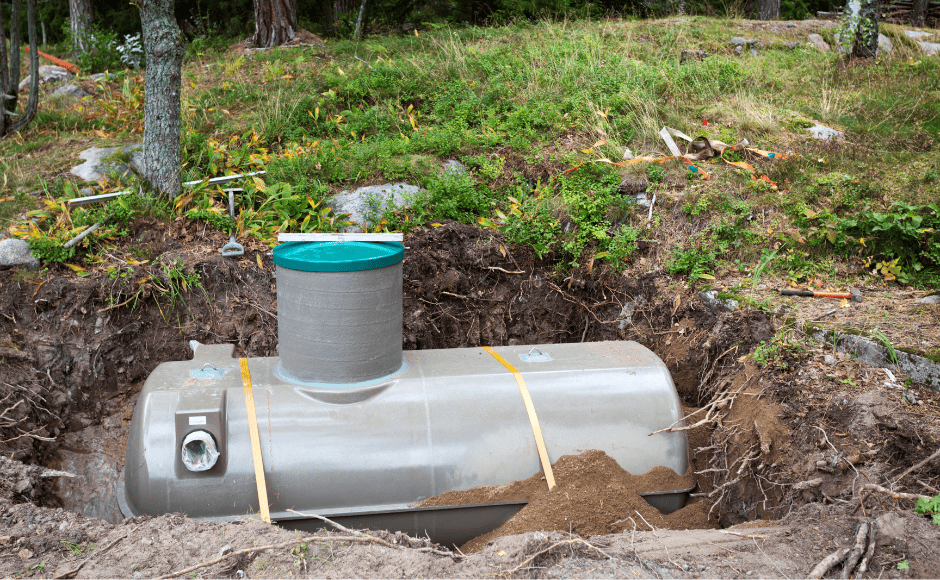
Engineering systems may store water beneath the surface, such as septic systems for wastewater or infiltration systems for stormwater. However, these systems can cause catastrophic damage if they’re built too close to the water table. Septic systems can leach wastewater and contaminate groundwater supplies, while water infiltration can raise the water table and lead to flooding. Consequentially, government regulations may require a Minimum Vertical Separation From Water Table to ensure public safety. For example, the NYC Department of Environmental Protection mandates that stormwater infiltration practices in Brooklyn and Queens are at least 4 feet above the groundwater table.

Image credit: https://michigansaves.org/