Month: June 2025

Endorheic Basins

Endorheic Basins

Endorheic Basins

06/08/25

“How do we classify watersheds that don’t drain into an ocean?”

Most watersheds drain into an ocean. However, sometimes a watershed does not. These inland watersheds, known as Endorheic Basins, are self-contained watersheds that never leave the landmass they’re on. Examples of endorheic basins include the Caspian Sea in Central Asia and the Tarim Basin in East Turkestan.

Fossil Water

Fossil Water

Fossil Water

06/07/25

“How do we classify groundwater that’s been contained for thousands of years?”

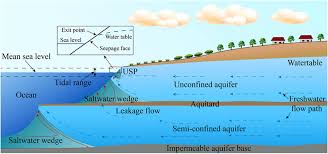
Confined aquifers can hold groundwater for large periods of time. Groundwater that’s been confined for millennia is known as Fossil Water. Large fossil water aquifers are found in the Eastern Sahara Desert in Northern Africa,  the Kalahari Desert in Southern Africa, and the High Plains in the Central U.S. Fossil water is typically non-renewable, so people need to conserve the water carefully. 

Cloud Bases

Cloud Bases

Cloud Bases

06/06/25

“How do we describe the base of a cloud?”

Clouds come in all shapes and sizes. But how do we describe their lowest visible parts? Well, just like the beginning of any structure is called a “base”, the lowest visible region of a cloud is termed a Cloud Base. Cloud bases are measured as the distance from mean sea level or the Earth’s surface.

Nimbostratus Clouds

Nimbostratus Clouds

Nimbostratus Clouds

06/03/25

“How do we classify dark and moderately rainy clouds?”

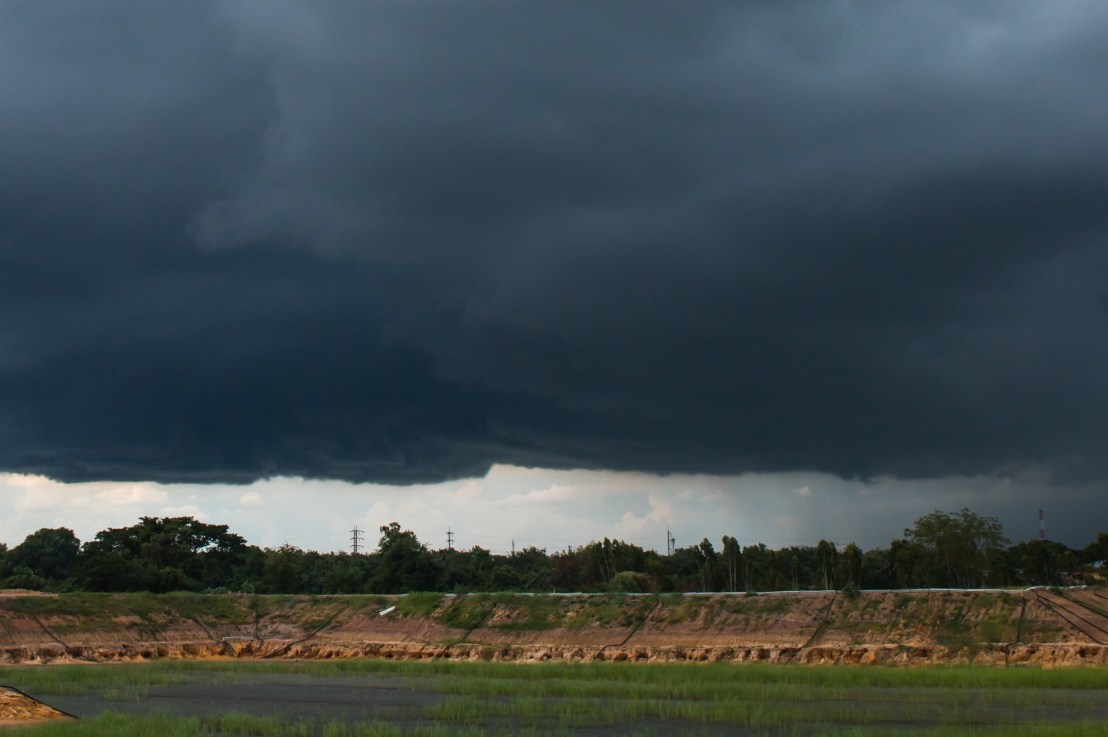
Clouds come in all shapes and sizes. During warm fronts, moisture may rise into the atmosphere and create dark clouds. These Nimbostratus Clouds produce constant streams of rain with (usually) no lightning or thunder. Nimbostratus clouds typically form around 2 – 4 kilometers in the middle level of the troposphere.

Image credit: https://www.metoffice.gov.uk/

Garbage Patches in Ocean Gyres

Garbage Patches in Ocean Gyres

Garbage Patches in Ocean Gyres

06/02/25

“Why do country-sized garbage patches circle the oceans?”

Ocean gyres rotate water between continents like a conveyor belt. When people release garbage into the ocean, it can get sucked into this rotation. Over time, this waste has accumulated into giant Garbage Patches in Ocean Gyres. The largest by area, the Great Pacific Garbage Patch, is estimated to be around twice as large as the U.S. state of Texas! These garbage patches are not continuous, solid masses, but rather similar to a mirky soup soup.

Image credit: cdn.prod.website-files.com

Westerlies Seasonal Variation

Westerlies Seasonal Variation

Westerlies Seasonal Variation

06/01/25

“How do the westerlies have seasonal variation?”

The westerlies are a vital part of global air circulation. Temperature differences between the poles and tropics are one of the causes of these winds. During the winter, the temperature differences between these two regions are greater, leading to stronger westerlies winds. This is why Westerlies Seasonal Variation occurs. Storms in the westerlies regions are stronger during the wintertime as a consequence.