Month: December 2024

Closed Loop Water Source Heat Pumps

Closed Loop Water Source Heat Pumps

Closed Loop Water Source Heat Pumps

12/13/24

“How can we make water source heat pumps that don’t directly extract water?”

Water source heat pumps use water to heat a building. however,  many systems rely on water extraction. How can we make one that’s more sustainable? Well, what if we were to make something that simply exchanges heat using sealed pipes? Well, this exists as Closed Loop Water Source Heat Pumps. This technology is not only more sustainable but also more resilient against winter freezing.

Image credit http://www.energy.gov

Rheology

Rheology

Rheology

12/12/24

“What is the study of the flow of matter?”

Flows happen in matter, whether it’s in a liquid, gas, or even a soft solid. The science behind studying material flow phenomena is called Rheology. Rheology has direct insights for physics, engineering, materials science, physiology, and chemistry.

The Lower Mantle

The Lower Mantle

The Lower Mantle

12/11/24

“What’s special about the Earth’s lower mantle?”

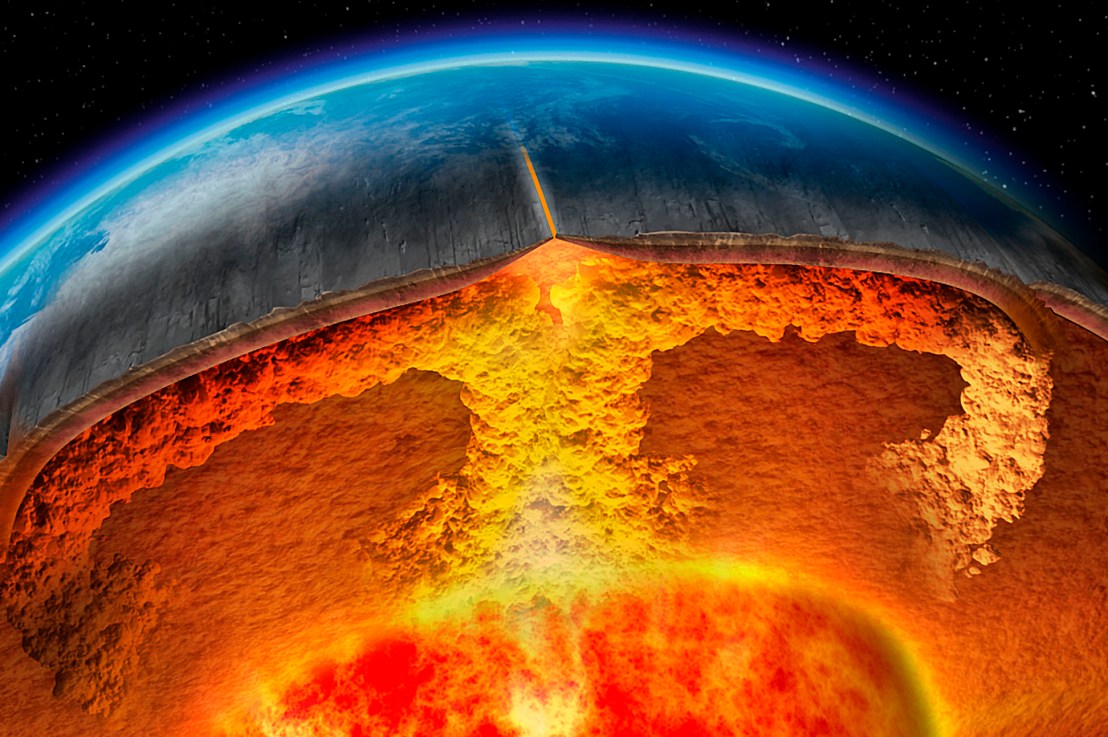
The Earth’s mantle is a marvel to behold. Connecting the crust and the core, it’s a transition that makes up most of the planet’s volume. Over half of the Earth’s total volume is located in what’s called the Lower Mantle, where temperatures can reach up to 2600 kelvin and pressure 127 gigapascals. 

Image credit: wikimedia.org

The Upper Mantle

The Upper Mantle

The Upper Mantle

12/10/24

“What is special about the upper part of the mantle?”

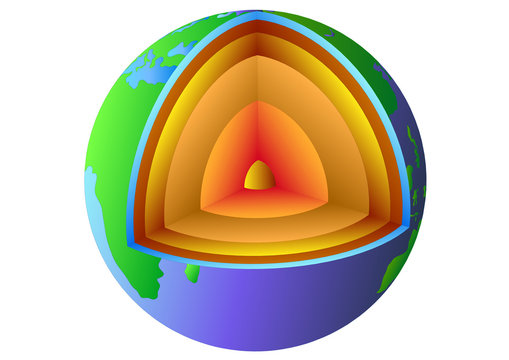
The Earth is a humungous structure. Not only is it divided into multiple layers, but each layers are divided into layers itself. The mantle has an upper part called The Upper Mantle which acts as a transition zone from the crust to the lower mantle. The temperature can range from 227 °C at the upper boundary to 3,930 °C at the lower.

Image credit: Adobe Stock

Earth’s Mantle

Earth’s Mantle

Earth’s Mantle

12/09/24

“What is the part of the planet between the core and the crust?”

When people think of the Earth, people typically imagine the outer mantle or the inner mantle. But what’s between these features? Well, that’s made up of the Earth’s Mantle. The Earth’s mantle is made primarily up of solid rock and contains over 80 percent of the planet’s volume.

Earth’s Crust

Earth’s Crust

Earth’s Crust

12/08/24

“What is the top surface of the Earth?”

The lithosphere is the top layer of the Earth. The top portion of this is called The Earth’s Crust. The crust of the Earth is less than one percent of the volume of the Earth but contains 100 percent of its life.

Ground Source Heat Pumps

Ground Source Heat Pumps

Ground Source Heat Pumps

12/07/24

“How can heat pumps use the ground as a heat source?”

Heat pumps take heat from one place and transfer it to another. Typically, underground layers in the Earth are much more mild compared with the Earth’s surface. This means that heat can be transferred from the ground to a building on a cold day and vice versa on a hot day. This is how Ground Source Heat Pumps work.

Water Source Heat Pumps

Water Source Heat Pumps

Water Source Heat Pumps

12/06/24

“How can a heat pump use water as a source?”

Heat pumps take heat from one medium and transfer it to another. Water Source Heat Pumps extract heat from a body of water to heat a desired space. Water source heat pumps typically have a higher heat transfer rate than ground source heat pumps.

Image credit: http://www.kimpton.co.uk

Extrusive Rocks

Extrusive Rocks

Extrusive Rocks

12/05/24

“What happens when lava cools in rocks?”

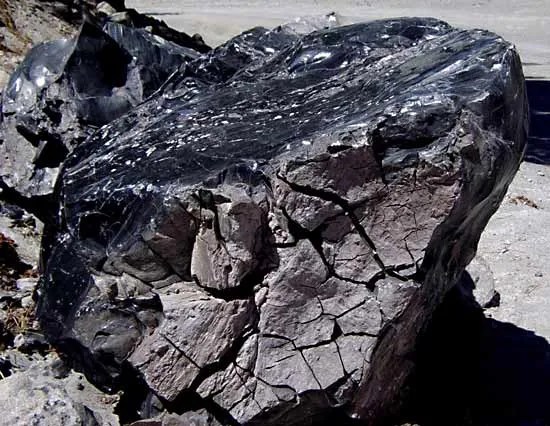
Lava is a powerful, hot, liquid substance. When it comes to the Earth’s surface and cools, it can solidify into rock. This becomes a type of igneous rock called Extrusive Rocks. Extrusive rocks have large crystalline structure sizes that can be seen by normal human sight and a lack of flow texture. Extrusive rocks have small, even microscopic crystal sizes because of the quick cooling. Examples of extrusive rocks include basalt and obsidian.

Image credit: http://www.britannica.com